

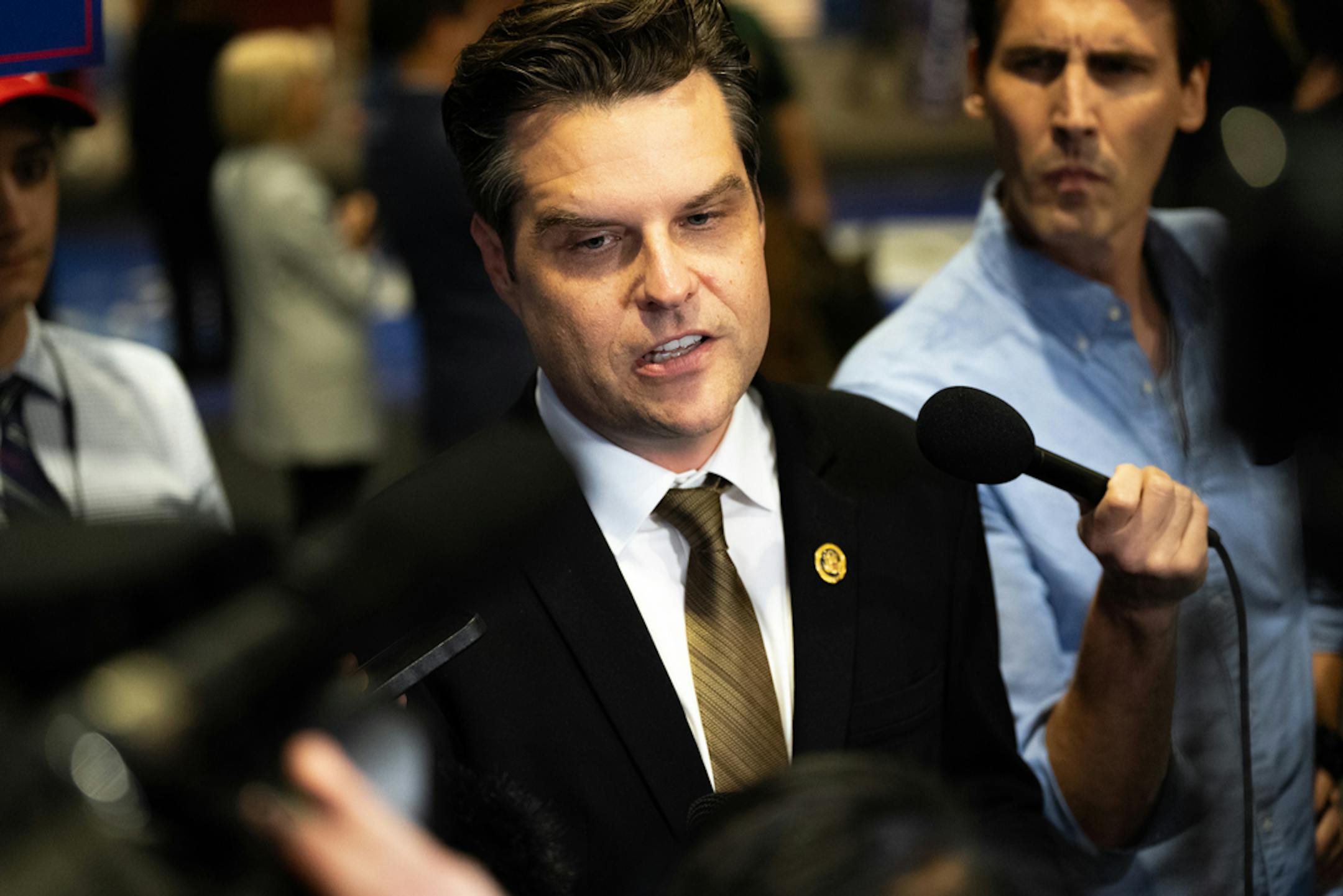
WASHINGTON — Lawmakers in both parties on Thursday called on a congressional panel to release the results of an investigation into alleged misconduct by former Rep. Matt Gaetz, R-Fla., demanding to see its report about sexual misconduct and other charges against President-elect Donald Trump’s pick to be the attorney general.
Gaetz abruptly resigned Wednesday after Trump announced he was the pick to lead the Justice Department, shocking many members of Congress who see him as unqualified and unfit for the post. His rapid exit effectively ended the ethics panel’s investigation into him two days before members had planned to vote on whether to release their long-awaited findings.
Since the spring of 2021, the House Ethics Committee has been investigating claims that Gaetz engaged in sexual misconduct and illicit drug use, shared inappropriate images or videos on the House floor, misused state identification records, converted campaign funds to personal use and accepted impermissible gifts under House rules, among other charges.
Sen. Dick Durbin, D-Ill., who chairs the Judiciary Committee, which would have jurisdiction over confirming an attorney general, on Thursday called on the House panel to preserve and share its conclusions.
“The sequence and timing of Mr. Gaetz’s resignation from the House raises serious questions about the contents of the House Ethics Committee report,” Durbin said in a statement. “We cannot allow this valuable information from a bipartisan investigation to be hidden from the American people.”
Rep. Michael Guest, R-Miss., the chair of the Ethics Committee, suggested in comments to reporters that he was not inclined to release the investigative findings now that Gaetz has resigned.
“Once we lose jurisdiction, there would not be a report that would be issued,” Guest said.
That raised the possibility of a constitutional clash between the Senate, which is charged with vetting and confirming presidential nominees, and the House at the start of Trump’s second term. Trump has already threatened to circumvent the Senate and unilaterally appoint people to his administration during a recess, short-circuiting the normal process.


