

PYONGYANG, North Korea
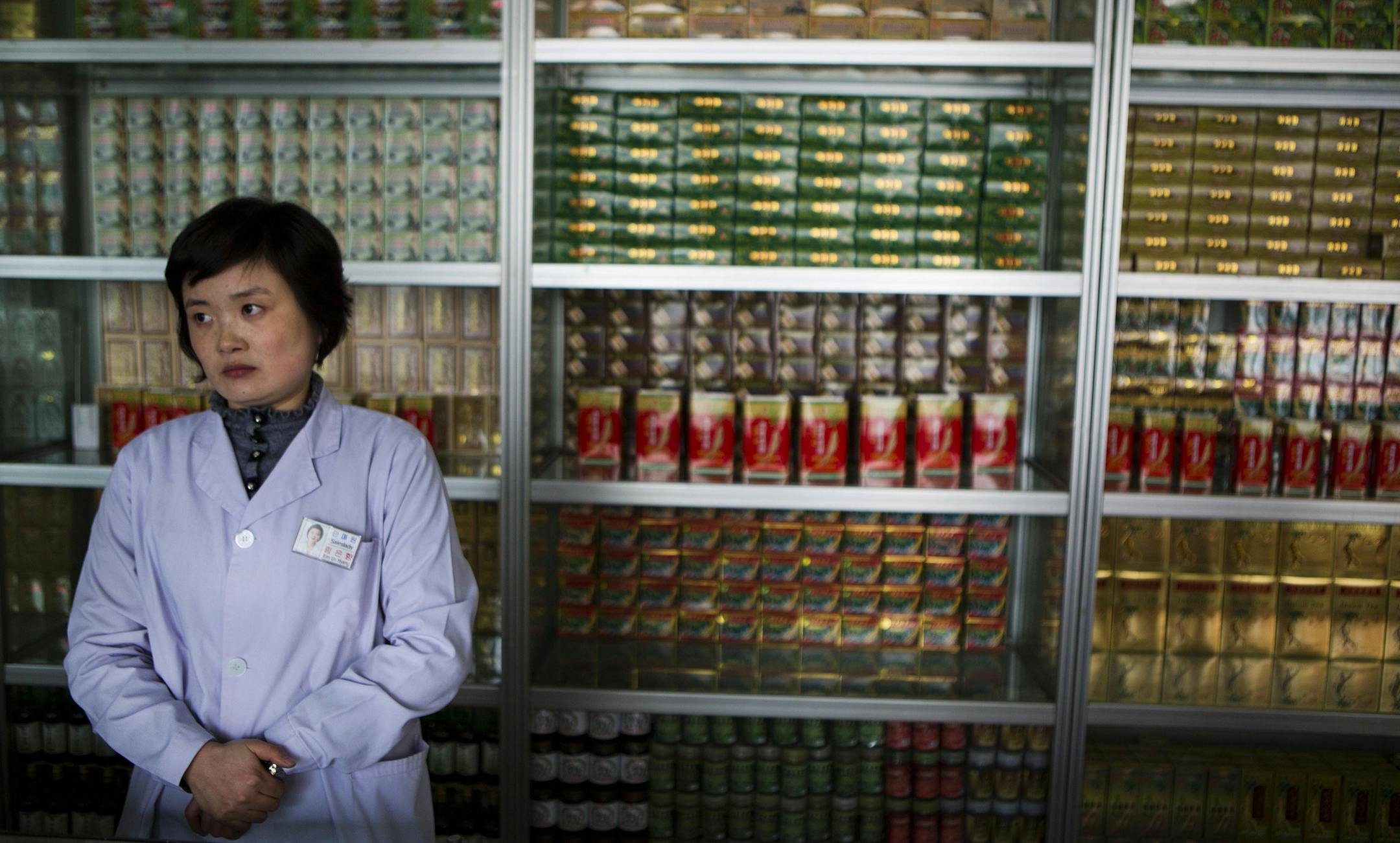
The Man Nyon Pharmacy is lined with rows of colorful packages containing everything from dried bear bile and deer antler elixir to tiger bone paste and ginseng. But the ancient "Koryo" medicine provided at this popular dispensary isn't just for minor aches and pains.
It has been integrated into the health system from the smallest village clinic all the way up to the nicest showcase hospitals in the privileged capital of Pyongyang. Both modern and traditional styles of healing have long been intertwined nationwide with doctors from both schools working in tandem under one roof.
North Korean physicians say many patients prefer traditional medicine to the Western kind, but it's difficult to determine the true situation in this closed and impoverished society where access is limited. Defectors, foreign aid workers and North Koreans agree that many Western drugs are scarce and say villagers still forage for plants in some areas to make their own herbal concoctions.
With the U.N. Security Council imposing its toughest sanctions after North Korea's third nuclear test in February, patients may become even more dependent on these homegrown remedies in a country of 24 million people where government health spending ranks among the world's lowest.
"Doctors are more interested in Koryo medicine rather than Western medicine because they can get it more easily," said Ri Hye Yong, who manages a concrete pharmacy opened by the government nearly three decades ago. "It's much cheaper."
The latest restrictions are meant to squeeze new leader Kim Jong Un and the ruling class by clamping down on access to foreign travel and luxury goods. The resolution is not supposed to block donor aid to those who need it most, including the two-thirds of the population who don't have enough to eat. But foreign aid workers say years of limitations have created a maze of red tape and approvals needed to ship in medical supplies. Some countries refuse to process payments for anything involving North Korea because of restrictions placed on banks, while some foreign companies and organizations simply do not want to be involved once they learn where the materials are headed.
"Even though the imposed sanctions clearly exclude humanitarian assistance, a negative impact on the levels of humanitarian funding has been experienced," the U.N. Resident Coordinator's Office in Pyongyang said April 29, adding nearly three-quarters of the $147 million needed this year has not been received.


