

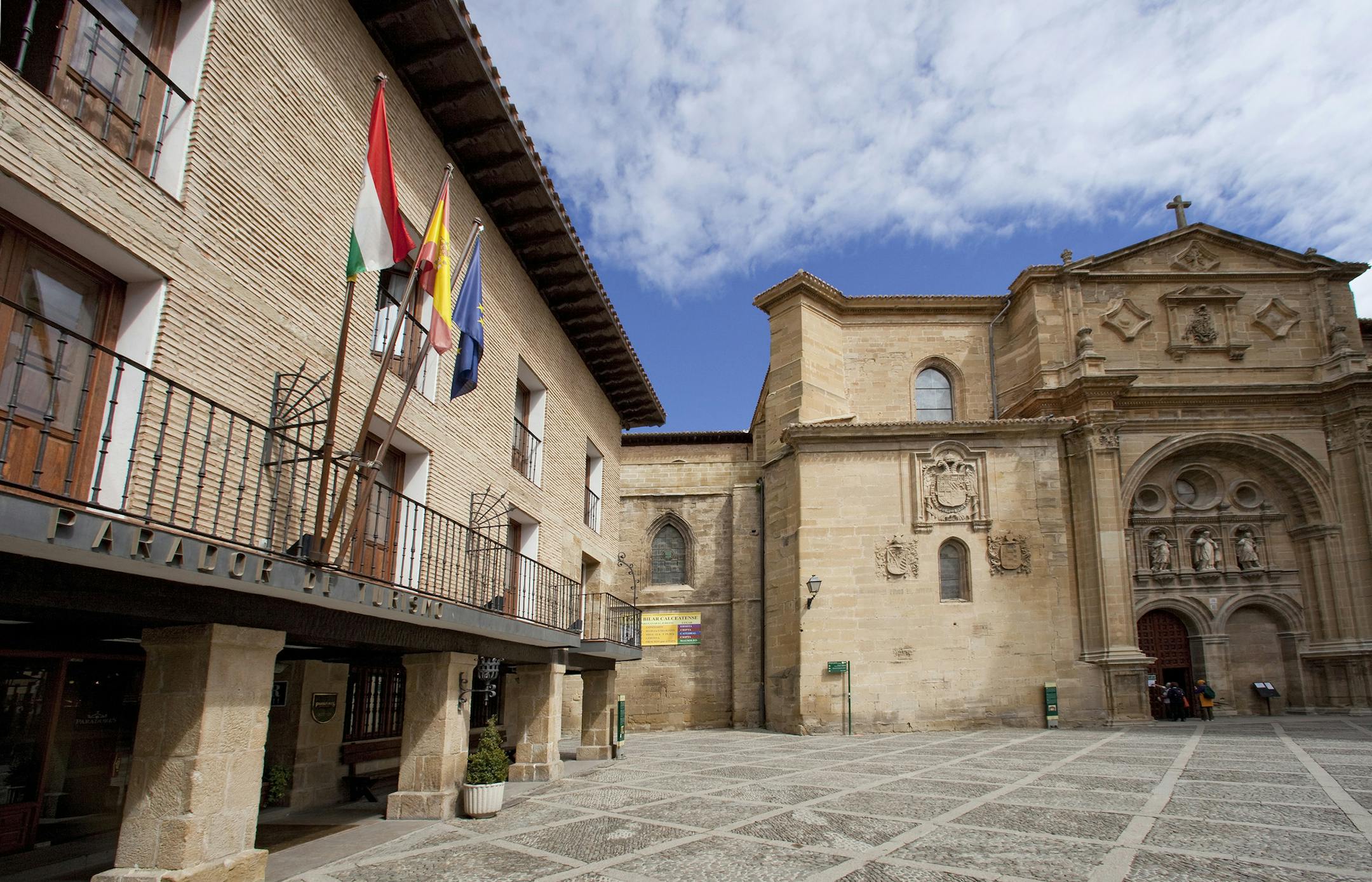
Just beyond the expanse of windows at the Castillo El Collado, a perfect gem of an inn located in Laguardia, northern Spain, a blazing orange ball of a sun slips behind the mountains and a violet haze descends upon the valley.
It's nearly 7 p.m. and I am just finishing lunch. While getting up from lunch at a time when most are sitting down for dinner may seem a bit odd to Americans, it is the ideal metaphor for Spain.
This is a country deeply rooted in the past and steeped in tradition. Time is relative here, and the hours of the day are delineated not so much by the clock but by sensory impressions. Morning is the smell of freshly baked bread and the crow of a rooster; afternoon, the feel of the broiling sun on one's back; nighttime, the sound of clicking castanets and the silky taste of a rich red wine.
Nowhere is this timelessness more apparent than in La Rioja. The smallest of Spain's 17 regions, La Rioja was strategic enough to have attracted, at various times, Celts, Romans, Visigoths, Muslims and Christians, all of whom left their mark.
Lying in the shadows of the Pyrenees, the mountain range that separates Spain from France, La Rioja is split in two: Rioja Alta (Upper Rioja) is mountainous and humid, while Rioja Baja (Lower Rioja) is flat and has a sunny, Mediterranean-like climate. Together, they constitute Spain's most prolific wine-producing region.
Premier wines produced here
Here, in the basin of the River Ebro, in an area 80 miles long and 33 miles wide, are 500 wineries, or as they are known in Spain, bodegas. Upper and Lower Rioja, along with adjacent Rioja Alavesa in the Basque country, have been producing Spain's premier (mostly) red wines since the Middle Ages, when monks were the first winemakers.
Unlike France's Bordeaux region and the Napa and Sonoma valleys of California, La Rioja's bodegas are not always open to tourists. Many are open by appointment only, and a visit requires careful planning, especially if you require an English-speaking guide.
However, a few are open to the public on a regular basis. Bodegas Muga, near the city of Haro in Upper Rioja, is perhaps the best known, and Bodegas Palacio and Bodegas Ontanon in Lower Rioja are also worth a visit.


