

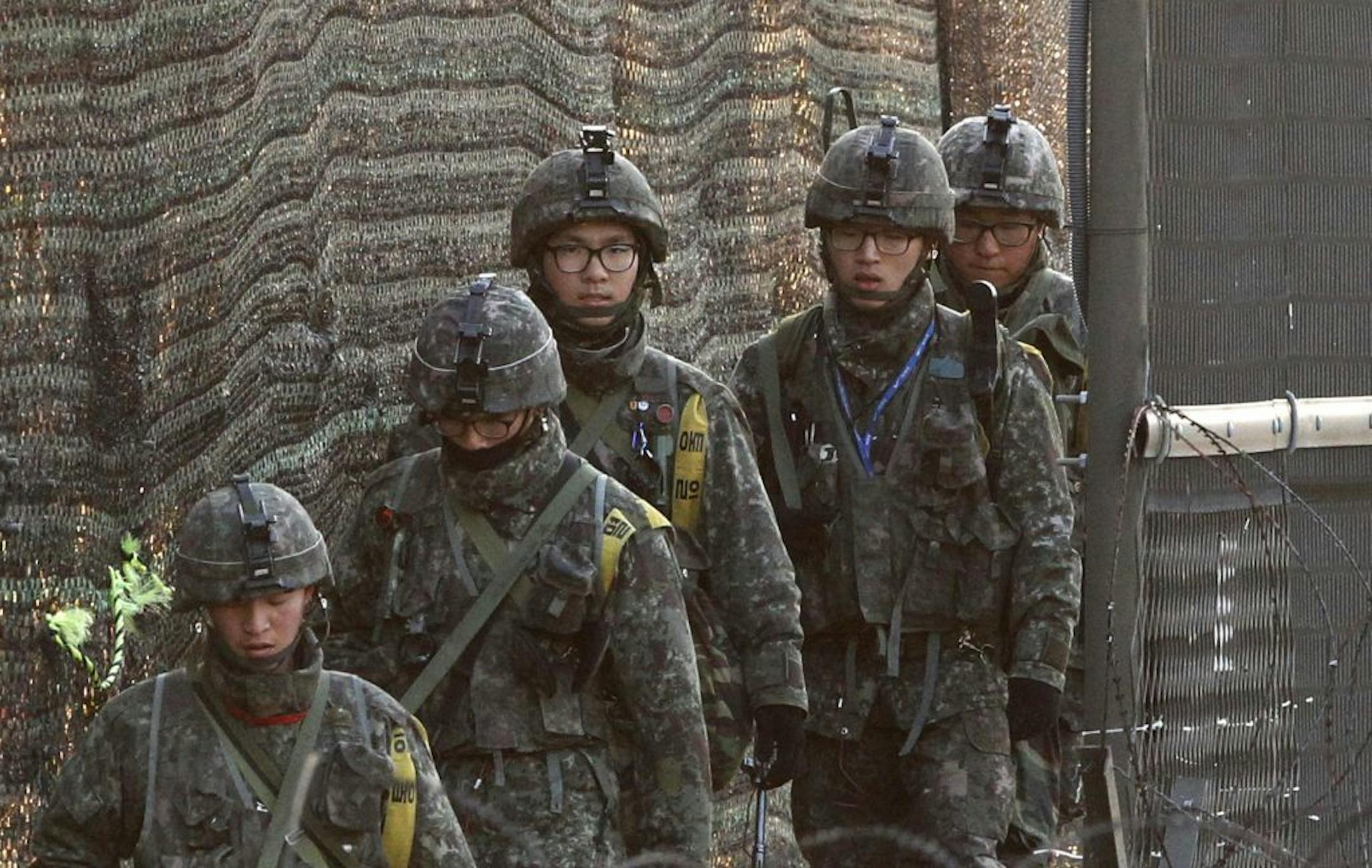
SEOUL, South Korea - A day after shutting down a key military hotline, Pyongyang instead used indirect communications with Seoul to allow South Koreans to cross the heavily armed border and work at a factory complex that is the last major symbol of inter-Korean cooperation.
Business was operating normally at the Kaesong industrial complex in North Korea, despite Pyongyang's shutting down of the hotline usually used to arrange passage for workers and goods through the Demilitarized Zone. The military communication channel, which consists of six telephone, fax and reserve lines, was virtually the last remaining direct link between the rival Koreas, which do not have diplomatic relations.
South Korean officials say North Korea has shut down the hotline but verbally approved the crossing Thursday by telling South Koreans at a management office at the factory in North Korea. Those South Koreans then called officials in South Korea. Both governments prohibit direct contact with citizens on the other side, but Kaesong has separate telephone lines that allow South Korean managers there to communicate with people in South Korea.
Technically, the divided Korean Peninsula remains in a state of war. North Korea also halted communications in 2009, creating a cross-border shutdown that left hundreds of South Korean workers stranded in the North for several days, until the line was restored.
The hotline shutdown follows a torrent of bellicose rhetoric in recent weeks from North Korea, which is angry about annual South Korea-U.S. military drills and U.N. sanctions over its nuclear test last month. North Korea calls the drills rehearsal for an invasion; Seoul and Washington say the training is defensive in nature and that they have no intention of attacking.
North Korea's threats and provocations are seen as efforts to provoke the new government in Seoul, led by President Park Geun-hye, to change its policies toward Pyongyang. North Korea's moves at home to order troops into "combat readiness" are seen as ways to build domestic unity as young leader Kim Jong Un strengthens his military credentials.
North Korea previously cut Red Cross phone and fax hotlines with South Korea, and another communication channel with the U.S.-led U.N. command at the border between the Koreas. Three other telephone hotlines used only to exchange information about air traffic were still operating normally Thursday, according to South Korea's Air Traffic Center.
North Korea said there was no need for communication between the countries in a situation "where a war may break out at any moment."


