

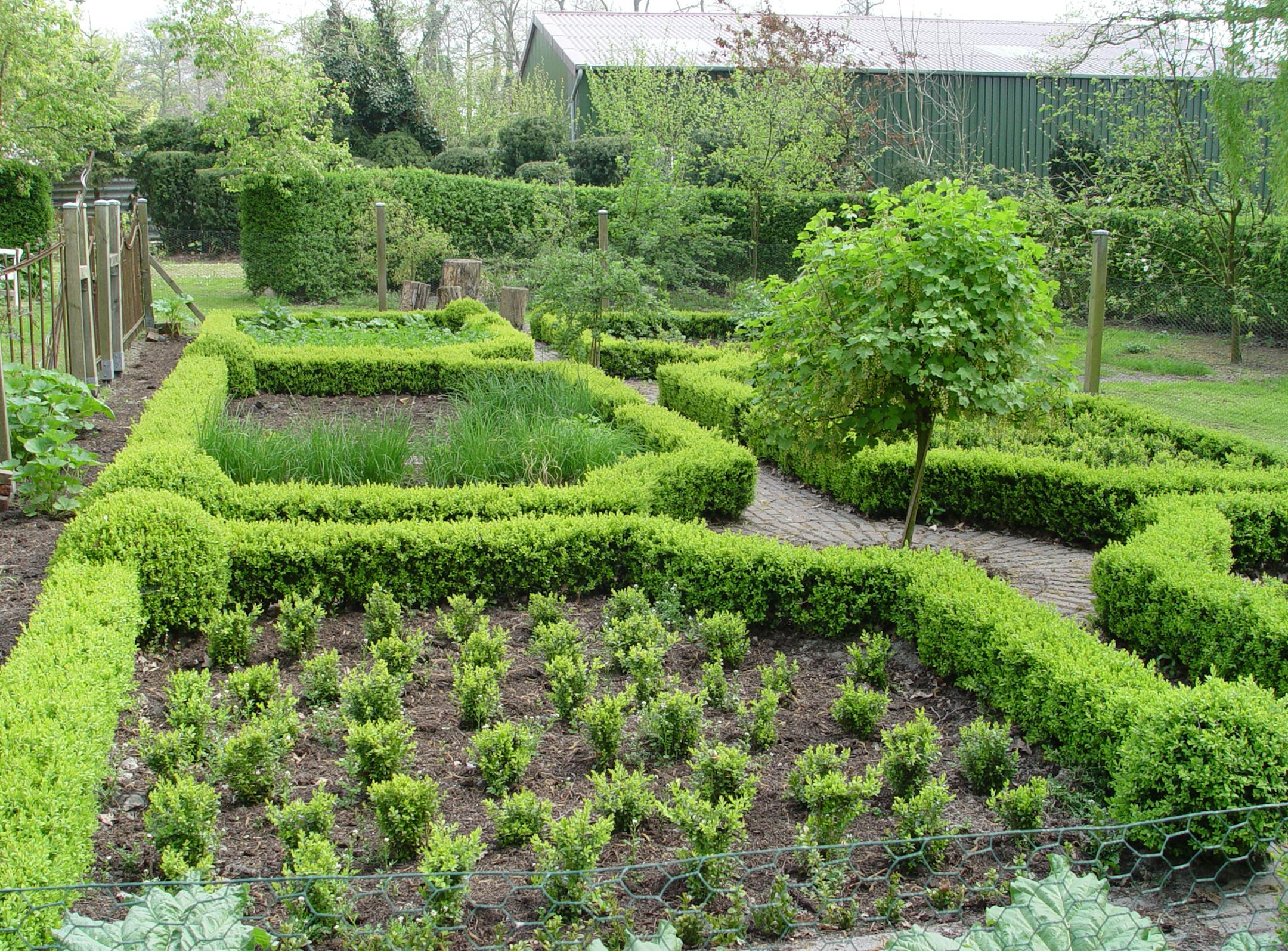
Romans were major gardeners in a time when most cultures were still hunting and gathering. But when the Roman Empire declined, much of Rome's agricultural development vanished. All that remained of it were ruins of villas in formerly conquered lands. The Roman home was a series of rooms that enclosed a central courtyard. Often this was divided into four equal spaces with a well or fountain at the center.
Centuries later, monastic communities of the early church sought the remains of these homes to house their many members. Self-sufficiency was vital to a monastery's survival, so the central courtyard became the root of the monastic gardens.
The Benedictines' St. Gall plan for monasteries featured three protected types of gardens: one for flowers to decorate the church, one for herbs and healing plants, and one for larger food crops. Smaller monasteries housed in old homes did not have the space for all of them, so a single garden would have to support all three endeavors.
In strongly Catholic France, this blended garden became known as a potager. Strictly translated, the word "potager" means "a thick and substantial soup" because all its ingredients could be grown in this single space. Most homes in the country depended on their potager in those early days of unpredictable food supplies.
As conditions grew safer for agriculture, the four-square garden was expanded with additional geometric zones for planting. These were laid out in creative beds that were worked by hand to hold both annual and perennial plants. Access was essential so that flowers could be cut, herbs plucked and vegetables picked without stepping off the adjacent walkway. The Renaissance brought this geometric approach to much larger sites, where the complexity of the patterns became a world-famous signature of French garden design.
The potager is making a comeback in America, too. It's one of the best ideas for replacing a greedy lawn with more-generous plants. But what is most appealing is that a potager can be laid out in beautifully symmetrical beds that can produce food while remaining highly ornamental. Flowers are a big part of the potager, and perennial herbs make these beds interesting year-round. For more elaborate landscapes, small hedges or brick edging tidy up the margins of planting areas, where they line pathways of pavers, gravel or decomposed granite.
If you're looking to replace a flat lawn, consider a series of geometric beds that can be devoted to food, flowers or both. Think creatively about how you shape your beds, whether raised or at grade.


