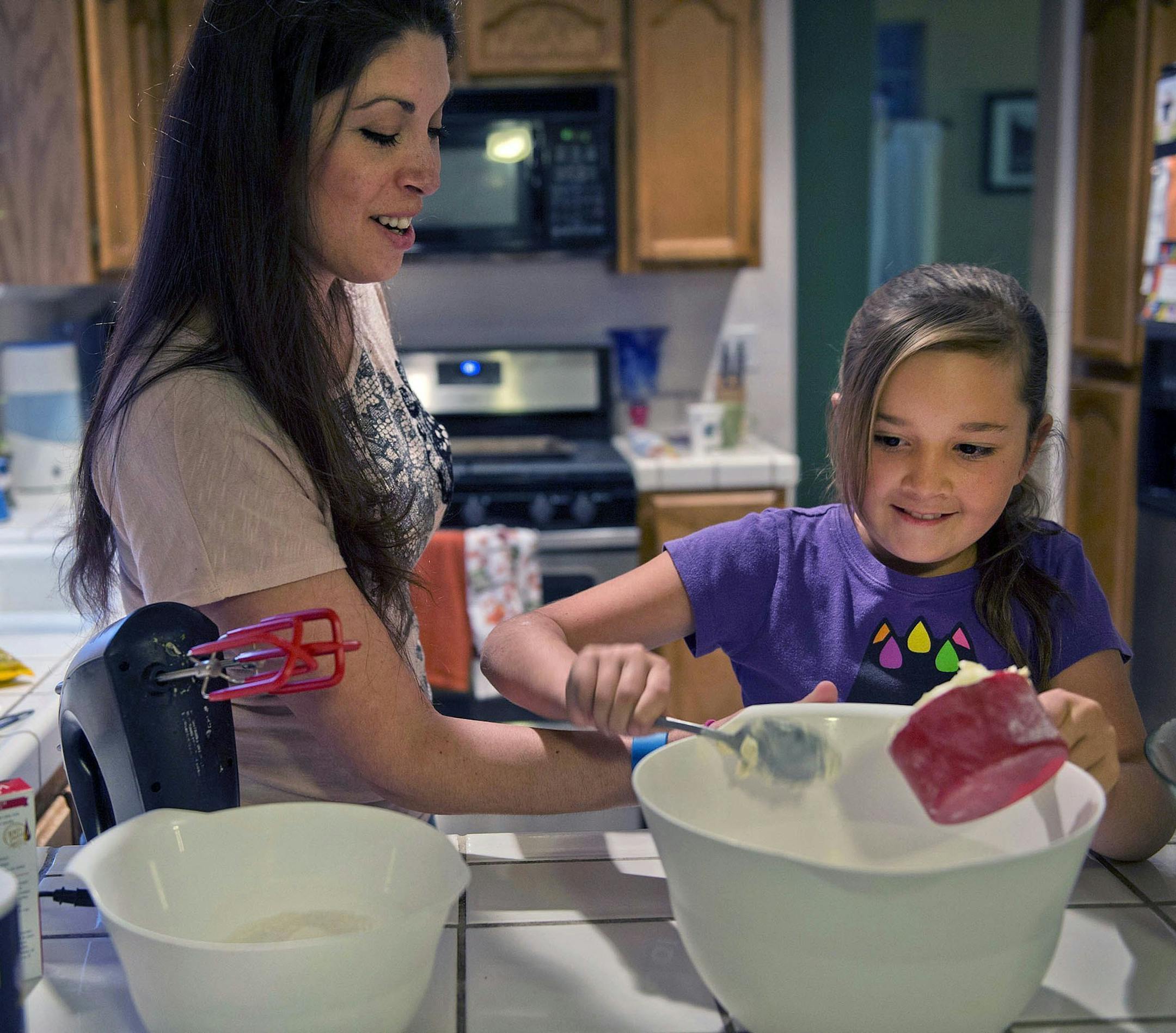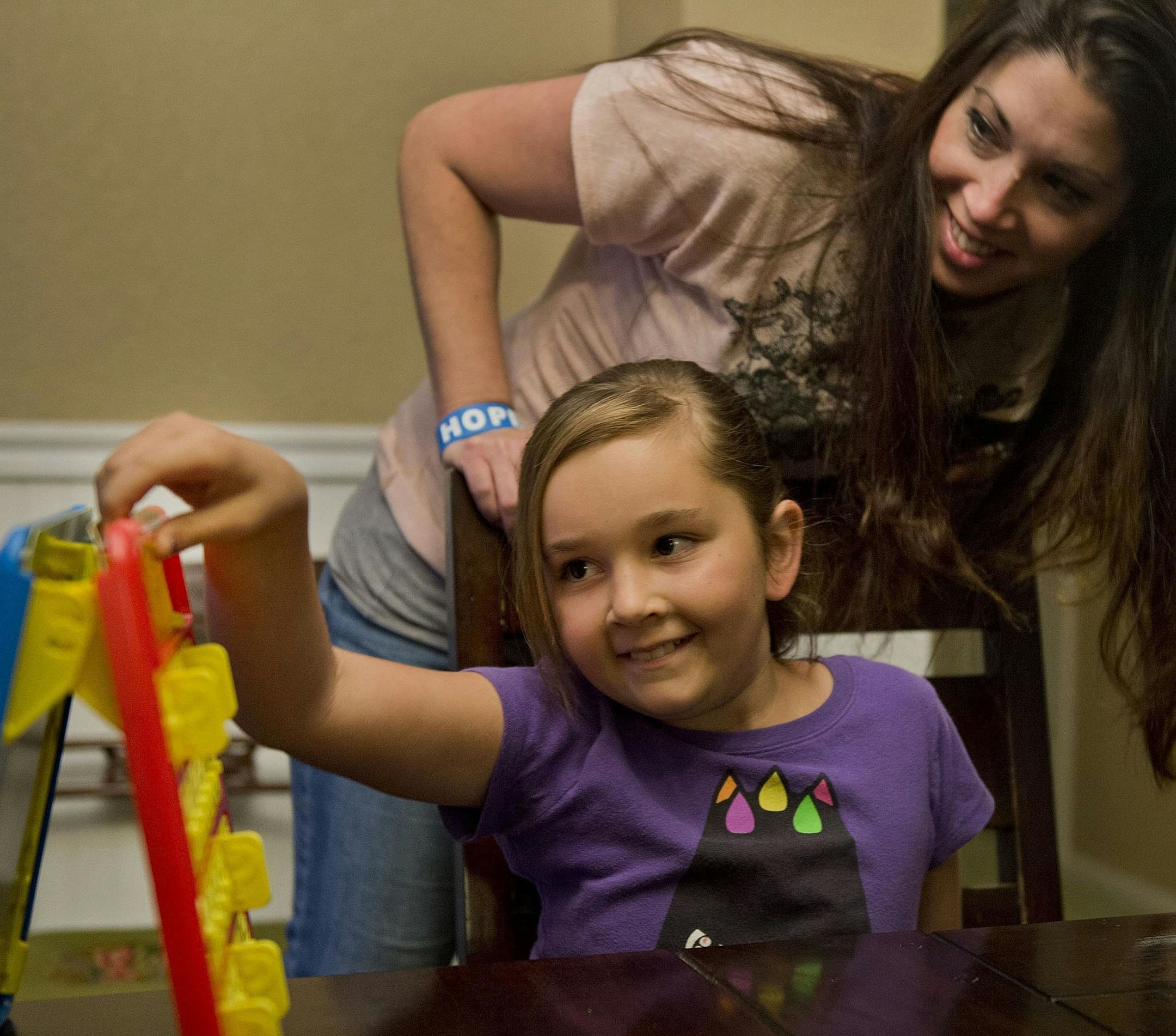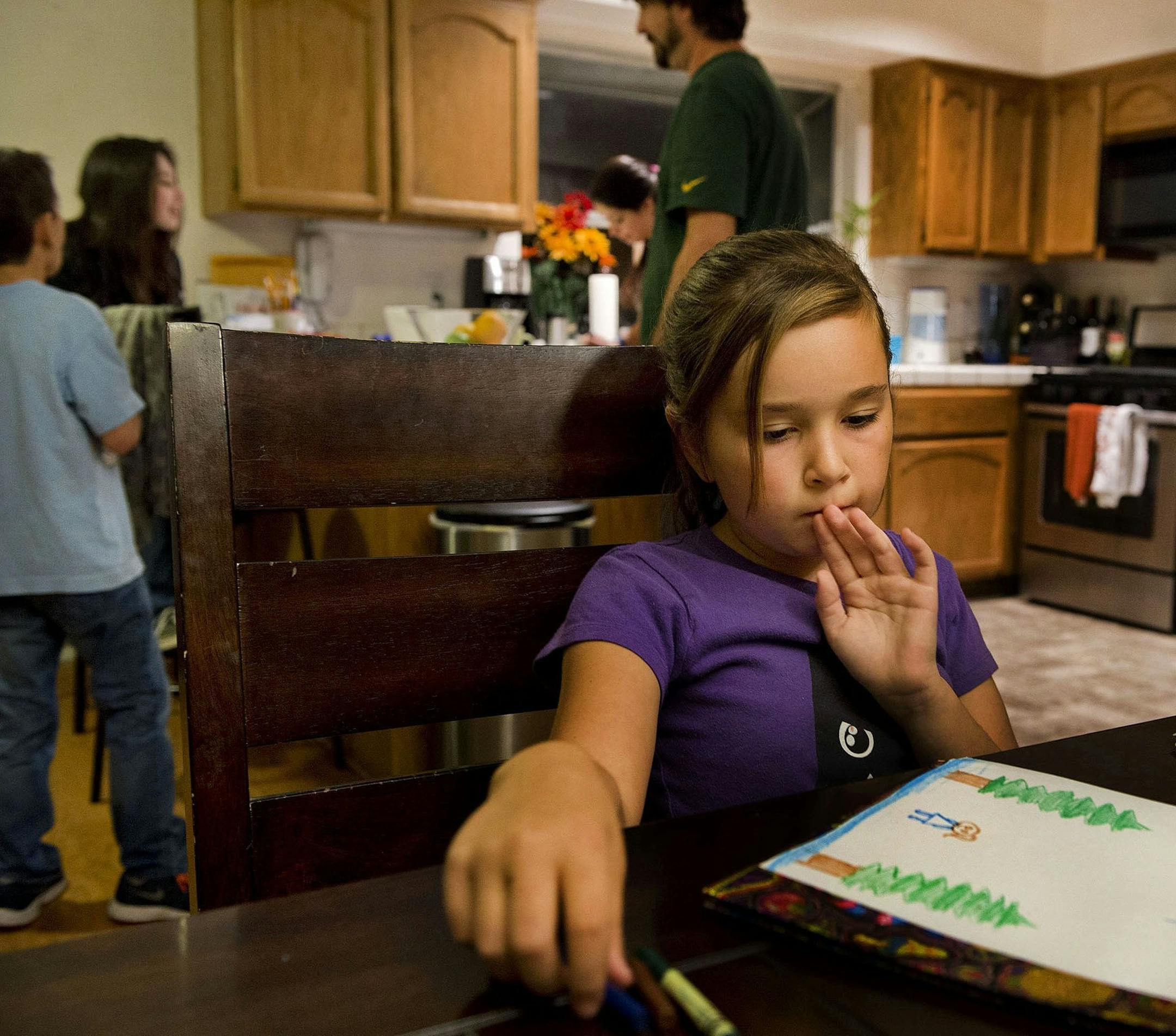
SACRAMENTO, Calif.
The ailments of old age have taken a toll on Evan Whisenant. In the past few years, she's dealt with osteoporosis and cataracts. She's gone through a couple of bouts with melanoma. Her lung function is low, and she has problems with her memory.
Much of this is to be expected as people grow older — but Evan is only 10, a fourth-grader living with her family in Antelope, Calif. And all of these maladies are side effects of the intense radiation and chemotherapy treatments she endured half her lifetime ago, when she beat a rare and especially tenacious form of leukemia.
"It's almost like this beautiful little soul is living in this body that looks 10 but is really a lot older," said Evan's mother, Shannon Whisenant, 34. "She's so spirited and strong.
"There's not a day I'm not grateful for her. But there are also points where I wonder who she would have been. The things we did have long-lasting complications."
This is the reality lurking on the other side of survival. When children are diagnosed with cancer, families fight so hard for them to make it; their lives are a gift. But the miraculous treatments that save childhood cancer patients can also, years after the fact, make them susceptible to secondary cancers and other health problems — a range of illnesses known as late effects.
Now researchers are learning that late effects can include not only the early development of the illnesses of old age but also the premature onset of frailty — physical weakness, exhaustion and low muscle mass seen in people of advanced age.
'Profound' problems
The numbers are startling. St. Jude Children's Research Hospital research shows that 80 percent of adults who beat cancer as kids have a chronic, perhaps life-threatening health condition by the time they reach age 45. More than half have heart abnormalities by that age. Another 65 percent have impaired lung function, and 48 percent have memory impairment.