Khmer bronze sculptures shine at Minneapolis Institute of Art

“Royal Bronzes: Cambodian Art of the Divine” includes more than 200 objects.

The Minnesota Star Tribune
October 30, 2025 at 11:00AM
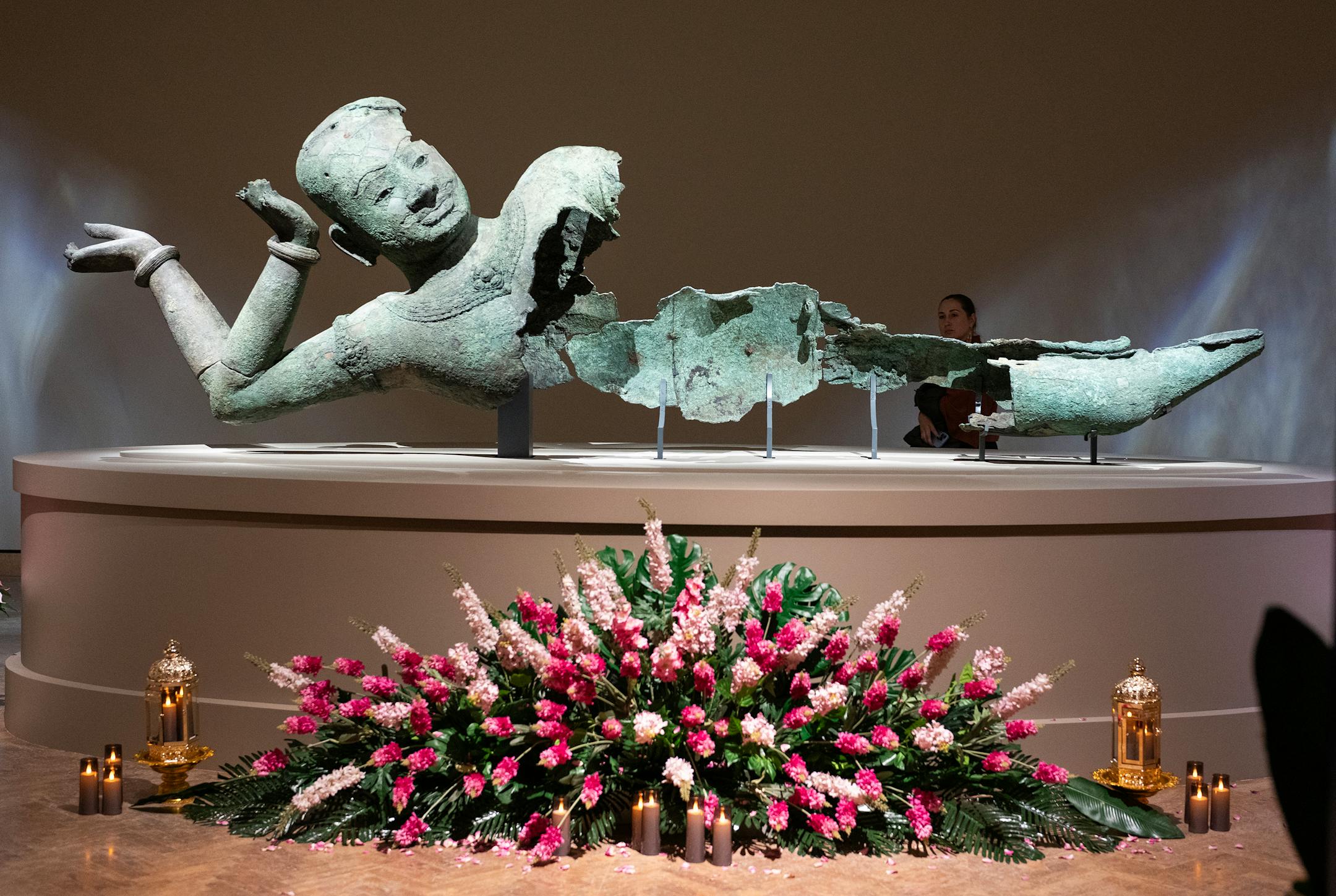
The West Mebon Reclining Vishnu starts and ends the powerful exhibition "Royal Bronzes: Cambodian Art of the Divine" at the Minneapolis Institute of Art. (Richard Tsong-Taatarii/The Minnesota Star Tribune)

Orange-clad Cambodian monks and women with red-and-blue sashes representing the national flag bless and welcome a 1-ton bronze statue of Vishnu.

They traveled from the Watt Munisotaram Pagoda in Farmington for the opening of “Royal Bronzes: Cambodian Art of the Divine” at the Minneapolis Institute of Art.

“This is the first time in the U.S., and especially with this connection of the fragments to the body,” said Chhay Visoth, director of the National Museum of Cambodia. “Commonly you see only the body, but this is a great chunk, the first time we show the body and the bust together.”
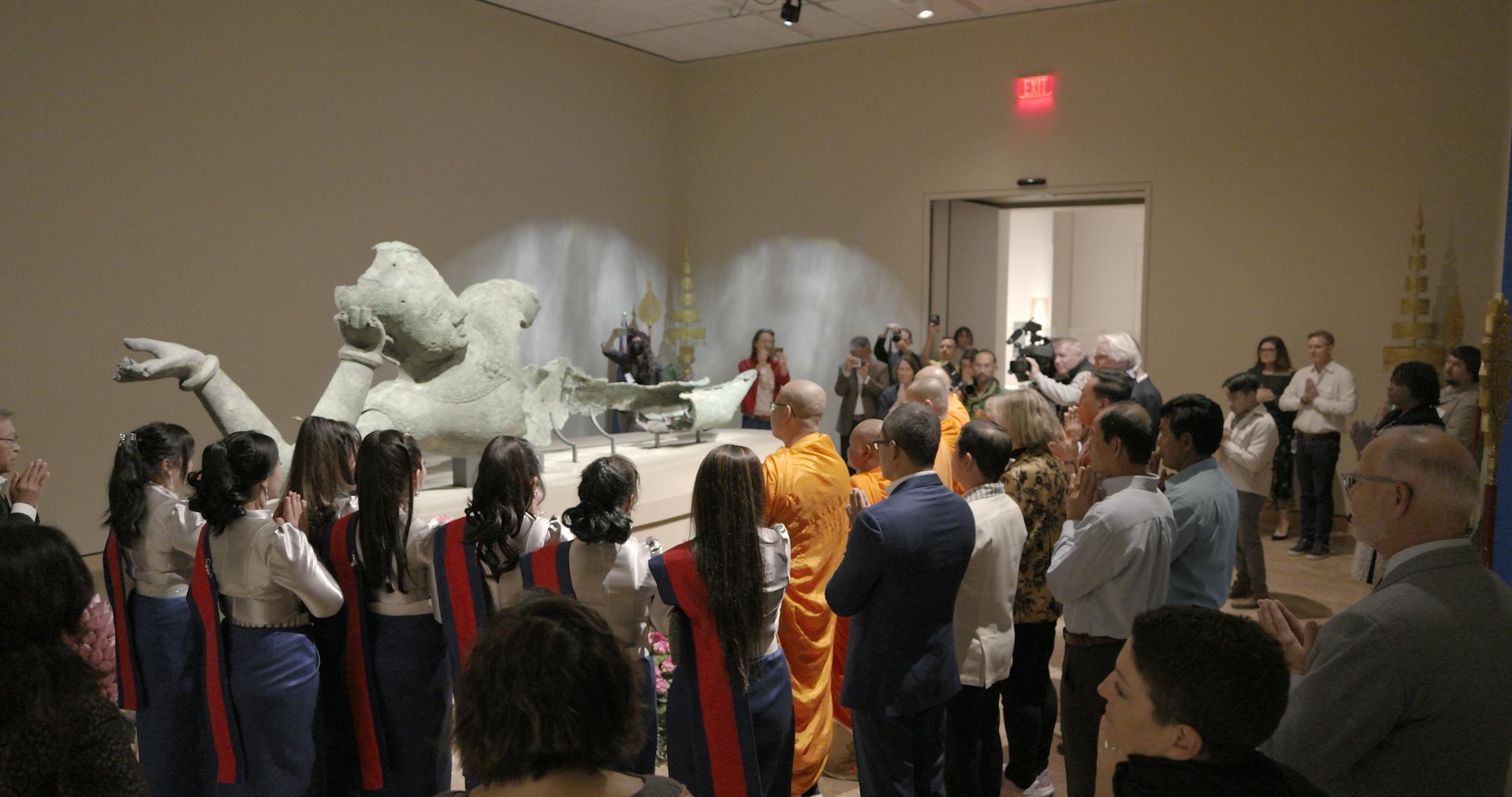
Cambodian Buddhist monks and female singers from Watt Munisotaram Pagoda in Farmington bless the reclining Vishnu, found in 1936 in the middle of a lake in West Baray, Cambodia. (Minneapolis Institute of Art)

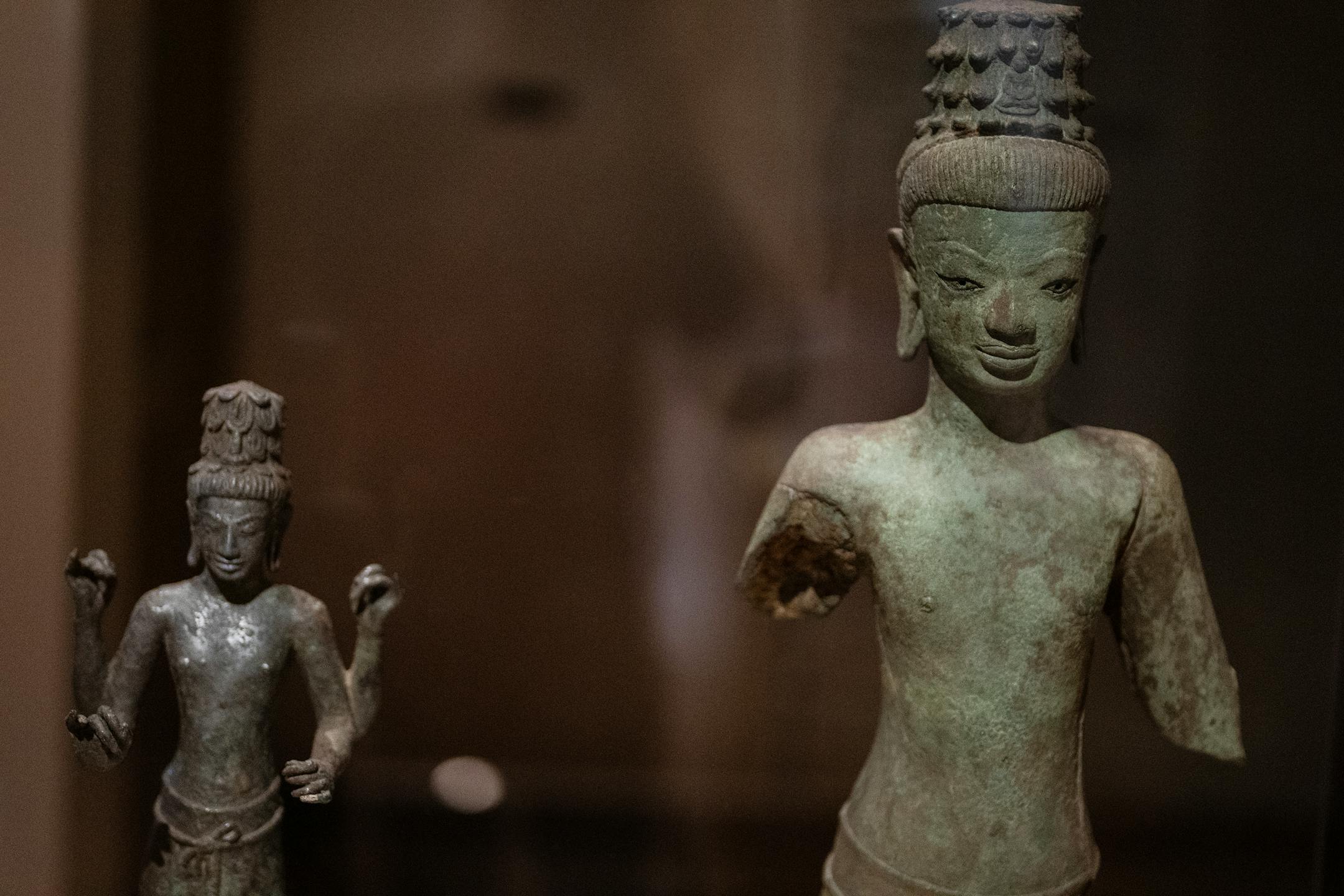
It is one of nearly 200 precious objects in the exhibition organized in partnership with the Guimet Museum of Asian Arts in France and the National Museum of Cambodia. The exhibition offers a rare peek into bronze sculptures of the Khmer Empire, 802–1431.

For Cambodians, these precious objects aren’t “artwork” as Westerners think of them.

“We can see the value of these objects is important because we can feel that this is our ancestors’ souls,” Visoth said.

The exhibition opened just a week after the brazen Louvre heist on Oct. 19. A decade of scientific research and restoration of the West Mebon Reclining Vishnu took place in the Louvre Laboratory.
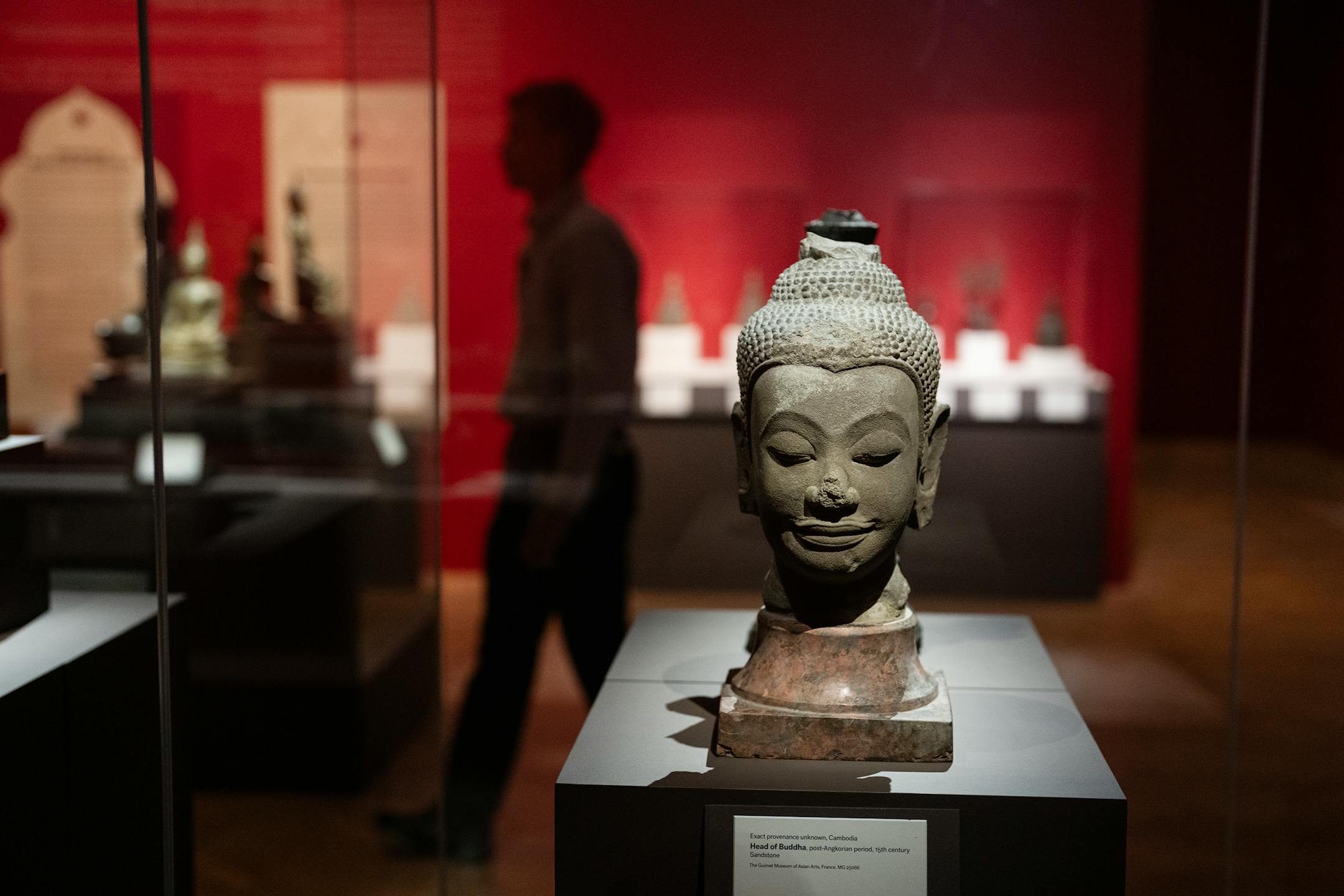
A 15th century Buddha head is on view in "Royal Bronzes: Cambodian Art of the Divine" at the Minneapolis Institute of Art. (Richard Tsong-Taatarii/The Minnesota Star Tribune)

Pierre Baptiste, head curator at the Guimet, pointed out that this exhibition went beyond architectural design and sculptural work.
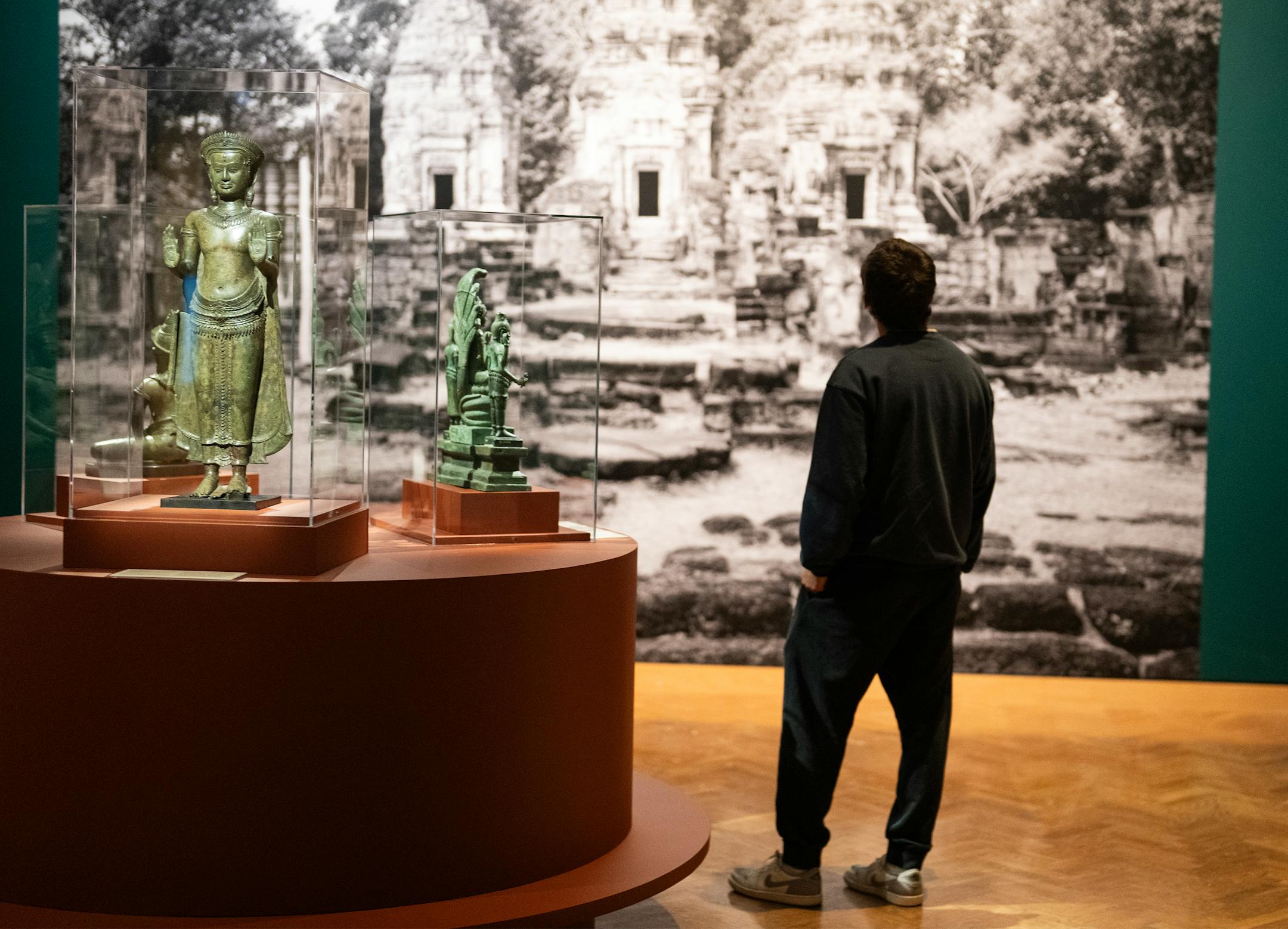
“The idea here was to provide a closer view of the specific technology of bronze casting in Cambodia,” Baptiste said.

The Guimet loaned 50 pieces for this exhibition. Another 126 came from the National Museum of Cambodia.

“This is my privilege to see it,” said Soklynna Som of Farmington, who sang in the blessing ceremony. “I felt like its spirit is still alive.”

Som fled Cambodia with her family at age 6 during the brutal Khmer Rouge dictatorship, led by French-educated Pol Pot, who ruled from 1975-1979 and killed more than 2 million people out of a population of 8 million. She lived in a refugee camp in Thailand for 10 years before coming to the United States.

More than 200 bronze sculptures are on view in "Royal Bronzes: Cambodian Art of the Divine” at the Minneapolis Institute of Art. (Richard Tsong-Taatarii/The Minnesota Star Tribune)

Nearly 12,000 Cambodians live in Minnesota, with three-quarters of the population in the Twin Cities. Around 158,000 Cambodians came to the United States after 1975, mostly as refugees.

Cambodia’s cultural history changed dramatically with the rise of the Khmer Rouge. Looters tore through the country, illegally trafficking artworks and selling them to Western museums and private collectors.

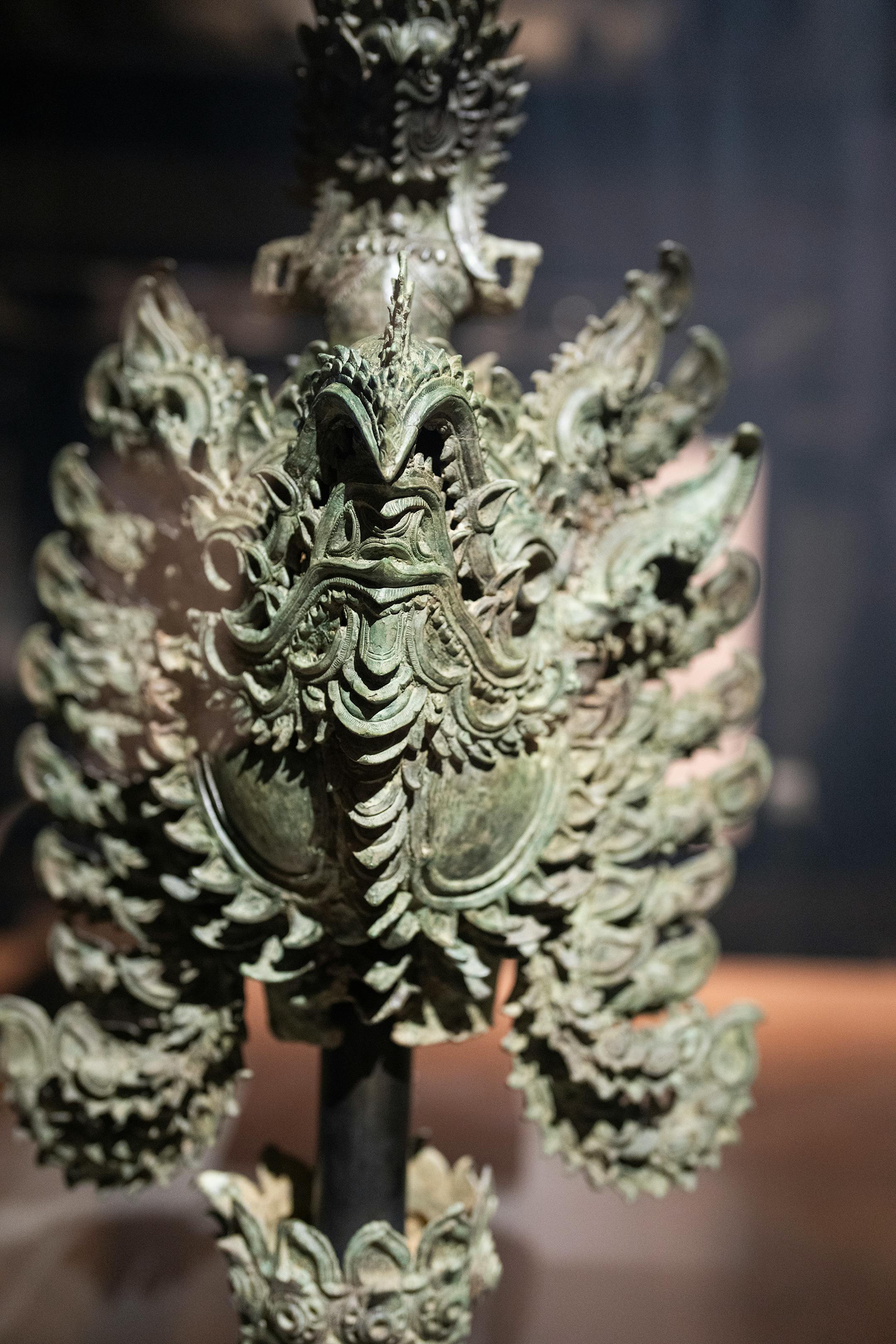
Disgraced British art dealer Douglas Latchford gifted two bronzes that are in the show: the ninth century bronze Bodhisattva Lokeshvara and the Figurehead Featuring Garuda of the 12th-13th centuries

The exhibition is divided into five sections: origins of copper metallurgy, casting for the king, honoring the gods, the fall of Angkor and the rise of Buddhism, and the unearthing of the reclining Vishnu in 1936 by the French after Cambodian people told them its whereabouts.

Figurehead Featuring Garuda takes the form of a "naga," or serpent, and a "garuda," a mythical birdlike creature from the Angkorian period. Disgraced British art dealer Douglas Latchford returned it in 2011. (Richard Tsong-Taatarii/The Minnesota Star Tribune)

France colonized Cambodia in 1863, and Cambodia gained full independence in 1953.

And French and Cambodian efforts led to restoration of the Anantashayana Vishnu.

Visoth said that the Cambodians don’t want it to leave the country again.

The French and Cambodian team built a mount that makes it look like Vishnu is floating on the water with parts of his body intact.

“He is a god, he is on the water, but it is cosmic water, so we didn’t want it to be put directly on the pedestal,” Baptiste said.

An eighth century bronze sculpture of Bodhisattva Maitreya comes to Minneapolis from the Guimet Museum in France. (Richard Tsong-Taatarii/The Minnesota Star Tribune)

‘Royal Bronzes: Cambodian Art of the Divine’

When: Ends Jan. 18.

Where: Minneapolis Institute of Art, 2400 3rd Av. S.

Hours: 10 a.m.-5 p.m. Tue., Wed., Fri.-Sun, 10 a.m.-9 p.m. Thu.

Cost: $16-$20, free for ages 17 and under

about the writer

about the writer

Alicia Eler

Critic / Reporter

Alicia Eler is the Minnesota Star Tribune's visual art reporter and critic, and author of the book “The Selfie Generation. | Pronouns: she/they ”

See Moreicon

More from Stage & Arts

See More
card image
Dan Norman Photography

Lavina Jadhwani died at 42 a month before rehearsals, leaving her “Carol” team gutted.

card image
card image