

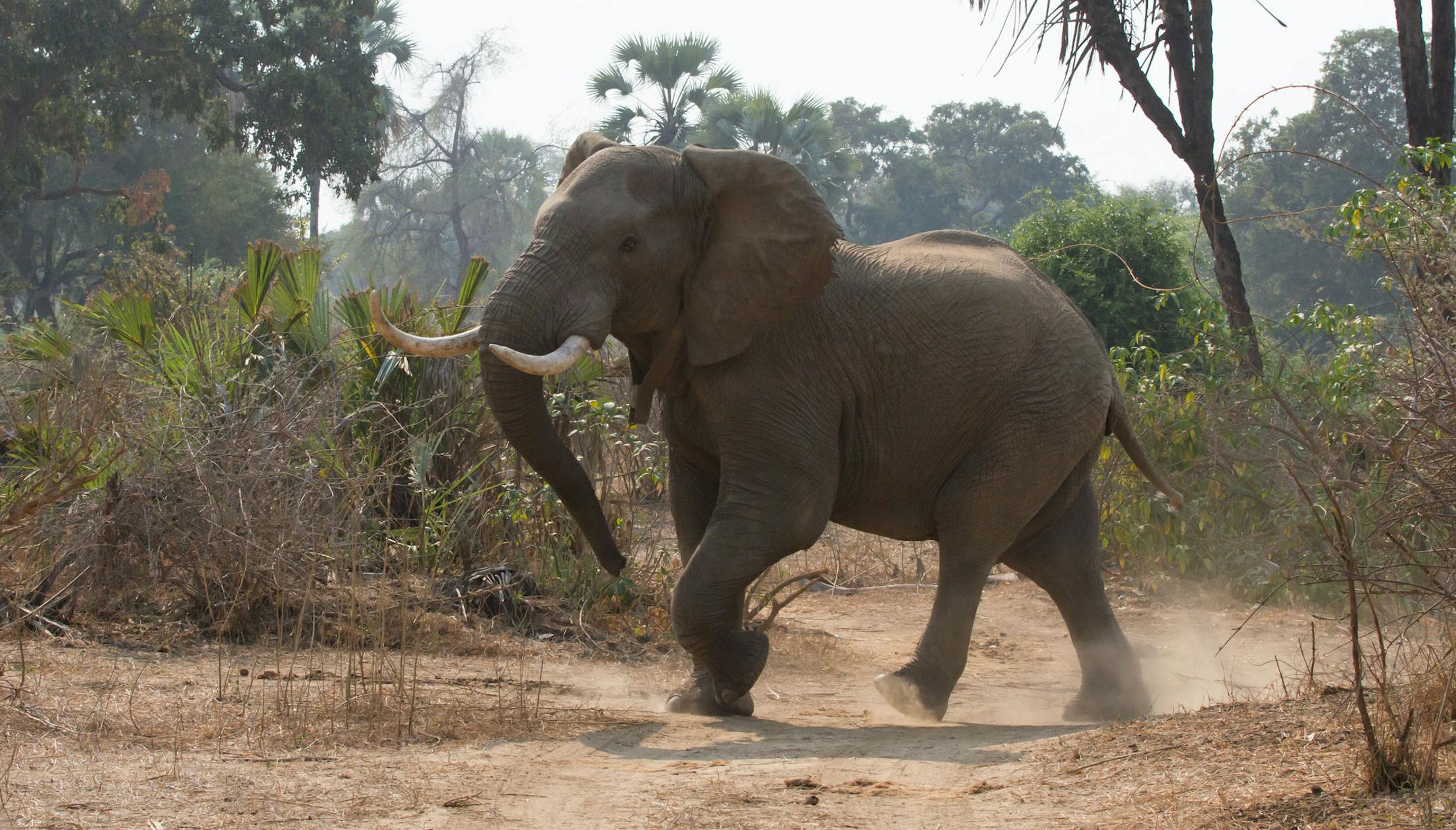
There is bad timing, and then there is this. Last week, an apparent military coup placed Zimbabwean President Robert Mugabe in custody, ushering in a new period of political uncertainty. A few days later, the Trump administration announced that Zimbabwe's government could be trusted to manage its elephant population responsibly, and so a ban on importing Zimbabwean elephant trophies — body parts of animals U.S. hunters have slaughtered — would be lifted.
Fortunately, President Donald Trump said Friday that he would review this unwise decision, which ought not to stand.
African elephants are in crisis, and the U.S. should not do anything that could endanger them further. Counterintuitively, well-managed trophy hunting could, on balance, help fund enforcement efforts and local communities that might otherwise poach nearby animals. But, as House Foreign Affairs Committee Chairman Edward R. Royce, R-Calif., said: "In this moment of turmoil, I have zero confidence that the regime — which for years has promoted corruption at the highest levels — is properly managing conservation programs."
This and other pushback appeared to prompt Trump's welcome intervention. Any sensible review would recommend keeping the ban, for now.
Conservation advocates say Zimbabwe used to have decent programs. The U.S. could have more confidence then that the heads and tusks hunters brought back were legally hunted under requirements that the hunt did not further endanger the already precarious African elephant population. But, environmentalists lament, in the past decade Zimbabwe's deteriorating political situation and accompanying corruption undermined the government's stewardship. The Obama administration in 2015 banned elephant trophies from Zimbabwe, while continuing to allow their import from places with stronger governance, such as South Africa.
In seeking to reverse that call, the U.S. Fish and Wildlife Service argued that Zimbabwe's government has a management program in place to impose sensible hunting limits. Missing, though, was evidence that the program is working on the ground. Yet the agency decided to move ahead anyway — until, that is, Trump suddenly and thankfully halted the move.
A trophy ban won't save the African elephant. The largest threat continues to be poaching for large-scale tusk harvesting to satisfy the international ivory trade. But the trophy ban has done good. The threat of a ban creates a large incentive for African countries seeking tourist dollars from American safari hunters to ensure their hunts are sustainable. Now is not the time for the U.S. to take the pressure off Zimbabwe.
FROM AN EDITORIAL IN THE WASHINGTON POST


