

HOW MOSQUITOES BITE.
The mosquito has a proboscis like an elephant, only not so large. It will, however, look nearly as large under a good microscope. He cannot do so many handy things with it as the elephant can, with his, but he can cause a good deal of annoyance with it in a small way. It is hardly the thing to say that the mosquito bites us, for he has not teeth. The microscope reveals the fact that he carries a pair of scissors inside of his proboscis; the neatest and sharpest little cutting tools you ever saw. He gets his living by these. They are two delicate little blades, and are placed alongside each other. When he is ready to make a meal off of us, he first buzzes around with those beautiful wings and sings a pleasant little song. If we let him quietly settle down, he picks out a place on our skin which is just to his liking. He is very delicate about it. When he gets ready, he puts his proboscis down, and pushes the little scissors out, and makes a neat cut, so that he can suck the blood out. Then he drinks as much blood as he wants, and he is done with his dinner, but he does not leave yet. He is going to pay his bill. He has taken our blood, and he will leave us something in exchange for it. With all his faults, he is an honest little fellow – after his fashion. He has the pay in his pocket, ready to squeeze out before he goes. It is poison, but that makes no difference to him. It is the best he has to give us. His poison pocket is at the head of his proboscis, and at the lower end of his proboscis he has another little pocket, into which he puts poison enough for one dose. This poison is very powerful. A very little makes the place where the mosquito puts it very sore. After he has sucked our blood he puts the drop of poison into the place he took the blood from. It is not the bite or cut that the mosquito makes that hurts us, but the dropping of this powerful poison into our flesh. If this mosquito were large enough to give a powerful dose of this poison, it would be bad for us. If we were as big as a kitten, and his poison as strong in proportion, a "bite" from him would kill us.
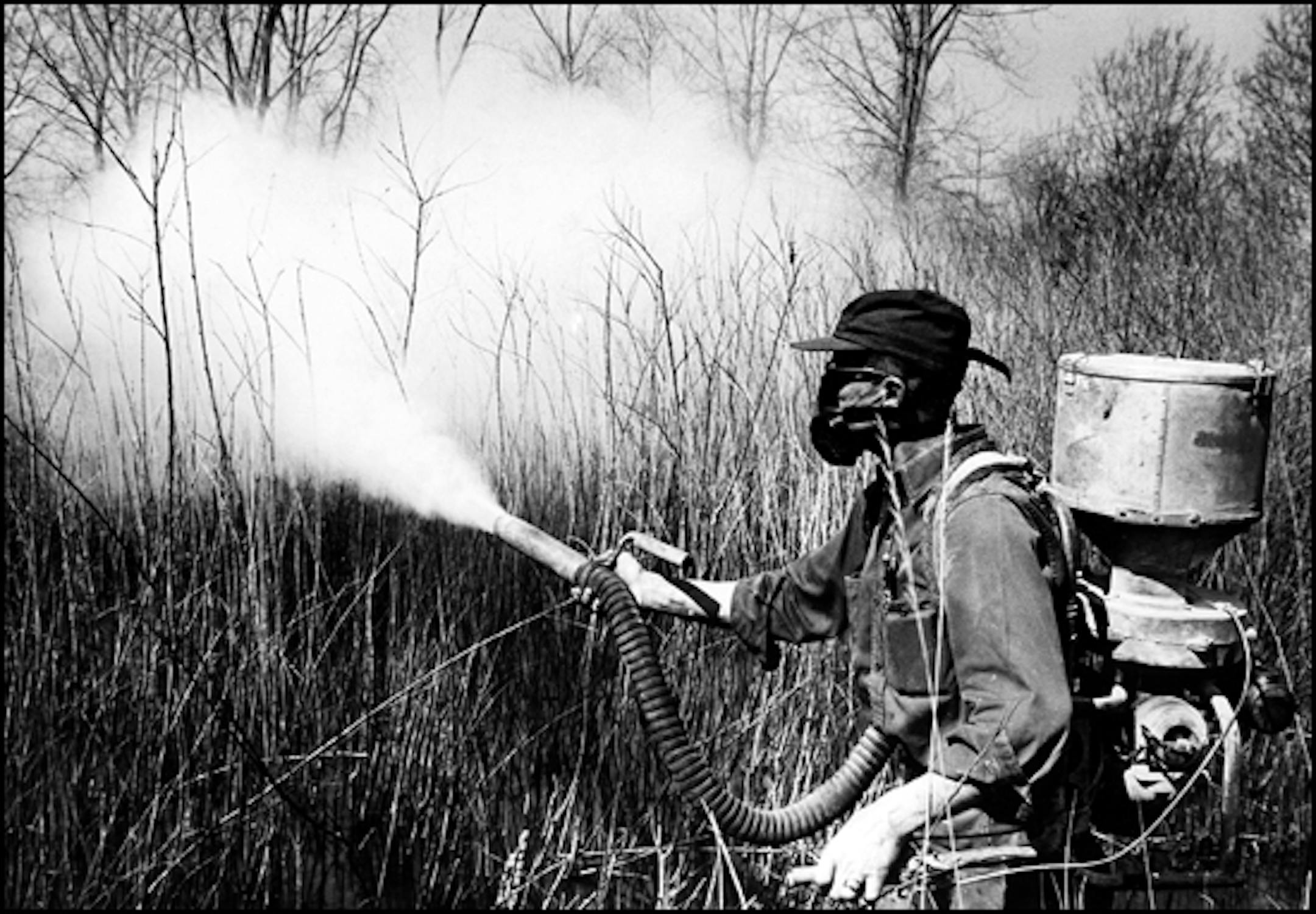
The Metropolitan Mosquito Control District has been taking it to our unofficial state bird since 1958. It's not clear what Kenneth Shoberg, above, was spraying on a swampy patch of land near Hwy. 7 and W. Lake Street in St. Louis Park in April 1965. But until 1968, the agency applied hundreds of thousands of pounds of DDT each year to breeding sites around the metro area. The United States banned the pesticide four years later. The agency now relies on such insecticides as permethrin and on bacillus thuringiensis israelensis, a naturally occurring bacterium that destroys the mosquitoes' digestive tracts. Take that, you little buggers. (Minneapolis Tribune photo by Russell Bull)
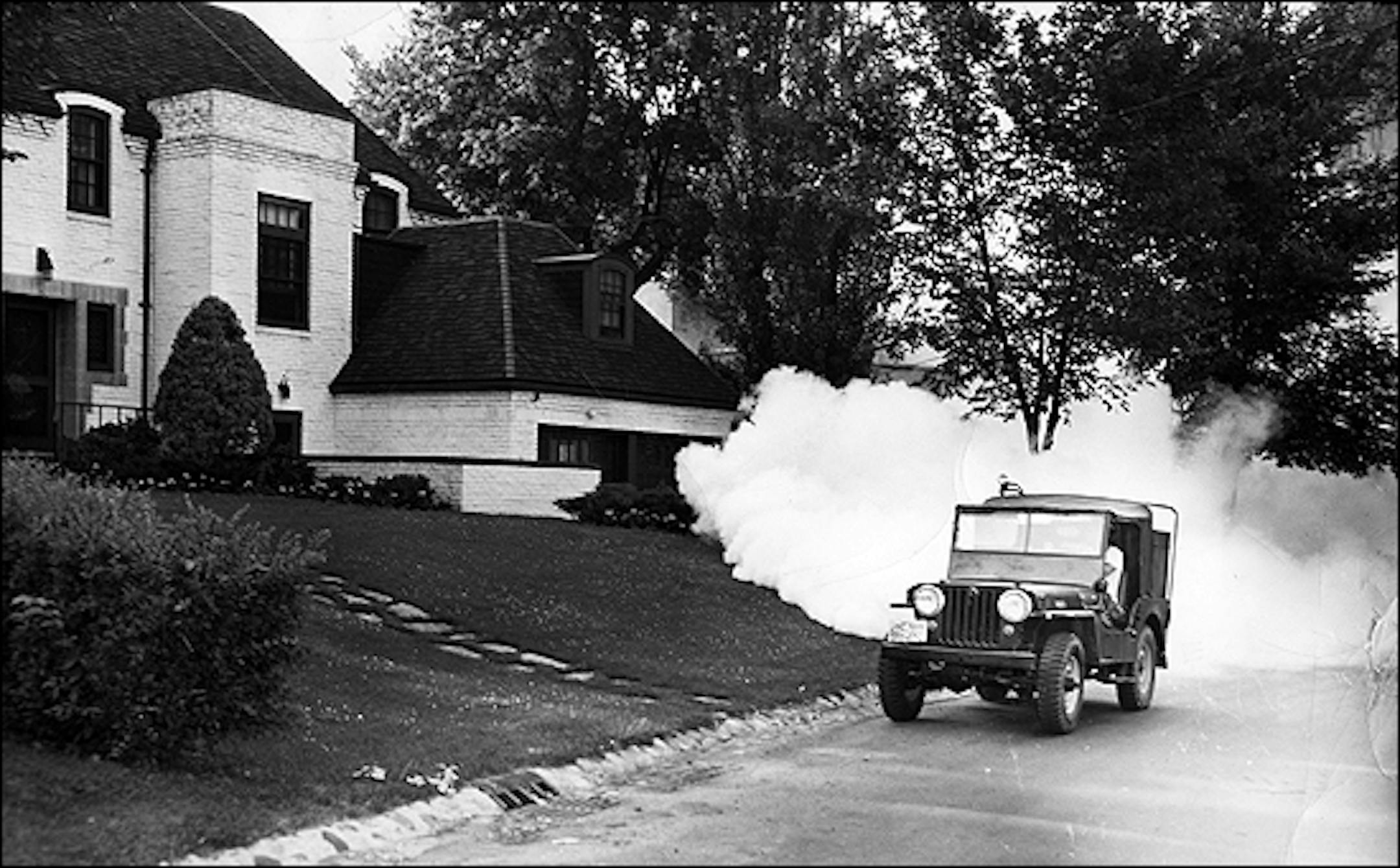
After serving in the military during World War II, "two fighting Irishmen" from St. Paul, Ed and Bert Cochran, engaged in a war on mosquitoes in the Twin Cities. In 1949, homeowners paid $40 for a DDT treatment every six or seven days from May 1 to Oct. 1. Here Ed Cochran gave the Cedar Shores community a thorough taste of the insecticide. (Minneapolis Star photo)


