

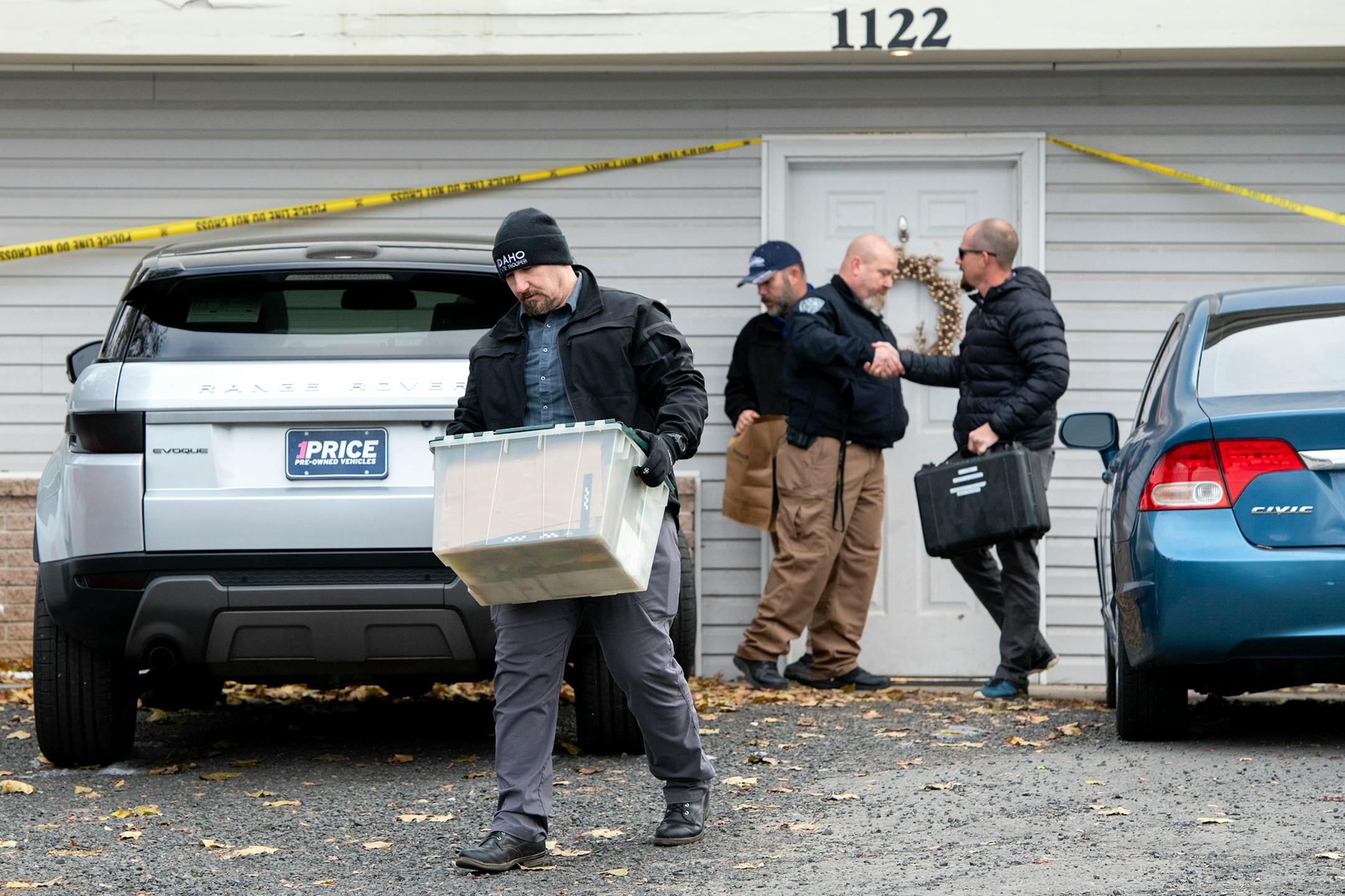
BOISE, Idaho — Attorneys for a man charged with murder in connection with the killings of four University of Idaho students are asking a judge to throw out most of the evidence in the case because they say it all hinges on an unconstitutional genetic investigation process.
Bryan Kohberger's defense team also contends that the search warrants in the case were tainted by police misconduct. A two-day hearing on the matter started Thursday, and much of it was closed to the public. If they are successful, it could throw a major wrench in the prosecution's case before trial starts in August.
Kohberger is charged with four counts of murder in the deaths of Ethan Chapin, Xana Kernodle, Madison Mogen and Kaylee Goncalves, who were killed in the early morning of Nov. 13, 2022, at a rental home near campus in Moscow, Idaho. When asked to enter a plea last year, Kohberger stood silent, prompting a judge to enter a not-guilty plea on his behalf. Prosecutors have said they will seek the death penalty if Kohberger is convicted.
Kohberger's attorneys say law enforcement violated his constitutional rights when they used a process called Investigative Genetic Genealogy, or IGG, to identify possible suspects.
''The court should suppress the IGG identification and everything that flows from that,'' defense attorney Anne Taylor told the judge Thursday, shortly after the hearing was opened to the public. ''There was no warrant for several phases of the search that led to the IGG work, and we think for every single one of those stages a warrant was required.''
The IGG process often starts when DNA found at the scene of a crime doesn't yield any results through standard law enforcement databases. When that happens, investigators may look at all the variations, or single nucleotide polymorphisms, that are in the DNA sample. Those SNPs, or ''snips,'' are then uploaded to a genealogy database like GEDmatch or FamilyTreeDNA to look for possible relatives of the person whose DNA was found at the scene.
In Kohberger's case, investigators said they found ''touch DNA," or trace DNA, on the sheath of a knife that was found in the home where the students were fatally stabbed. The FBI used the IGG process on that DNA and the information identified Kohberger as a possible suspect.
Taylor said police never sought warrants to analyze the DNA found at the crime scene, nor did they get warrants to analyze the DNA of potential relatives that had been submitted to genealogy databases. Then, she said, the FBI violated its own Investigative Genetic Genealogy interim policy by running the data through a database that wasn't approved under the policy.
