

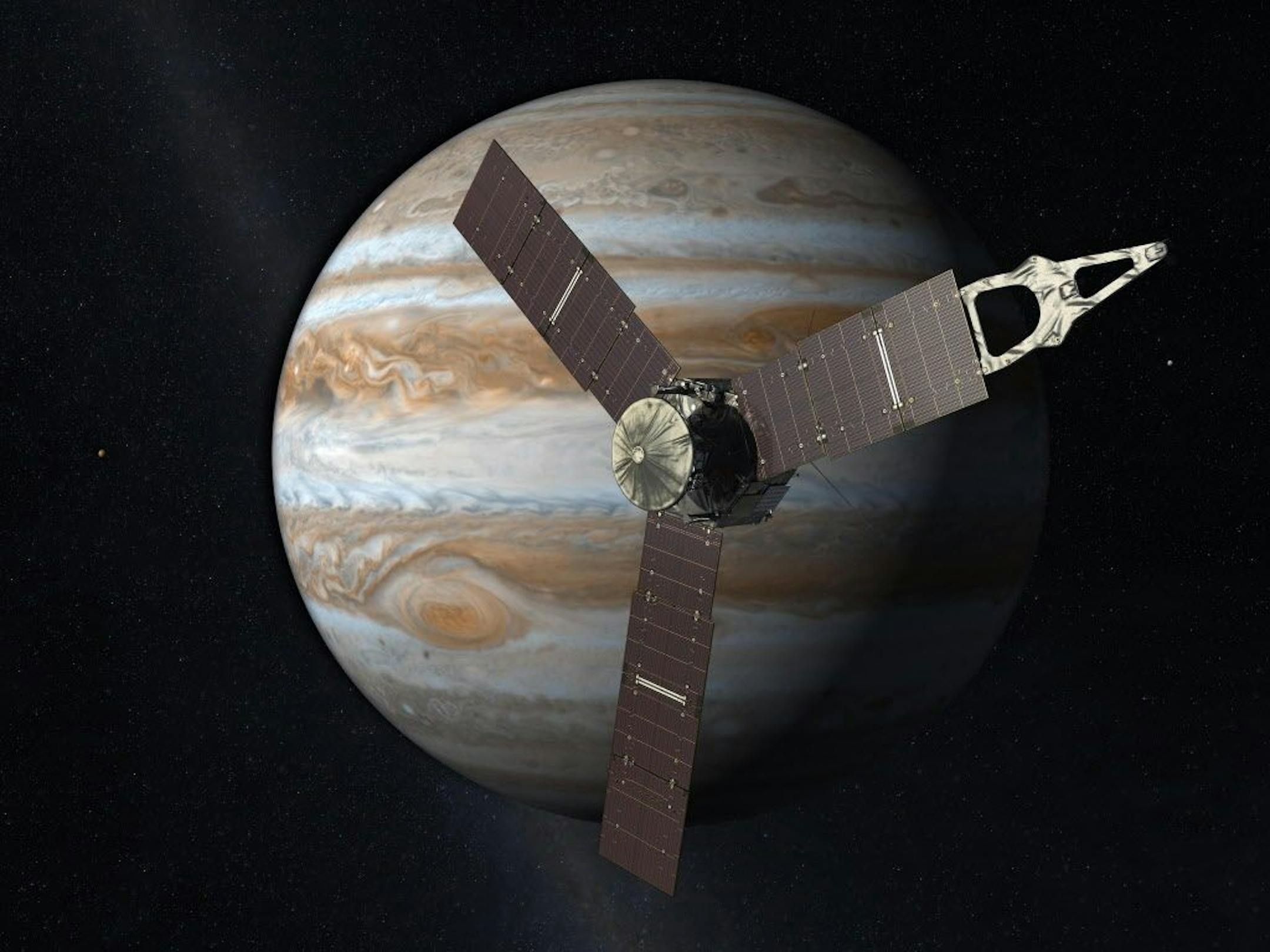
LOS ANGELES — Jupiter takes center stage with the arrival next week of a NASA spacecraft built to peek through its thick, swirling clouds and map the planet from the inside out.
The solar-powered Juno spacecraft is on the final leg of a five-year, 1.8 billion-mile (2.8 billion-kilometer) voyage to the biggest planet in the solar system.
Juno promises to send back the best close-up views as it circles the planet for a year. Jupiter is a gas giant made up mostly of hydrogen and helium unlike rocky Earth and its neighbor Mars. The fifth planet from the sun likely formed first and it could hold clues to how the solar system developed.
A look at the $1.1 billion mission:
THE ARRIVAL
As Juno approaches Jupiter late Monday, it will fire its main rocket engine to slow down and slip into orbit around the planet. This carefully orchestrated move, all preprogrammed, is critical because Juno will zip past Jupiter if it fails to brake. The engine burn — lasting about a half hour — is designed to put Juno on a path that loops over Jupiter's poles.
Since it takes 48 minutes for radio signals from Jupiter to reach Earth, mission controllers at NASA's Jet Propulsion Laboratory in Southern California won't be able to intervene if something goes awry. They'll watch for beeps from Juno that'll signal whether the engine burn is going as planned.
"Everything's riding on it," Juno chief scientist Scott Bolton said Thursday during a press briefing.


