

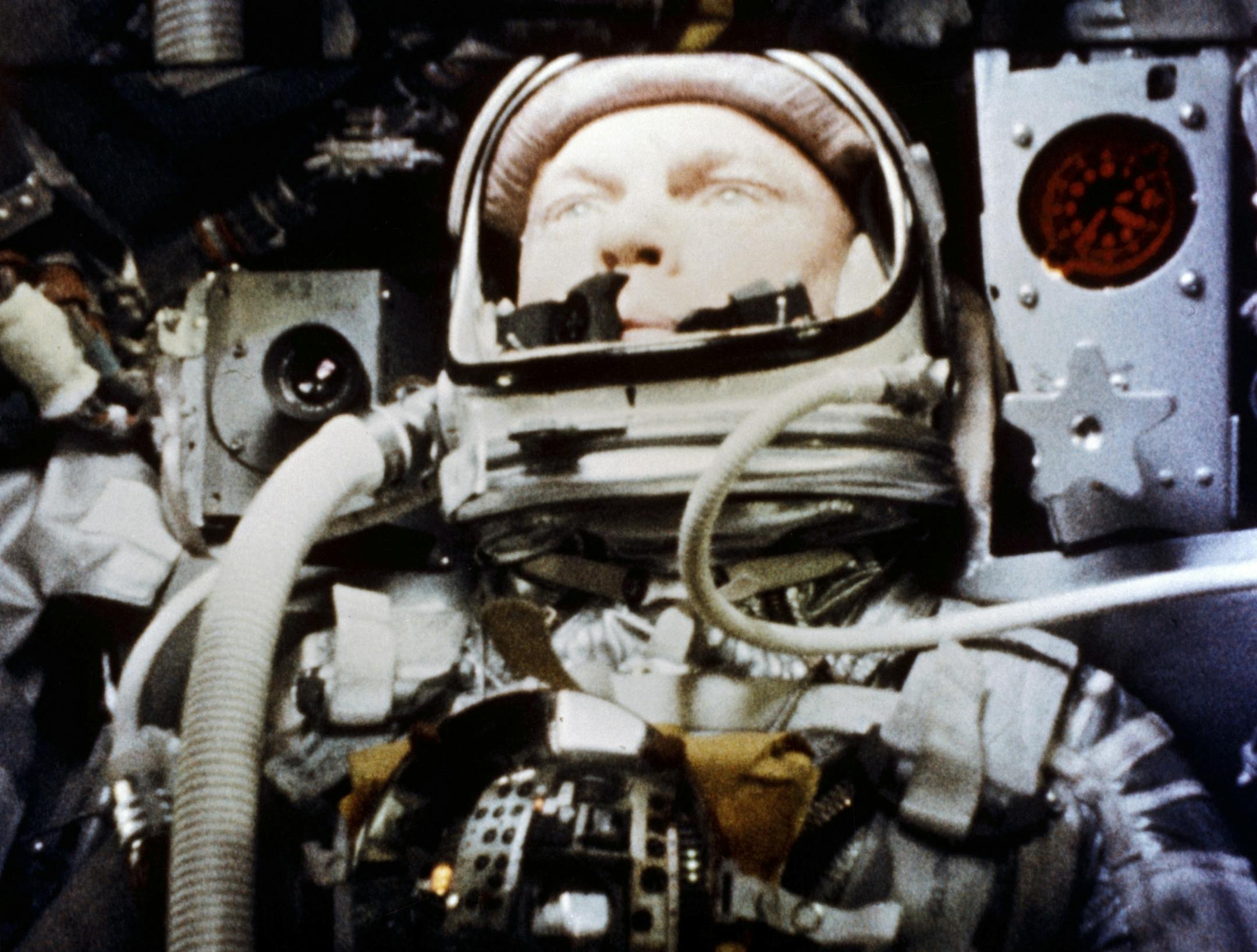
John Glenn was one of my heroes. When I was a kid, we would learn about the exploits of the Mercury astronauts in "My Weekly Reader" and gawk at their photographs in "Life." Each of us had a favorite, and Glenn was mine. I was in second grade in February 1962 when he became the first American to orbit the globe, and like the rest of the country I was ecstatic.
Glenn, who died this week at 95, was the rare public figure who was just exactly what he seemed — the smiling, hardworking Presbyterian from a little town in Ohio who joined the Marines as an aviator after Pearl Harbor, won medals in two wars, and became the face of the U.S. space program. He was a genuine hero at a time when heroes were in short supply.
It's hard to capture for the contemporary reader the extent to which the Cold War dominated public life in the early 1960s. This was the era of fallout shelters and air raid drills. Glenn's flight was sandwiched between the crises in Berlin and Cuba, either of which could have erupted into a conflagration. Children worried as much as adults about Armageddon. My friends and I used to bet nickels and dimes on when World War III would start.
In this atmosphere, the space race between the U.S. and the Soviet Union took on apocalyptic proportions. The astronauts were feted and honored as, in truth, no group of American heroes has been since.
The nation hung on their every move. My friends and I would compete to see who could name the seven Mercury craft: Aurora 7, Friendship 7, Freedom 7, and the rest. We knew that Alan Shepard was a test pilot and that Glenn had won six Distinguished Flying Crosses. We also knew that the U.S. was falling behind the Soviet Union in outer space. Everyone knew that, even if it wasn't really true.
In "The Right Stuff," Tom Wolfe attributes much of the adoration of the Mercury astronauts to an intuition that by challenging the Soviets in space they were engaged in something akin to the ancient ritual of single combat, where "the mightiest soldier of one army would fight the mightiest soldier of the other army as a substitute for a pitched battle between the entire forces." Our astronauts versus their cosmonauts, and the winning side would somehow win everything else too.
In the late 1950s and early 1960s, we seemed to be losing. The Soviets were first to send a man into space and first to send a man around the planet. On top of that, as Wolfe points out, our rockets always seemed to blow up. It's difficult to capture in words the public relief — the sheer joy — when Glenn completed his mission. Three orbits. The first person to see four sunrises in one day. Suddenly the U.S. was ahead.
And never looked back.


