

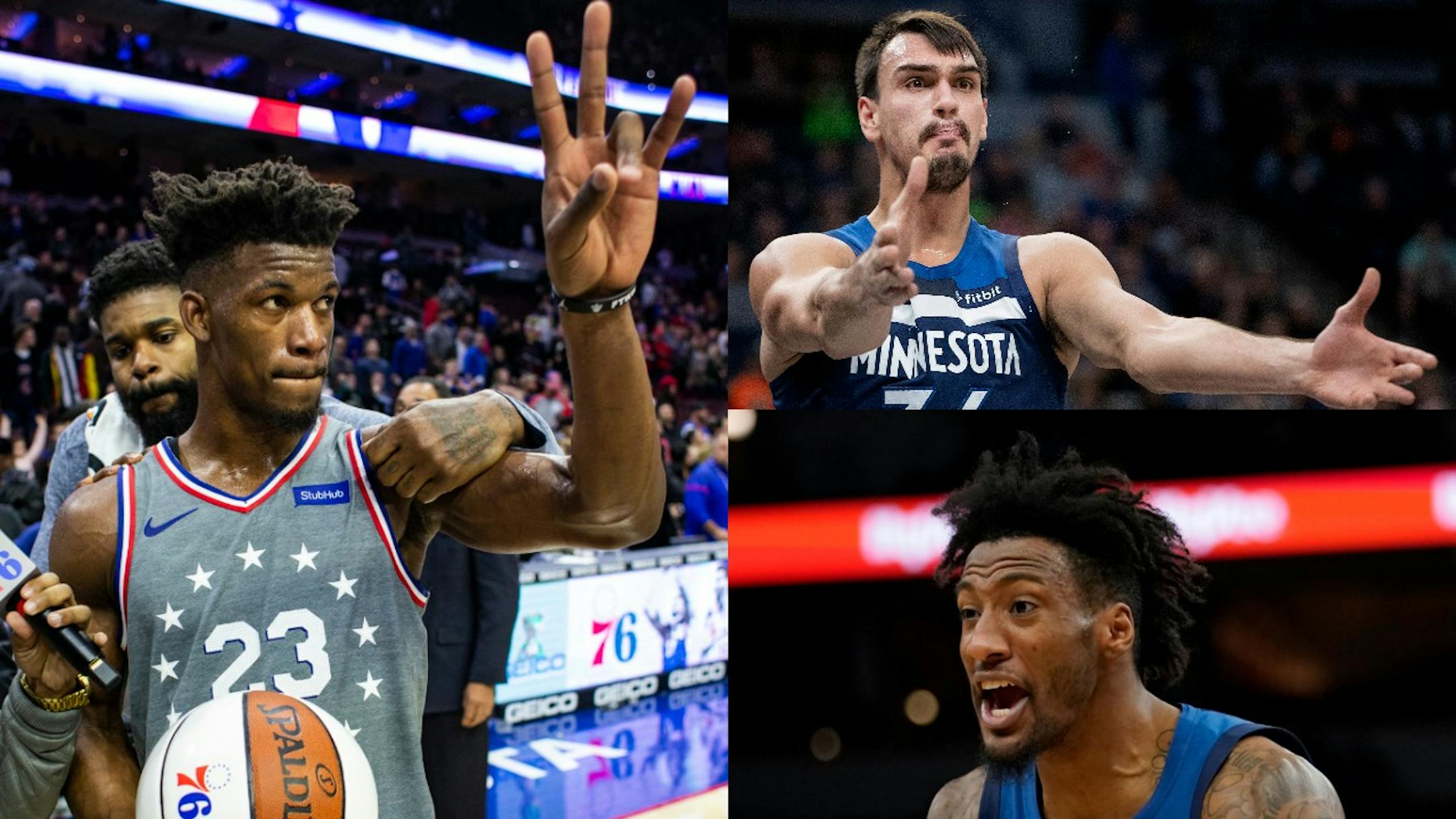
The most obvious small sample size gains so far from the Wolves' trade of Jimmy Butler to the 76ers, which brought Robert Covington and Dario Saric back primarily in return, has come on defense.
Kent Youngblood will have a larger look at this Wednesday in print and online, complete with insights from Wolves practice Tuesday, but suffice to say that the defense has looked much better since the deal. Minnesota is 2-1 with Covington and Saric playing regular minutes. They've allowed 100, 96 and 100 points in those three games after allowing fewer than 110 points just one other time in their first 14 games.
Defense is about effort and communication, both of which have improved dramatically. It also helps that Covington — a first-team All-NBA Defensive player a year ago — is at least Butler's equal as a wing defender.
What I want to spend a little time on now, though, is the offense. Things looked very clunky in the loss to Memphis on Sunday, but there is some evidence that the Wolves could get better on that side of the ball soon — and that Covington and Saric could lead the way in a key area. Let's dissect this:
*First, it's worth noting the Wolves with Butler last season were a very good offensive team. It didn't always look pleasing to the eye, but Minnesota was fourth in offensive efficiency in the NBA thanks to being good at free throws, taking care of the ball, hitting the offensive glass and making a lot of two-pointers.
The Wolves have been pretty good in those first three areas again, all of which seemed fairly sustainable. The last one, though — being good at two-pointers — contained a lot of hidden potential inefficiency.
Namely: The Wolves ranked in the top-5 in the NBA in percentage of field goal attempts from each of these three distances last year: 3-10 feet, 10-16 feet and 16 feet to the three-point line (per Basketball Reference). A whopping 48 percent of their combined field goal attempts came from those spots, and overall they took the highest percentage of two-pointers in the league.
But the most efficient two-pointers by far are 0-3 feet away from the rim, and the Wolves — though they made 69 percent of those shots, fourth-best in the NBA — ranked just No. 22 in percentage of overall shots taken from that distance.


