

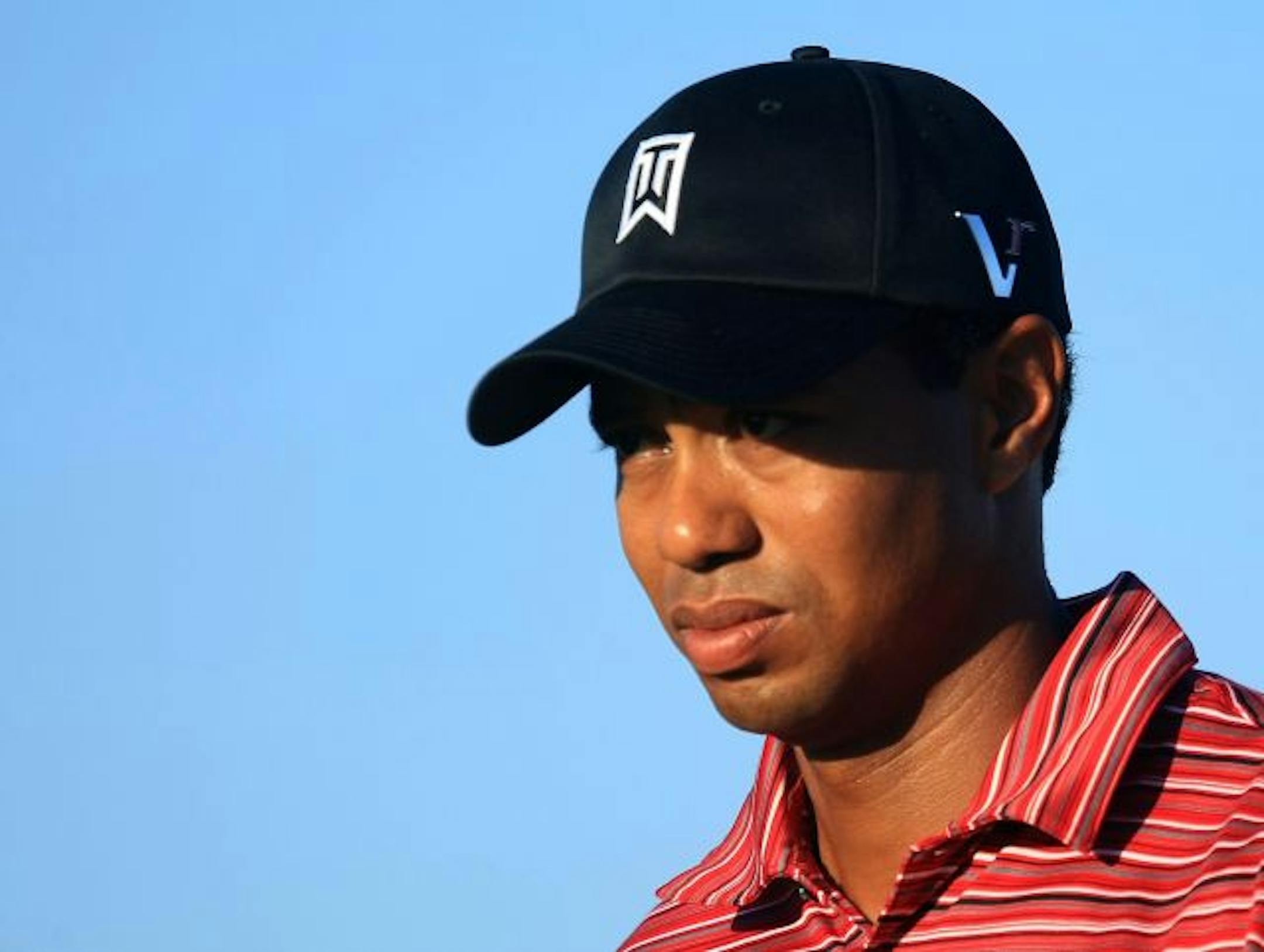
I was privileged to cover Tiger Woods' one-legged U.S. Open victory last summer, as he hit laser-guided shots just before grimacing in pain.
I was privileged to walk within his vicinity during his dramatic comeback to win the 2005 Masters, and hear him dedicate the victory to his ailing father in the gloaming on Sunday night at Augusta National.
In both of those victories, he beat overmatched but game competitors, Rocco Mediate and Chris DiMarco, in playoffs. As we enter Masters week, though, I am reminded of my favorite personal Tiger moment, and it did not occur as he made a dramatic putt on the 18th hole of the Masters or limped around Torrey Pines.
My favorite Tiger Moment illuminates the golfer he has become.
Early in his career, Woods dominated because of sheer power and imagination. He could hit it farther than just about anyone else, could hit shorter irons into the green than anyone else, could pull off shots most wouldn't attempt around the greens.
This week, Woods will bring his surgically repaired left knee to Augusta National, having made a birdie putt on the 18th hole at Bay Hill to win for the first time since he limped off with the trophy at Torrey Pines. Until he made the winning birdie putt last week, though, he spent the tournament reminding us of the golfer I watched in person in 2005 at Augusta, a golfer who thrives as much because of his ability to improbably save par as his ability to make an eagle.
Once the ultimate phenom, Woods has become the ultimate grinder. I first recognized the transition on the second hole at Augusta National, during the first round in 2005.
A rain delay left Woods starting on the back nine. When he came to hole No. 2 in the late afternoon, he was struggling, having just made a bogey at No. 1 after banking a shot off the flagstick and sculling a bunker shot.


