

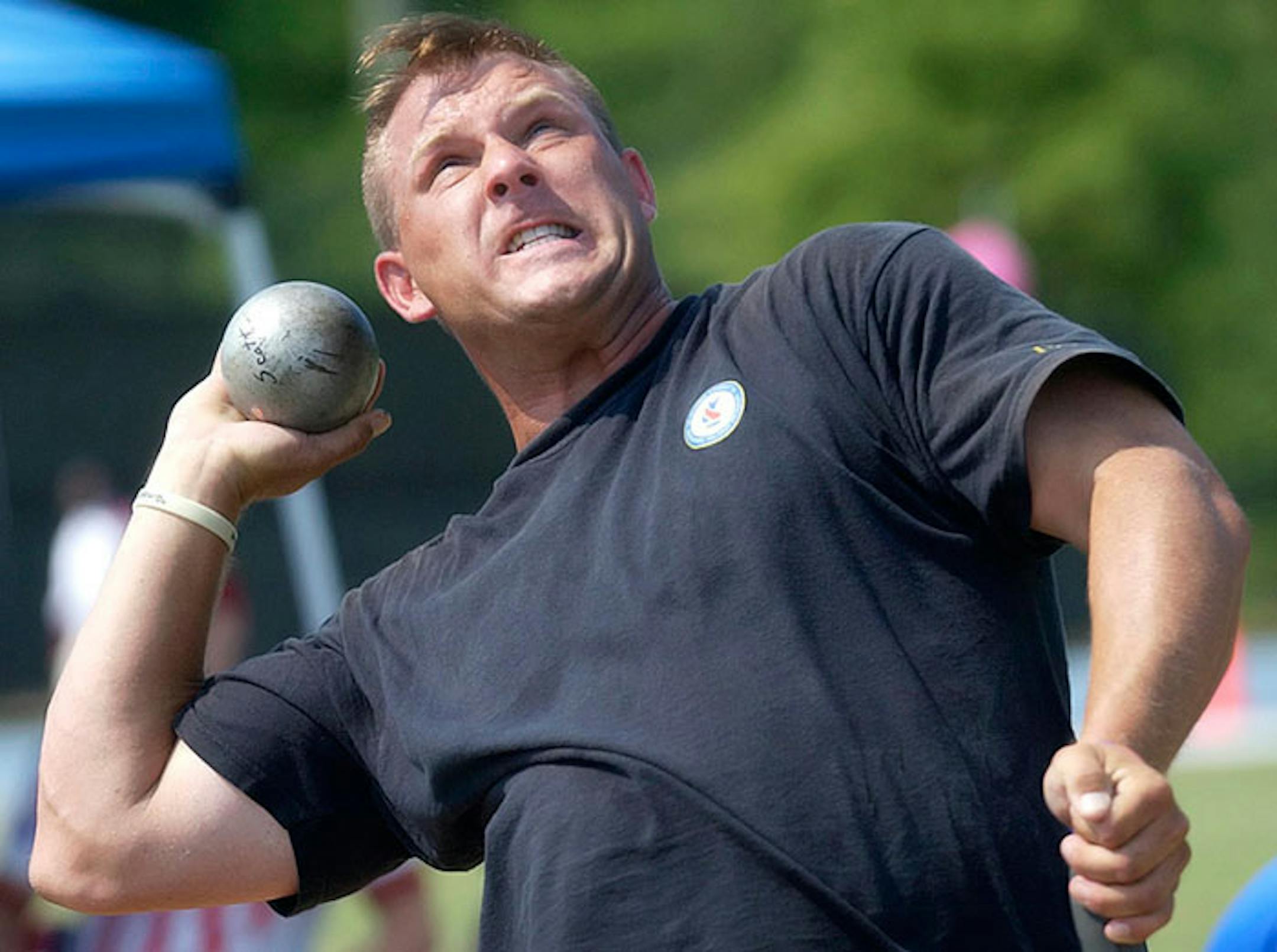
On an operation in Tikrit, Iraq, in 2003, Army Specialist Scott Winkler grabbed a load of ammunition off the back of a truck. One of the powerful bands that held the ammo in place snapped, catching his foot and yanking him violently to the ground.
"It was a hot zone, so we were in full battle rattle," Winkler said. "I landed, and I looked down, and my lower torso was totally turned around. To put it politely, my butt was up front."
Monday, Winkler took fifth in his division of the shot put at the Paralympic Games in Beijing. Weeks after the Closing Ceremonies concluded the 2008 Beijing Olympics, disabled athletes are competing with every ounce of pride and fervor of those who took the international stage in August, and with little of the recognition.
I met Winkler this spring in Chicago, at a summit for U.S. athletes. He acknowledged that his transition from paralyzed former soldier to proud American athlete was every bit as torturous as you might guess for someone once forced to look down at his own back pockets.
After the injury, the Army airlifted Winkler to Spain, then to Georgia. He developed lesions, probably because sand got into his wounds. He contracted diseases and infections caused by the kinds of surgeries required to put a human being back together.
"It took forever," Winkler said. "I stayed in the hospital for a very long time.
"It's expected. Nothing's perfect in this world."
Winkler wound up getting a divorce, and depressed. "That lasted a long time, too," he said.


