

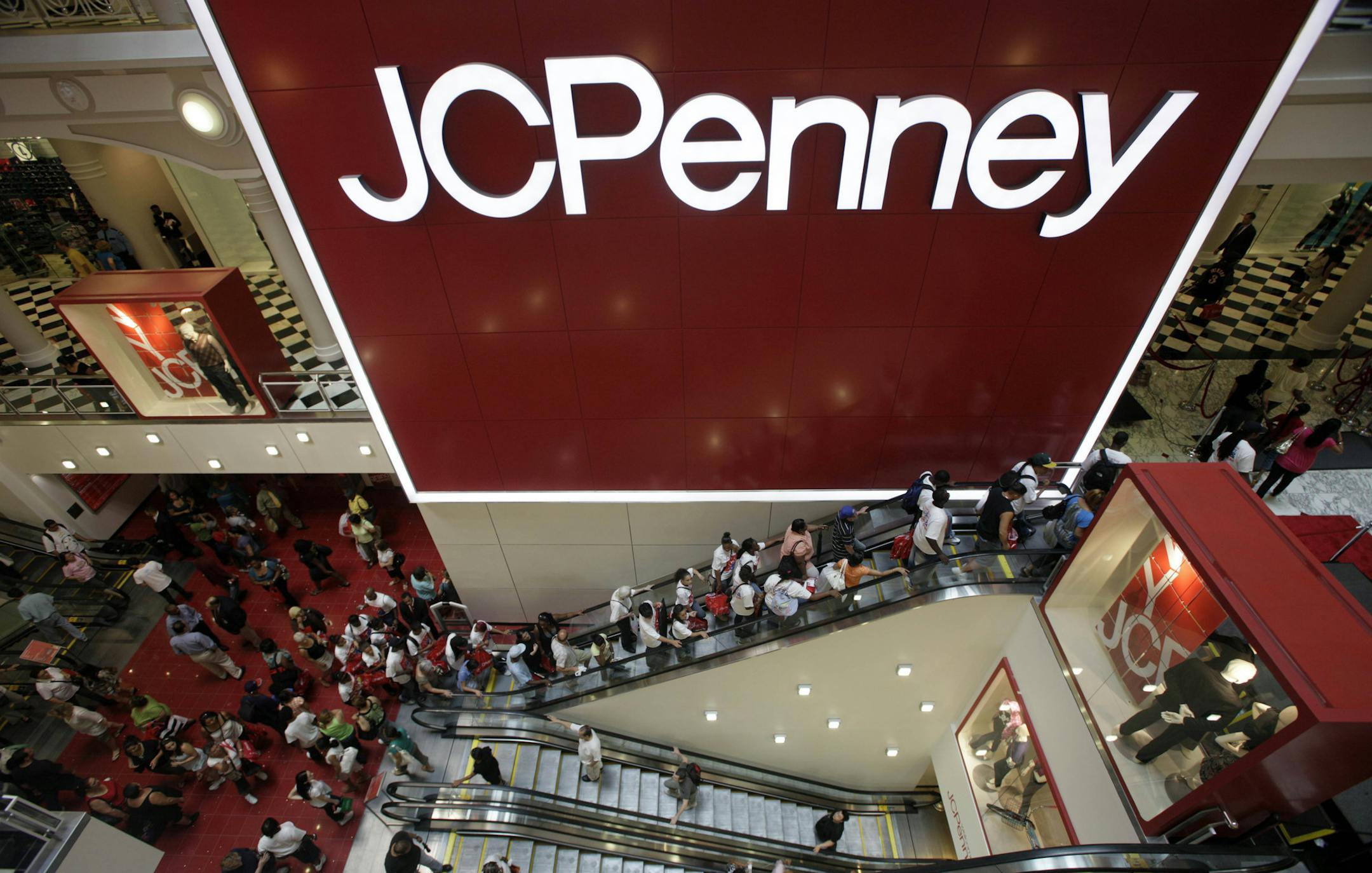
NEW YORK — J.C. Penney has always been the go-to place where Americans shopped for affordable clothing for their family.
But the Plano, Texas-based department store chain announced Friday that it must reduce its dependency on clothing and follow where the shoppers are spending their money: services and other products like appliances.
While part of the move has to do with being less reliant on Mother Nature, Penney is waking up to the overall seismic shift in consumer spending that is started to wreak havoc on mall-based retailers. It comes as Penney reported an unexpected drop in sales for the first quarter, joining a chorus of major department stores including Macy's, Nordstrom and Kohl's that reported weak first-quarter sales results.
The latest government figures on retail sales for April, released Friday, underscored that shift. Gains were fueled by online spending and automobile purchases.
"We look at our categories, and we look at what customers are spending," Marvin Ellison, CEO of J.C. Penney told investors Friday. "You heard the data all week. (It's) entertainment, it's experiences, it's home beautification. So we're listening. We're addressing those customers' needs."
Ellison told investors that it's conducting a detailed review of its customers' current and future shopping habits and will start to shift its merchandising mix accordingly.
The new approach comes as J.C. Penney Co. is still clawing its way back after a catastrophic reinvention plan under former CEO Ron Johnson sent sales and profits into a free fall in 2012 and 2013. Business had stabilized, though it has yet to fully recover.
Under Ellison, the department store is looking for new ways to increase sales while playing catch up in e-commerce. One area that it's betting on is appliances. Penney is getting back in the appliance business in nearly 500 stores, almost half of the locations, this summer. Penney got out of the major appliance business more than 30 years ago. That could be a big opportunity. Ellison said that one third of its appliance customers are new, based on a pilot program, and the overall average transaction in appliances is $1,200. Stores like Home Depot have avoided the retail funk thanks to a strong housing market.


