

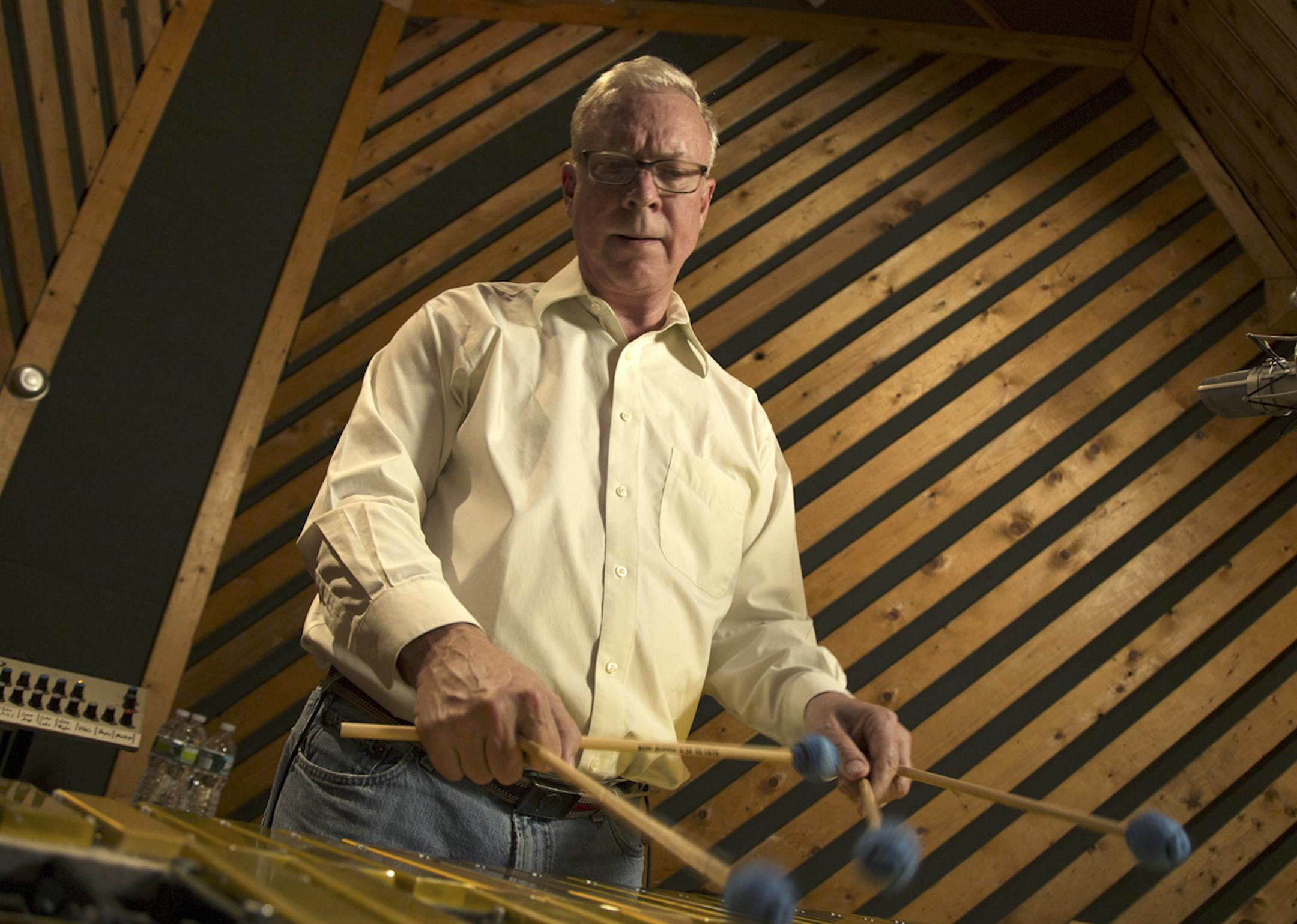
At 70, vibes player and bandleader Gary Burton is indelibly part of the jazz pantheon. He might not be the wildest, most colorful guy out there — that sort of behavior doesn't suit a former Hoosier farm kid — but jazz would not be the same without his guiding hand and many innovations, most of which came about simply because he wanted to try something new.
Burton, who brings his quartet to the Dakota Jazz Club in Minneapolis on Wednesday and Thursday, changed how the vibraphone is played, turning off the vibrato and expanding the instrument's reach with his four-mallet technique. He mentored countless young musicians, including superstar guitarist Pat Metheny, who considers Burton "a bottomless pit of ideas and melody." He pioneered jazz-rock fusion. He was one of the first musicians to juggle a parallel career as educator. Starting at Boston's Berklee College of Music as an instructor in 1971, he retired in 2004 as executive vice president.
At an age when most people are kicking back, Burton is having a banner year. He has released a new recording, "Guided Tour" (his 70th as leader), embarked on a tour with his acclaimed quartet and has written what he calls "my one and only actual real book," his engaging, story-filled and sometimes dishy autobiography, published this month.
"Learning to Listen: The Jazz Journey of Gary Burton" (Berklee Press) unspools the life of someone who excelled at almost everything. Burton was a straight-A student with a loving family who opened doors for him but never pushed him through — and didn't blink when he returned home from jazz camp at 16 and announced he wanted to be a jazz musician.
He signed a record contract with RCA at 17, released his first album at 18 and hasn't been without a major label since. At 19, he joined George Shearing's band; by 21, he was playing with Stan Getz. At 24, he formed his first band. He has played and recorded with almost everyone who matters, including pianist/composer Chick Corea, with whom he shares six Grammys and a four-decade collaboration.
About the only thing Burton wasn't good at, until recently, was marriage. Following two amicable divorces, the father of two finally acknowledged publicly that he's gay in a 1994 interview on public radio's "Fresh Air." (Jazz, like football, is a macho world.) On July 28, he married his longtime partner, Jonathan Chong. Earlier this month, he accepted our congratulations by phone at his home in Fort Lauderdale, Fla., then said, "I never imagined I would see this in my life."
Q: Do you think the jazz world has changed in its acceptance and treatment of gay musicians since you were a young man?
A: Absolutely. But it's still a concern for young gay jazz musicians. In the music business, the reasons you get hired and included in projects and record dates and concert tours are often very fickle and subjective. You don't want to do anything that would limit your opportunity to participate in a project that could possibly make your career.


