

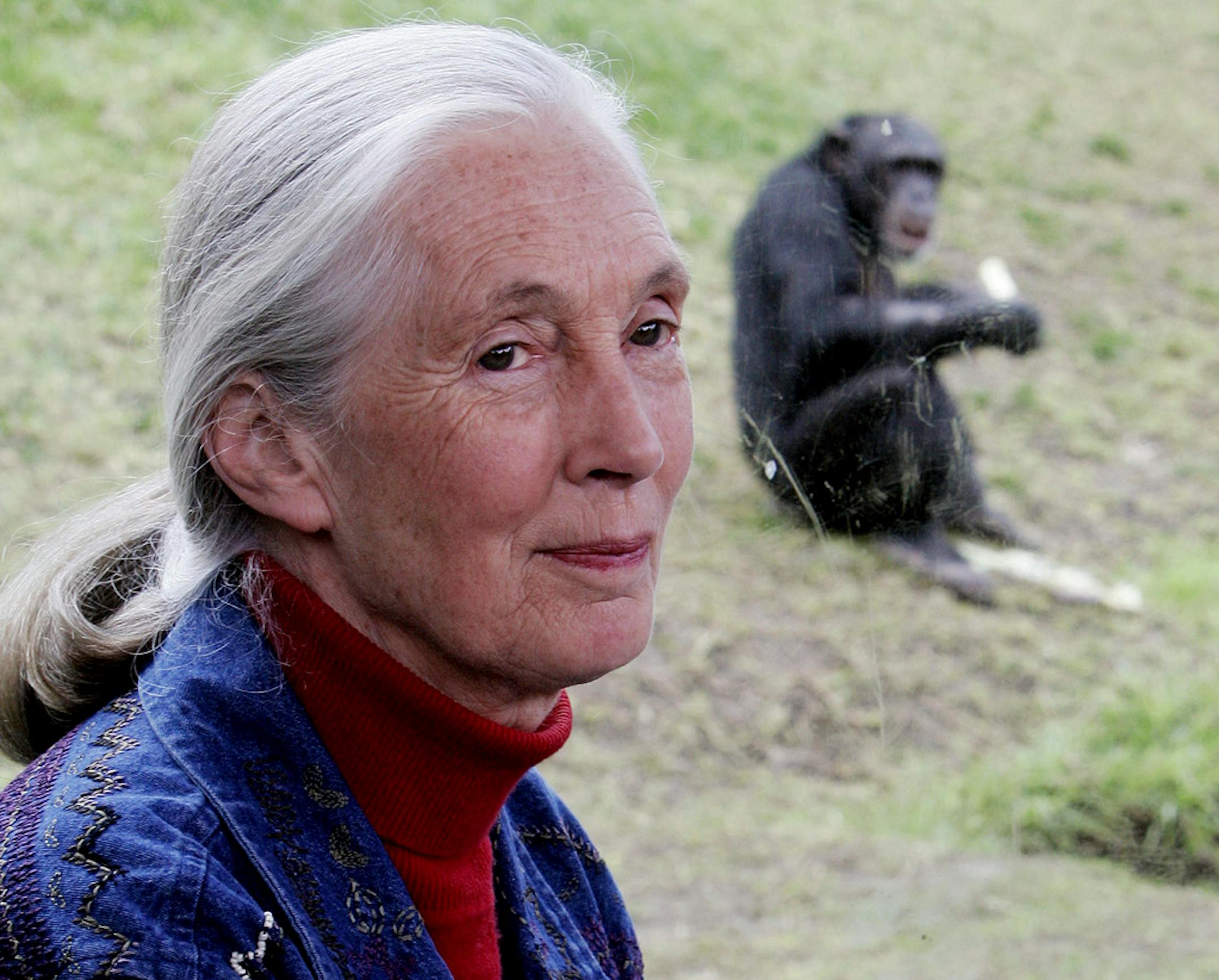
Jane Goodall had no scientific training, not even a college degree, when, at 23, she saved up money to visit a friend in Kenya. She was a London secretary and sometimes waitress with a restless spirit and romantic fixation on animals and Africa based mostly on the “Doctor Dolittle” and “Tarzan” novels of her childhood.
An encounter in Nairobi with the eminent paleoanthropologist Louis Leakey altered the course of her life, setting her on an unlikely path to becoming the world’s foremost primatologist. Her startling observations about chimpanzee behaviors — from making tools to making war — revolutionized not only scientific understanding of the capabilities and inner lives of our simian cousins, but also long-held notions about what it means to be human.
Dr. Goodall, whose research prompted a transformation in the ways scientists study social behavior across species, has died at 91. Her death was announced Wednesday by the Jane Goodall Institute, which said she was in California for a speaking tour. Additional details were not immediately available.
In a career spanning more than half a century, Dr. Goodall used her global fame to draw attention to the plight of dwindling chimpanzee populations and, more broadly, to the perils of environmental destruction.
The pivotal figure in Dr. Goodall’s career was Leakey, whose research had established that Africa was the cradle of man, the place where Homo sapiens evolved. He said that great apes contained important clues about the behavior of early hominids. And he said that women, whom he perceived as more patient and less threatening than men, were well suited to observe them.
Leakey, working as curator of a natural-history museum in Nairobi, was smitten with Dr. Goodall when they met in Nairobi in the late 1950s. He hired Dr. Goodall as his secretary, then invited her along on his next dig at Olduvai Gorge, where she proved her mettle amid the wild animals. It was also during that weeks-long expedition without a shower that she began wearing a ponytail, a stylistic trademark she would keep long after her hair turned from blond to gray.
Shortly after the team returned to Nairobi, Leakey invited Dr. Goodall to lead a new chimp research project. He saw her inexperience as an asset that gave her a “mind uncluttered and unbiased by theory.”
He asked Dr. Goodall to go into the forests of what was then Tanganyika (later Tanzania) and observe chimpanzees. She set up camp beneath oil palm trees near the sand-and-pebble shore of Lake Tanganyika, one of the largest freshwater lakes in the world.
