

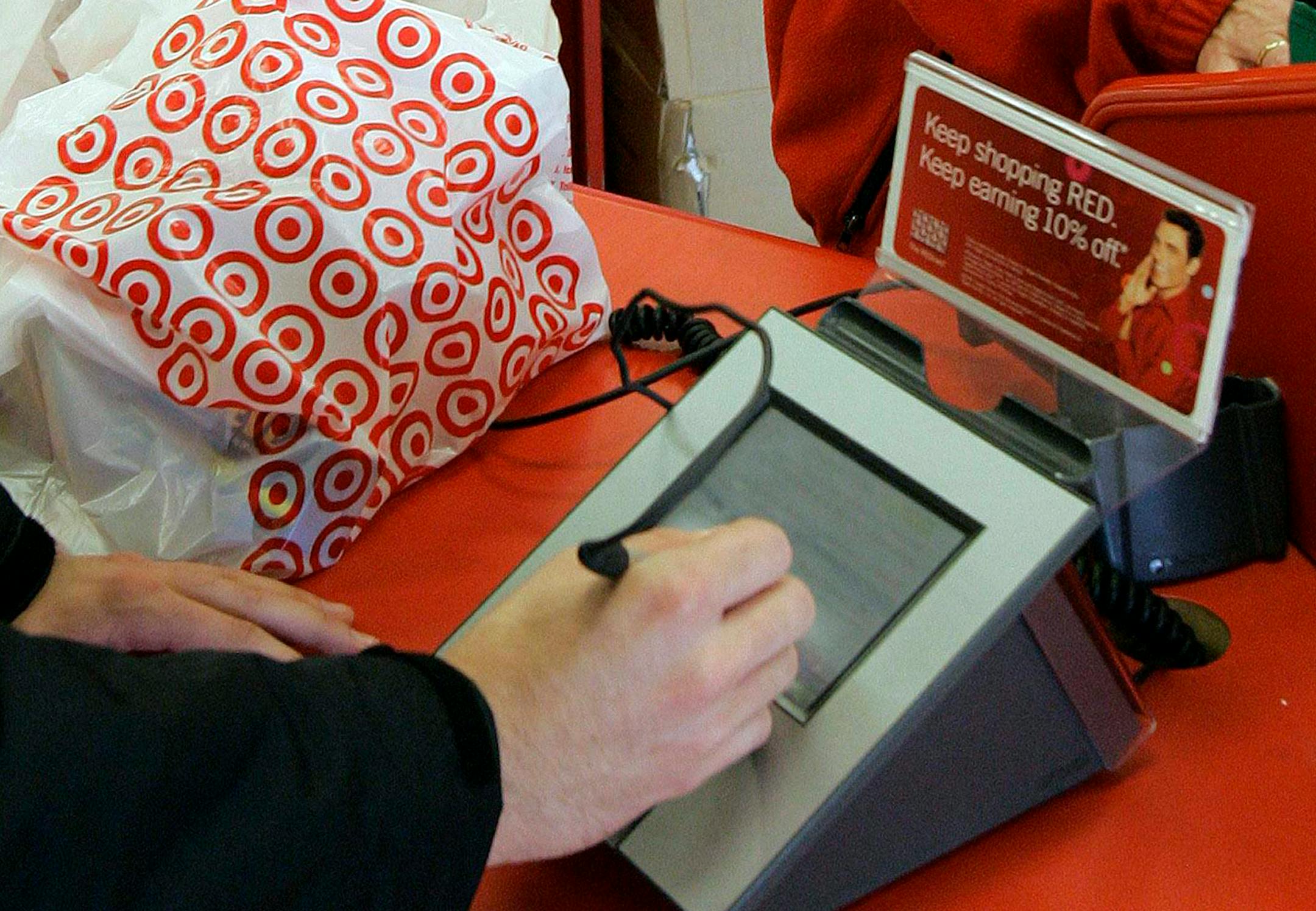
The massive consumer data breach at Target Corp. potentially exposes the company to years of litigation that could eventually cost it hundreds of millions of dollars.
In addition to thieves swiping the credit and debit card information from 40 million customers, the Minneapolis-based retailer disclosed Friday that the same criminals acquired names, addresses, and phone numbers from up to 70 million additional accounts.
The loss of such personal information significantly strengthens the legal cases of banks, credit unions and individuals looking to sue Target for fraud, negligence and invasion of privacy, some legal analysts say. Unlike credit and debit cards, which banks can quickly cancel or replace, most consumers are not about to change their names or where they live.
"It adds a lot more firepower [to lawsuits]," said Jack Tomarchio, an attorney who specializes in cybersecurity and data protection for the Buchanan Ingersoll and Rooney law firm in Philadelphia.
Normally, a plaintiff would need to prove specific damage from a data breach. "But the more personal information thieves stole, just the invasion of privacy claim alone could be enough [to prevail]," Tomarchio said.
Target spokeswoman Molly Snyder said the company does not comment on future or pending litigation. The company has said customers would have "zero liability" for any damage they suffer due to the theft of its data. It has offered to provide free credit monitoring and identity theft protection for customers for a year, and will announce details of that program soon.
Target, the nation's second-largest retailer with more than 1,900 stores and 360,000 employees, already faces at least 10 lawsuits seeking class-action status, Tomarchio said — a number that many legal analysts expect to climb.
The most significant question shadowing Target's legal exposure is how many customers had both their credit card information and personal information stolen, a possibility the company has acknowledged.


![Attendees of Frostbike made their way through the convention Saturday at the Quality Bike Products campus in Minneapolis. ] (AARON LAVINSKY/STAR TRIBUNE) aaron.lavinsky@startribune.com Frostbike 2016 was held at the Quality Bike Products Campus on Saturday, Feb. 27, 2016 in Bloomington, Minn.](https://arc.stimg.co/startribunemedia/NH2BSHB74ND2V6GF2G2HI5X4MM.jpg?&w=252&ar=3:2&fit=crop)
