
Advertisement

Ivy league

The Ziggurat-style, circa-1930 Ivy Tower was the inspiration for the luxurious new $100 million Hotel Ivy complex. But the quirky structure itself almost gets lost in the translation.

For the Minnesota Star Tribune
March 1, 2008 at 5:55PM
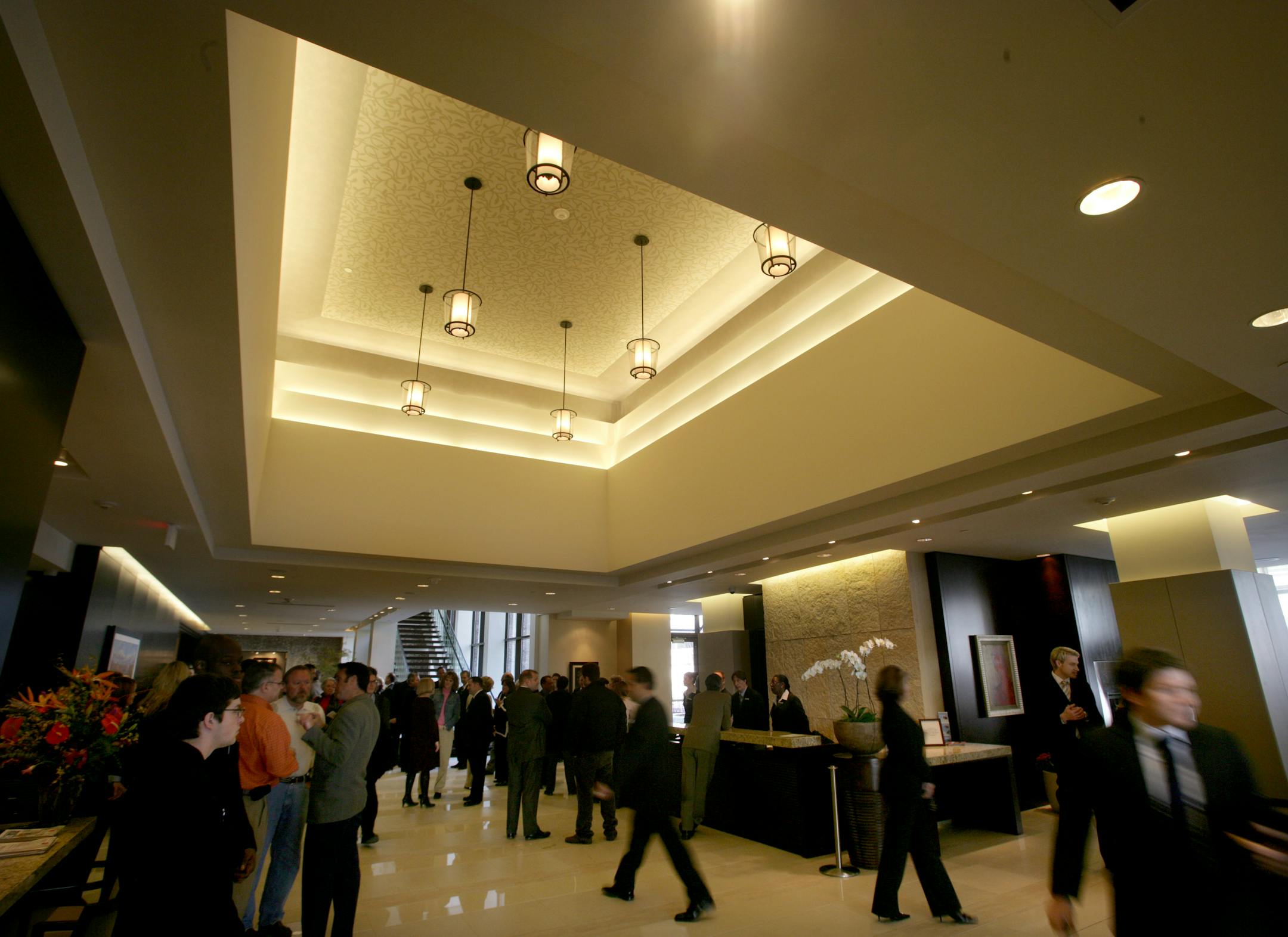
The lobby incorporates tradtional materials and a light-filled atrium for an understated, European ambience.
The lobby incorporates tradtional materials and a light-filled atrium for an understated, European ambience. (Star Tribune/The Minnesota Star Tribune)
Advertisement

The Hotel Ivy, which opened Feb. 21 after a seven-year effort, is both a triumph and a disappointment. The triumph is transforming a derelict corner of downtown Minneapolis into a luxury hotel and condo complex. The disappointment is that the quirky little Ivy Tower that inspired the development is all but overwhelmed by it.

The 10-story Ivy Tower is one of the city's oddest historic buildings. Built in 1930 in the then-popular Ziggurat style, it was planned as one of four such "towers" framing a central domed auditorium for the Second Church of Christ Scientist. The rest of the plan never materialized and the miniature building stood tall on the otherwise empty site for more than 70 years. With its seedy interior and dark gray pebbled exterior, it became the kind of place where mythical detective Guy Noir might have his office.

By 2000, its interior was trashed and all that was left was a concrete shell -- and a small one at that. With a footprint measuring less than many a suburban great room and the floors getting smaller as they step to a belfry-like top, the tower presented an unusual preservation challenge. What could make its re-use feasible?

Now the Ivy has been folded into a $100 million hotel/condo complex with a destination spa, a cutting-edge restaurant and rooms that go for about $250 a night to $3,000 for the presidential suite. It's been cleaned, sealed and salvaged. But it's more appendage than centerpiece.

Early plans envisioned the Ivy as the lobby for the new complex, and that would have given it a starring role. But with its size, its homely image and its location on one side of the site, the Ivy didn't lend itself to the lead role.

Instead, it plays a character role. The first floor and lower level house the restaurant, Porter & Frye. The second floor holds treatment rooms and the lounge for the tony Ivy Spa, the place to relax in your white robe while waiting for your hot stone massage. The third floor has become offices, and floors four through 10 hold hotel suites -- one on each floor. (Keep in mind that floors get smaller as the building steps in toward the top, which is incorporated into the two-story penthouse suite.)

Let's tour the place to see how it all works.

From the moment you walk under the hotel's canopy on 11th Street and into the expansive lobby, the feeling of luxury is palpable. (As the city's first five-star offering, the Hotel Ivy outranks the new F&M Westin and the W that's scheduled to open in the Foshay Tower this summer; it equals a Four Seasons or Ritz-Carlton, which Minnesota doesn't have.)

Advertisement

Glistening marble floors and a broad reception area defined by a coffered ceiling set the stage for the hotel experience. A surprisingly traditional lobby beckons with silk-upholstered furniture and the inevitable flickering fireplace. Described by its Minneapolis designer, Elmer Nelson of the Nelson Design Group, as "winter white and Jackie-O," it conjures the feel of a classy New York condo building.

The wood accents, which are a special mahogany-stained cherry dubbed the "Ivy" stain, are just right -- deep, dark and masculine, but warm. The gauzy silk curtains soften the look. A dropped ceiling gives the space intimacy while tall windows lighten the space. Another thoughtful touch: The lobby wraps around the back of the reception area so there are private meeting or working spaces.

The reception area leads to a light-filled atrium focused on a glass-and-wood stairway that rises just inside a glass wall. Not edgy like the Chambers or contemporary like the Graves, the space feels European: Traditional materials are used with a minimum of fuss.

Up one floor is the Ivy Spa Club, another understated space. The dark floor sets the tone. The glass wall and stair provide an architectural backdrop for the reception desk.

Visible through the glass wall are the familiar pebbled walls of the Ivy Tower. A small vest-pocket plaza sets it off from the new construction and gives it breathing room. A part of the pebbled wall pokes inside, giving a bit of edge to the otherwise traditional space.

A splendid spa

Advertisement

The spa has the luxe décor expected in such a place. The high ceilings and exposed concrete structure of the Ivy Tower lend a sort of faded elegance to the lounge.

The hotel's color scheme of bronze and platinum warms up on the third floor, where the banquet and meeting rooms feel more residential than institutional. Custom-designed furniture picks up a subtle Deco stepped "Ivy" theme here and in the hotel rooms themselves.

The suites also feel European. Although the spaces are smaller, the ceilings are high. The new construction matched the 9- to 10-foot ceilings of the Ivy Tower, so the rooms are elegant and even the hallways are unusually tall. You're not aware whether you're in the old Ivy or not. But the eighth-floor suite in the old space is especially appealing, with 1,200 square feet, a separate living room and views of the tower's walls.

Back on the main floor, Porter & Frye makes good use of the Ivy's first and lower levels. One corner was cut out to link the two with a cascade of chandeliers. The Minneapolis firm of Walsh Bishop keyed the design to the building's '30s character. The square concrete columns are left exposed. Brown leather wing chairs and a banquette covered in persimmon and pinstripe velvet lend a "Guys and Dolls" feel. Cave-like private dining rooms on the lower level reinforce the mob mystique. But the design doesn't overdo the theme.

New towers overpower

Outside, the Ivy Tower is overshadowed. Its sculptural form stands out against the new towers, but their mass is out of scale. The hotel tower is 19 stories; the condo tower, which has not yet opened, is 26 stories. Two floors had to be added during construction after it was found that excavation couldn't go down the planned six floors for parking.

Advertisement

(Historic agencies divided on whether the new construction was sympathetic. The Minneapolis Heritage Preservation Commission and State Historic Preservation Office approved the design, which allowed the project to go forward; the National Park Service rejected it, which denied the developers certain tax credits.)

In addition, the pre-cast walls of the new towers seem too beige and too bland. The rhythm of walls and windows does reflect that of the little building, though inevitably at a larger scale. At street level, the Minnesota limestone building base works with the Ivy. The upper floors should have disappeared into glass.

All in all, it was a tough job to build so much on a small site with a historic building occupying a quarter of it.

"We solved thousands of problems with little equations," said Troy Goetz of Walsh Bishop, which shepherded the design project. "I bet it was a million," responded architect Bob Brantingham, who watched over the vacant building from his office half a block away and persuaded Laux and Benson to buy it.

The Ivy Tower has survived. It has found new use. That is, in itself, cause for celebration.

Linda Mack is a freelance architecture writer.

Advertisement
about the writer

about the writer

Linda Mack

More from Minnesota Star Tribune

See More
card image
Provided/Sahan Journal

Family members and a lawyer say they have been blocked from access to the bedside of Bonfilia Sanchez Dominguez, while her husband was detained and shipped to Texas within 24 hours.

card image
Advertisement