

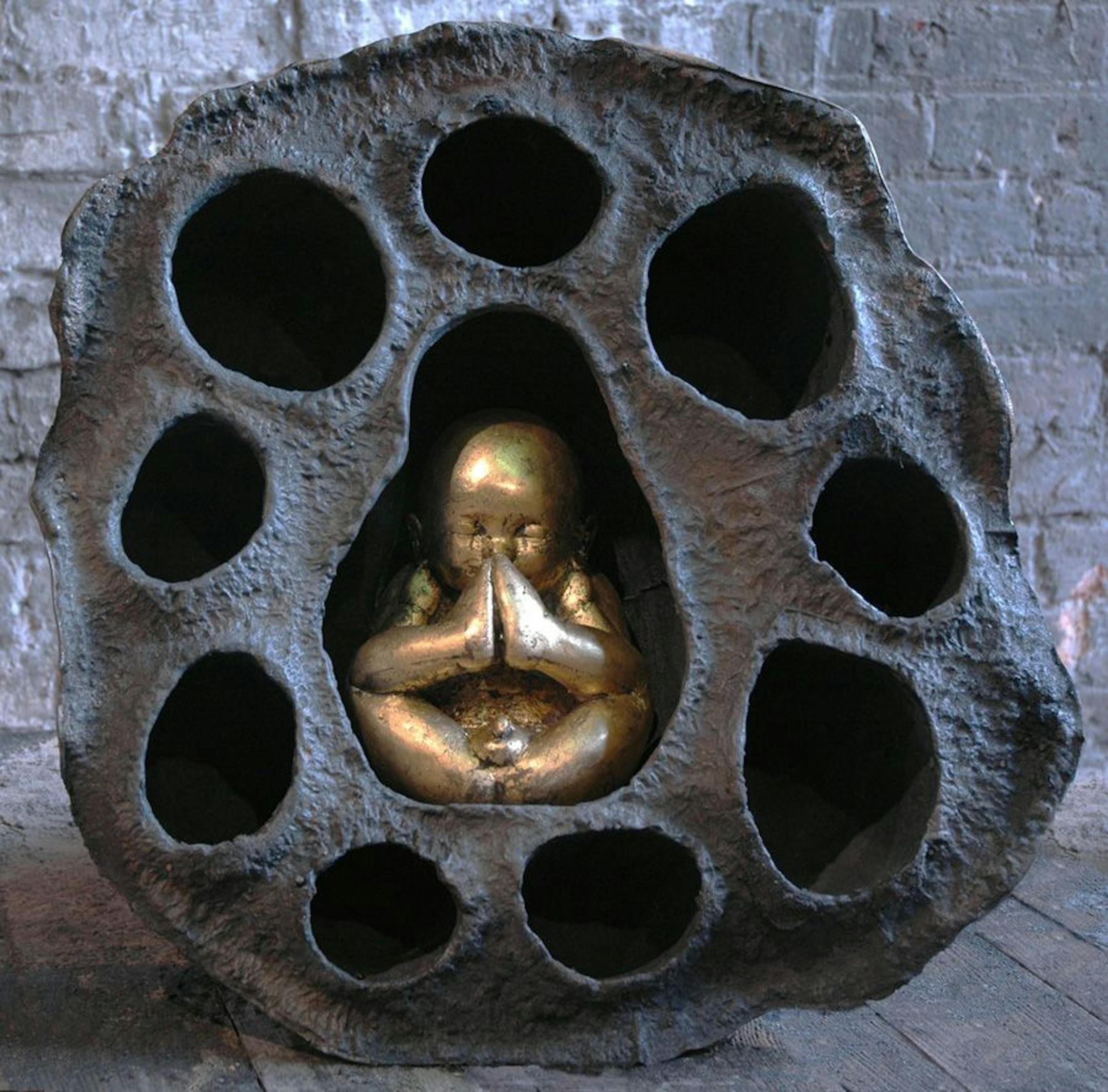
Pouring iron is not for sissies. Bundled up in padded suits, thick gloves and helmets, iron aficionados hoist pots of 2,500-degree molten metal and oh so carefully pour it into sand-filled molds while sparks fly, flames flare and fans gather round to cheer them on.
It's a 5,000-year-old ritual that has returned to art schools, college campuses and rural sculpture parks. Long a guy's world, iron casting now has a core of female followers who love the drama of the pours and the beauty of the products.
Call them "Iron Maidens," as does St. Catherine University in St. Paul, which is hosting, through Oct. 30, a handsome show of cast-iron sculpture by 16 American, British and Welsh women. Beautifully installed, the show brings vigor to neglected feminist tropes that complement St. Kate's core mission as a women's college. "Iron Maidens" will travel to St. John's Art Center in Collegeville, Minn., following its St. Paul presentation.
"All of us women feel that we're representing our sex well by working through the medium," said Tamsie Ringler, a sculpture professor at St. Kate's who organizes an annual Mother's Day iron pour on the campus. Ringler was instrumental in bringing "Maidens" to the Twin Cities, and last month she cast a car in iron at Franconia Sculpture Park near Taylors Falls.
"I notice there is a difference when women run iron pours," Ringler said. With women in charge, the atmosphere is generally calmer, safer and more collaborative, she said, and "you don't get as many people barking orders."
"That's the absolute truth," agreed John Hock, Franconia's founder and artistic director. The park already has a 60-40 ratio of sculpture by women vs. men, and next summer plans to stage an all-women iron pour. "It's always much more elegant and sophisticated when the gals run the pour; women are just so much more civilized," Hock said.
Ancient craft, modern modes
While industrially produced iron ornaments -- railings, window grilles and even toys -- were popular in the 19th century, cast-iron sculpture was pretty much unknown until the 1960s, when new studio-sized furnaces allowed small-scale production. University of Minnesota sculptor-professor Wayne Potratz, an expert in ancient metal-casting techniques, was a leader of the movement. Among his students was Coral Lambert, a British-educated artist who studied at the university in the 1990s and then spread the word via iron-casting workshops in the U.K.


