

 1:09
1:09Zachary Feinberg went to a mobile dental clinic in Roseville last week for his first checkup in six years. So the 14-year-old wasn't surprised when the dentist he dubbed "Captain Hindsight" told him he'd need two fillings and a root canal.
" 'You should have brushed more,' " he said, imitating the dentist. "I was expecting it."
Like the Stillwater teen, the state received a troubling checkup last week in a report that found that more than a third of Minnesota's poor children receive no annual dental checkups.
Help could be on the way in the form of MNsure, the state online insurance exchange that launches next month. Because federal policy requires the exchange to include pediatric dental benefits, state officials expect that thousands more Minnesotans will buy coverage and seek long overdue care for their children's teeth. But they also caution that this expansion of benefits won't solve all of the state's dental woes: Many of the neediest children already qualify for state-subsidized dental benefits and don't use them.
"We need to do more to provide dental care to low-income children. There's no question about it," said Merry Jo Thoele, who coordinates oral health planning for the Minnesota Department of Health.
A reminder of that need came from the Commonwealth Fund last week, which ranked Minnesota last in the nation for the rate of low-income children receiving annual dental and medical care. The ranking was based on the 2011-2012 National Survey of Children's Health, which showed that one in three children living at or below 200 percent of the federal poverty level in Minnesota didn't receive annual dental checkups, even though they were already eligible for coverage from state-subsidized health care programs.
In its first oral health plan, released this January, the state Health Department issued a goal of increasing the number of children receiving preventive dental care by 10 percent. The agency also listed strategies that could help low-income families, including making greater use of midlevel dental providers and dental hygienists — who under collaborative practice rules can perform basic cleanings and treatments in schools and satellite clinics without dentists looking over their shoulders.
The state also wants to continue to increase the number of school-based dental programs through such organizations as Children's Dental Services of Minneapolis, which currently works with more than 100 school districts.
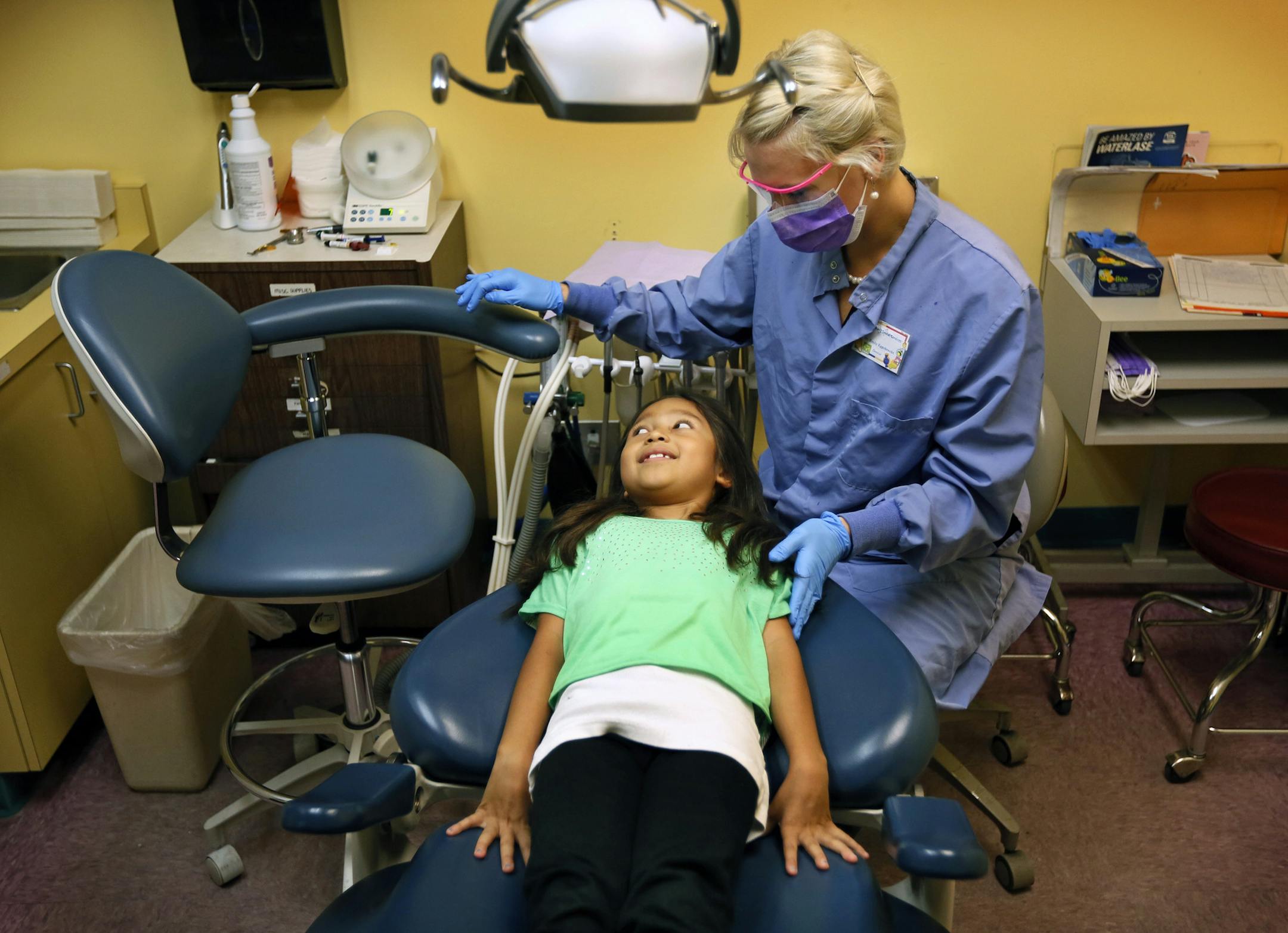
![8-year-old Chelsea Velasquez was in the chair at Childrens Dental Service in Minneapolis for a new filling. Dr. Emily Eggebrecht (right) ] BRIAN PETERSON • brianp@startribune.com Minneapolis, MN - 09/24//2013](https://arc.stimg.co/startribunemedia/QPFZPWUTX4SOUHGKWZ7564NWEA.jpg?&w=1080)


