

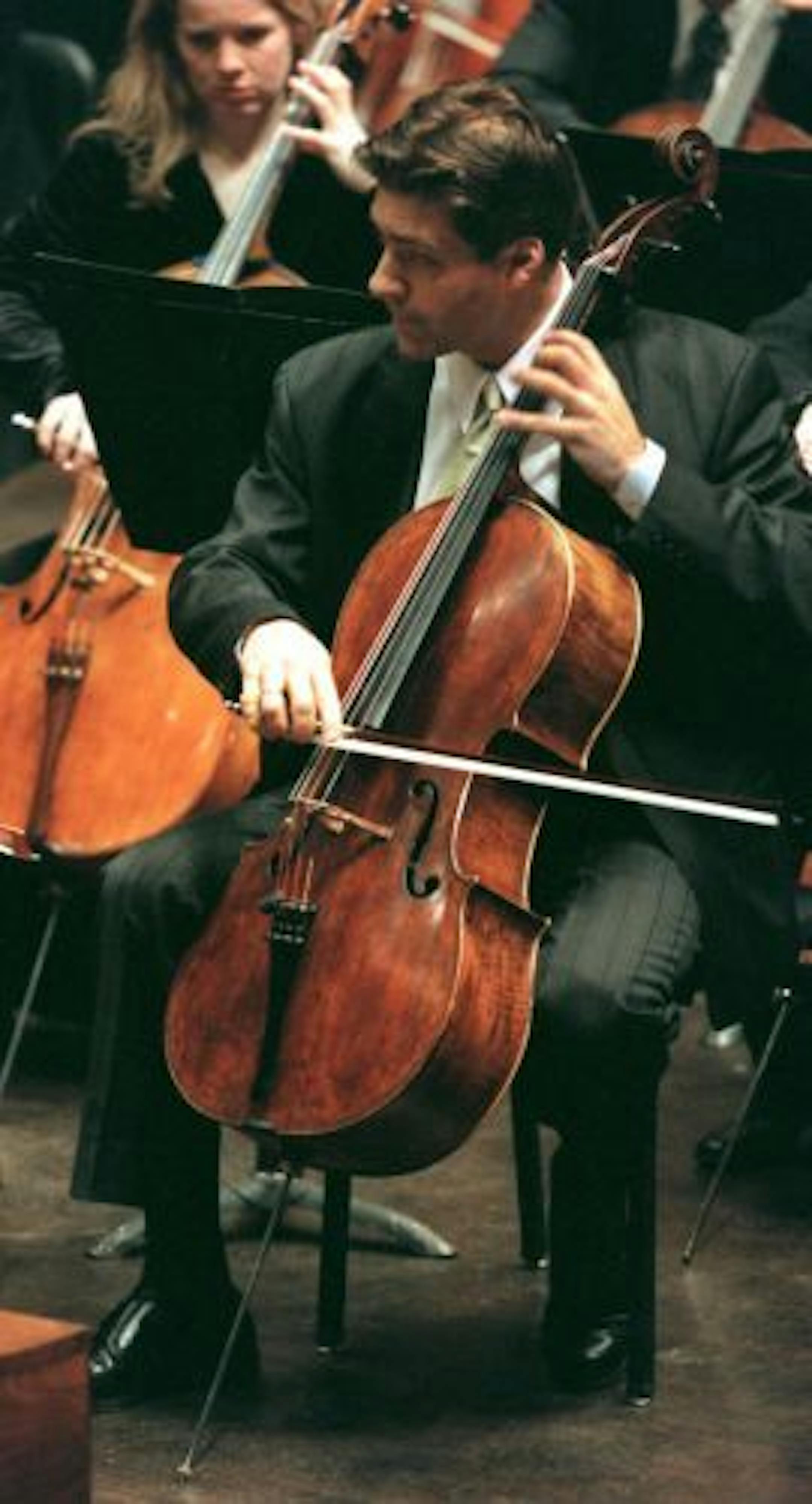
The bicentenary of Robert Schumann's birth will be celebrated next year, but there's every reason to start the festivities early. The Minnesota Orchestra and conductor Edo de Waart (its music director from 1986 to 1995) do just that this week, performing Schumann's impassioned "Manfred" Overture in a program otherwise Slavic: Shostakovich's Cello Concerto No. 1 (with the superb Anthony Ross) and Dvorak's "New World" Symphony.
The overture -- the pick of the incidental music Schumann wrote for Lord Byron's "wild, metaphysical, inexplicable" dramatic poem -- paints the poet's tormented hero in bold strokes. In a performance as plangent as De Waart's, it's one of the composer's most evocative scores. But Schumann's tenderness and yearning aren't fully embodied in his work for orchestra. To know the heart of this most ardent of romantics, one must steep oneself in his solo piano music and his songs.
Shostakovich, who would later re-orchestrate Schumann's Cello Concerto, made his first, unsettling contribution to the genre in 1959, inscribing his concerto to the larger-than-life cellist Mstislav Rostropovich (who memorized it in four days). From its snarky opening to its ferocious finale, which burlesques a sentimental ditty said to have been Stalin's favorite, the piece -- especially its five-minute cadenza -- is grueling for the soloist. (It's also no cinch for the horn player, in this case Michael Gast, who sometimes seems to harass the cellist.)
Ross, a 21-year veteran of the orchestra and its principal cello since 1991, is fully equal to the demands of the concerto, on which he sets his own stamp. Playing from memory, his tone wonderfully varied, he embraces both the sardonic and the tragic elements in the music. His slow-movement duet with celesta is as eerie as it gets. And on Thursday his cadenza, despite an audience evidently in the throes of respiratory failure, was searing.
For music historian Joseph Horowitz, the "New World" Symphony belongs to a vanished American moment when "concert-giving and opera-going were, more than rites of habit, a necessary response to aesthetic urges and emotional needs." There's no recapturing how this symphony felt at its 1893 premiere. But it can still enchant, especially in its less-rhetorical inner movements. De Waart and the orchestra shape Dvorak's famous Largo with surpassing eloquence; Marni Hougham's English horn solo is goose-bump beautiful.
Larry Fuchsberg writes frequently about music.


