0:50
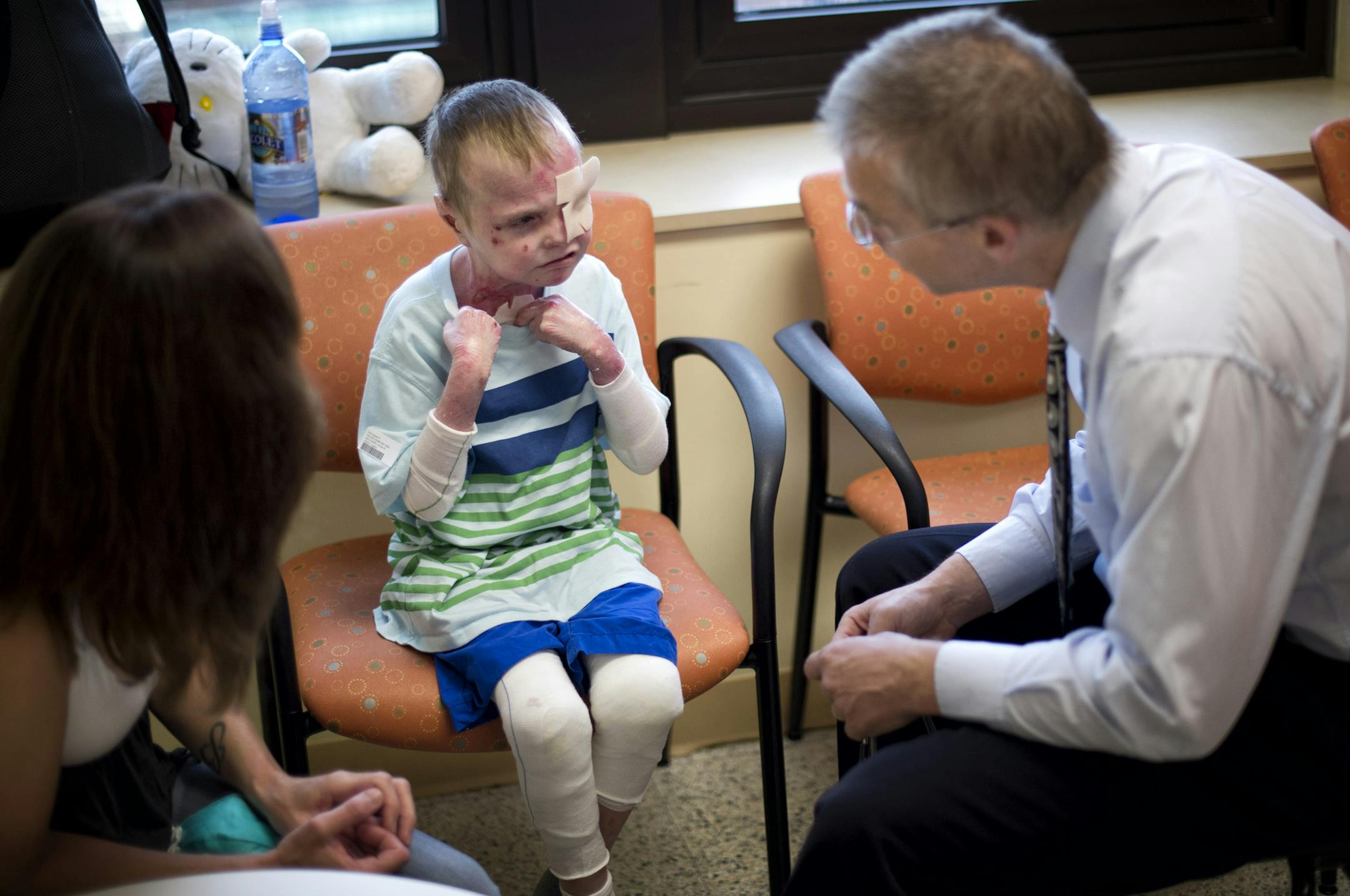
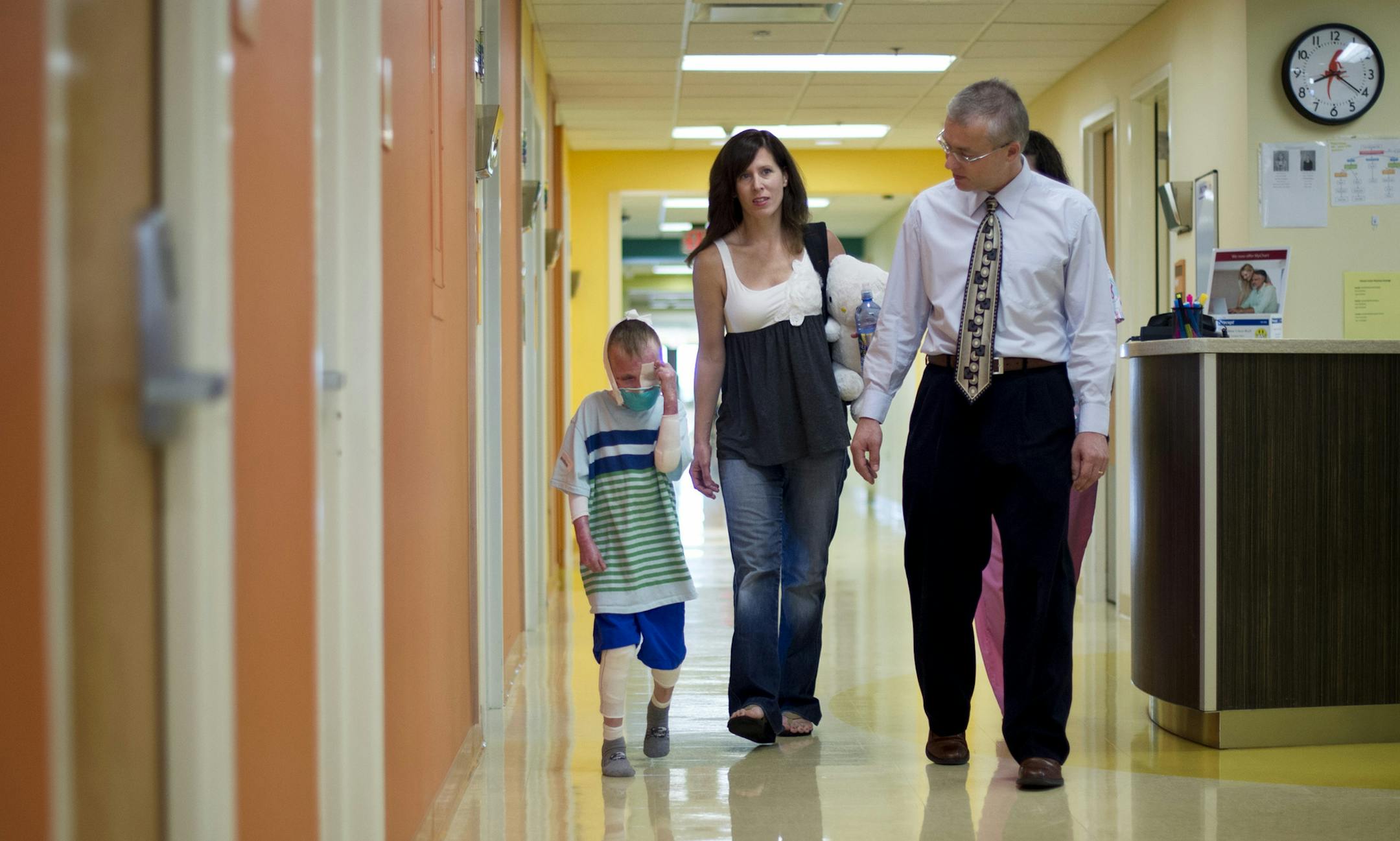
0:50It's hard to see the future of medicine through the scabs, blisters and scars that torment 7-year-old Charlie Knuth as he makes his way haltingly to a checkup at the U of M Amplatz Children's Hospital.
But the boy from Appleton, Wis., is helping doctors perfect a pioneering intervention called gene editing, a procedure that could lend hope to thousands of people suffering from hundreds of diseases — including epidermolysis bullosa, the disorder that causes Charlie's skin to shear off and his eyes to blister.
Charlie's case also illustrates the power of an emerging field called "biomedical and health care informatics" that's beginning to revolutionize every aspect of medicine, from laboratory research to clinical treatments.
The doctors and Ph.D.s helping Charlie — a team that includes scientists at the U, in Massachusetts and in Germany — couldn't have done their work without mining a massive genomic database that enabled them to interpret millions of bits of data in the boy's DNA, according to Dr. Jakub Tolar, director of the U's Stem Cell Institute.
That, in turn, allowed them to cut out a single, defective gene and splice in a correction without damaging side effects.
The procedure, which they described in a recent issue of the journal Molecular Therapy, is part of a larger movement that has medical professionals collaborating with physicists, mathematicians, statisticians, social scientists and computer engineers in an effort to create and mine "Big Data" centers. Much as Google, Facebook and Amazon mine massive amounts of data to discern consumer preferences, these researchers are sifting huge quantities of medical data to diagnose, understand and cure diseases.
The U, Mayo Clinic and several Minnesota businesses are well-positioned to take advantage of the trend. Five years ago, the U launched a special graduate program in Biomedical Informatics and Computational Biology (BICB). Partners include its Twin Cities and Rochester campuses, the Hormel Institute, Mayo, IBM, the National Marrow Donor Program and a brain research center at the Minneapolis Veterans Medical Center. And three years ago the U received a $5.1 million federal grant specifically to train health professionals in informatics.
Turning data into wisdom
Biomedical informatics starts from a simple premise: The human body represents a databank of stunning depth and complexity.