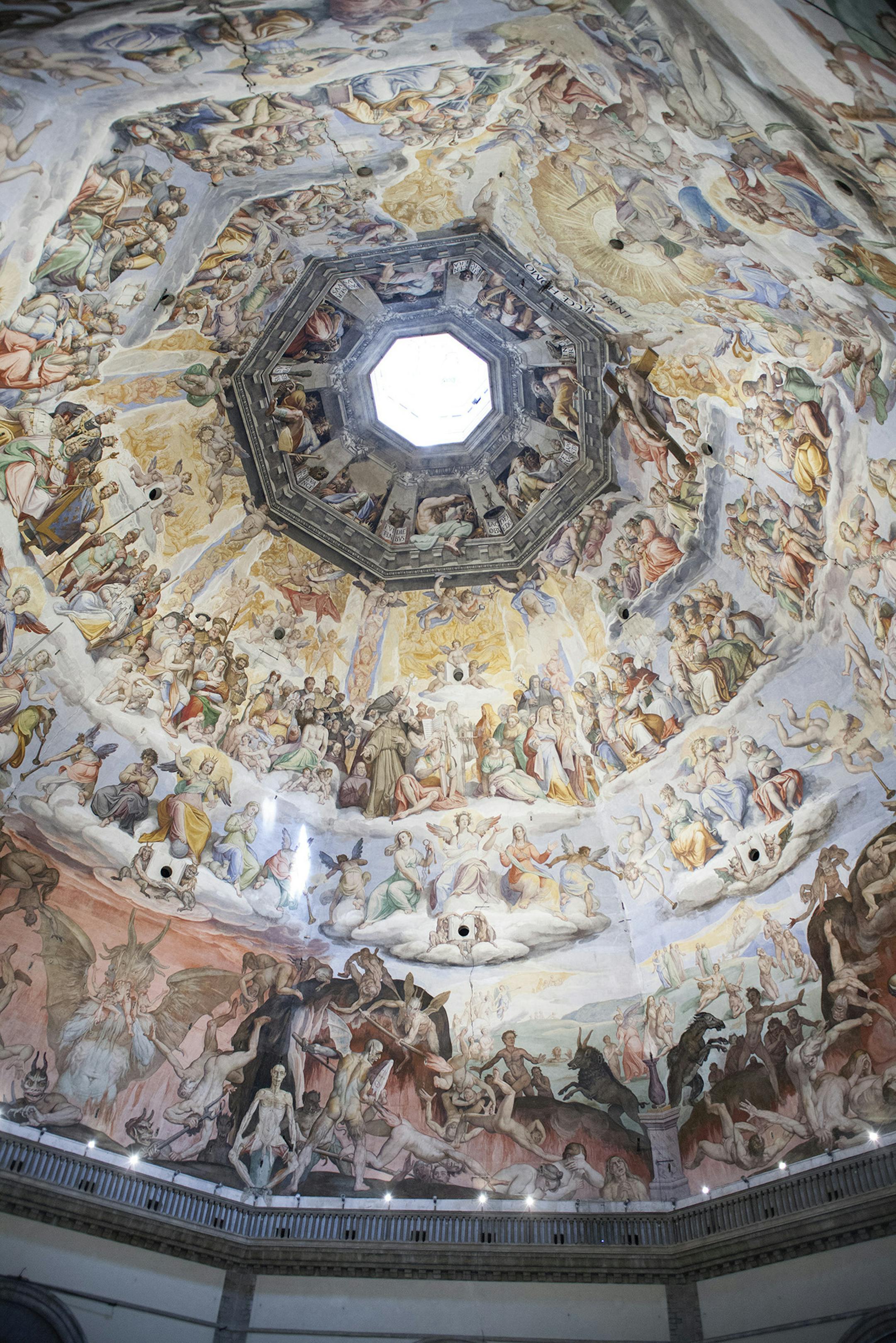
In the Hall of Five Hundred at the Palazzo Vecchio, the city hall of Florence, tourists are craning their necks and staring upward. They're trying to spot the words "cerca trova" — "seek and you shall find" — on a Vasari mural that figures in the plot of "Inferno," the latest bestseller by Dan Brown. (Hint: You need binoculars.) In his latest book, Brown has symbologist Robert Langdon racing across Florence in pursuit of a bad guy who's obsessed with Dante Alighieri, the author of the original "Inferno."
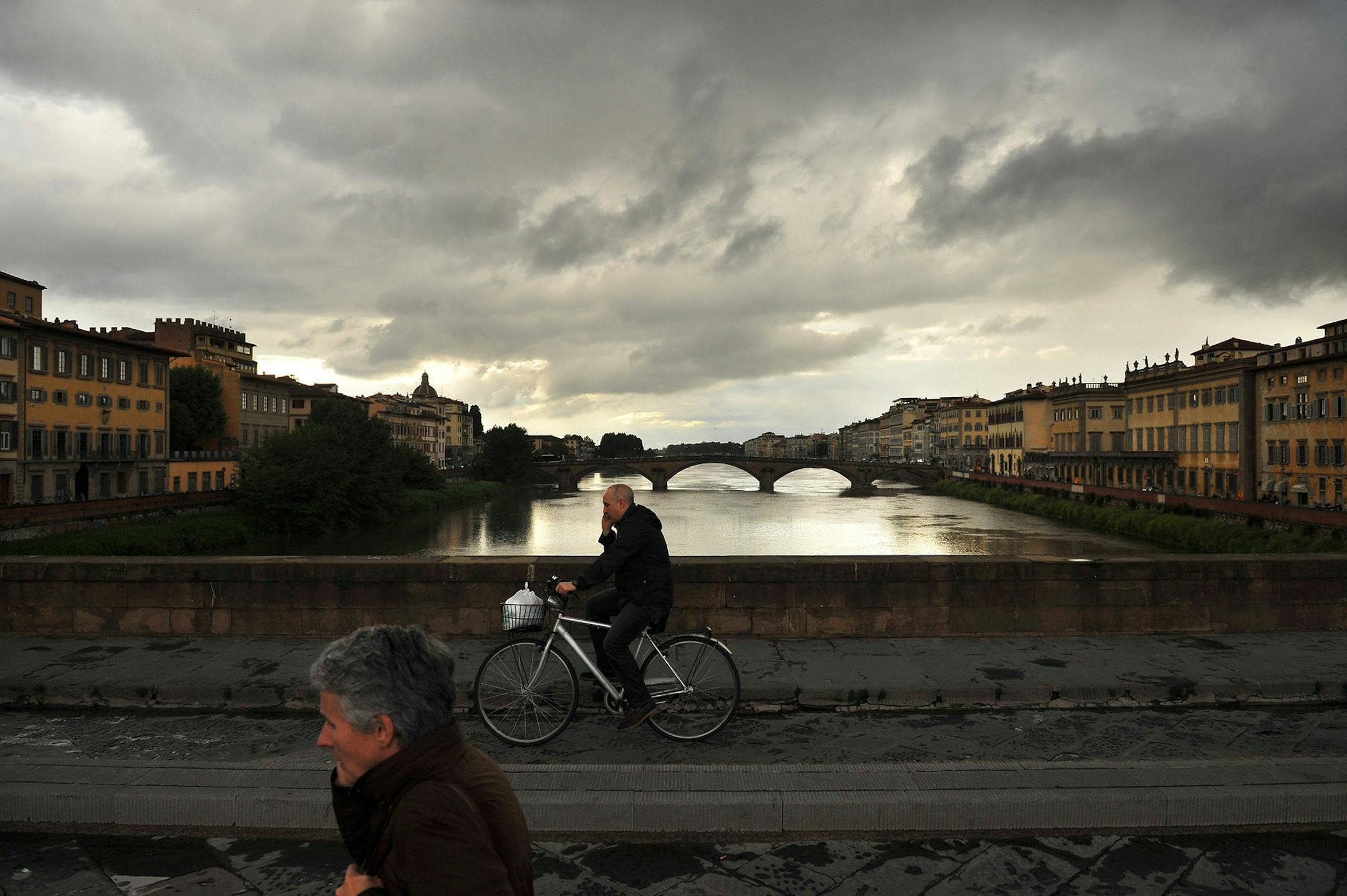
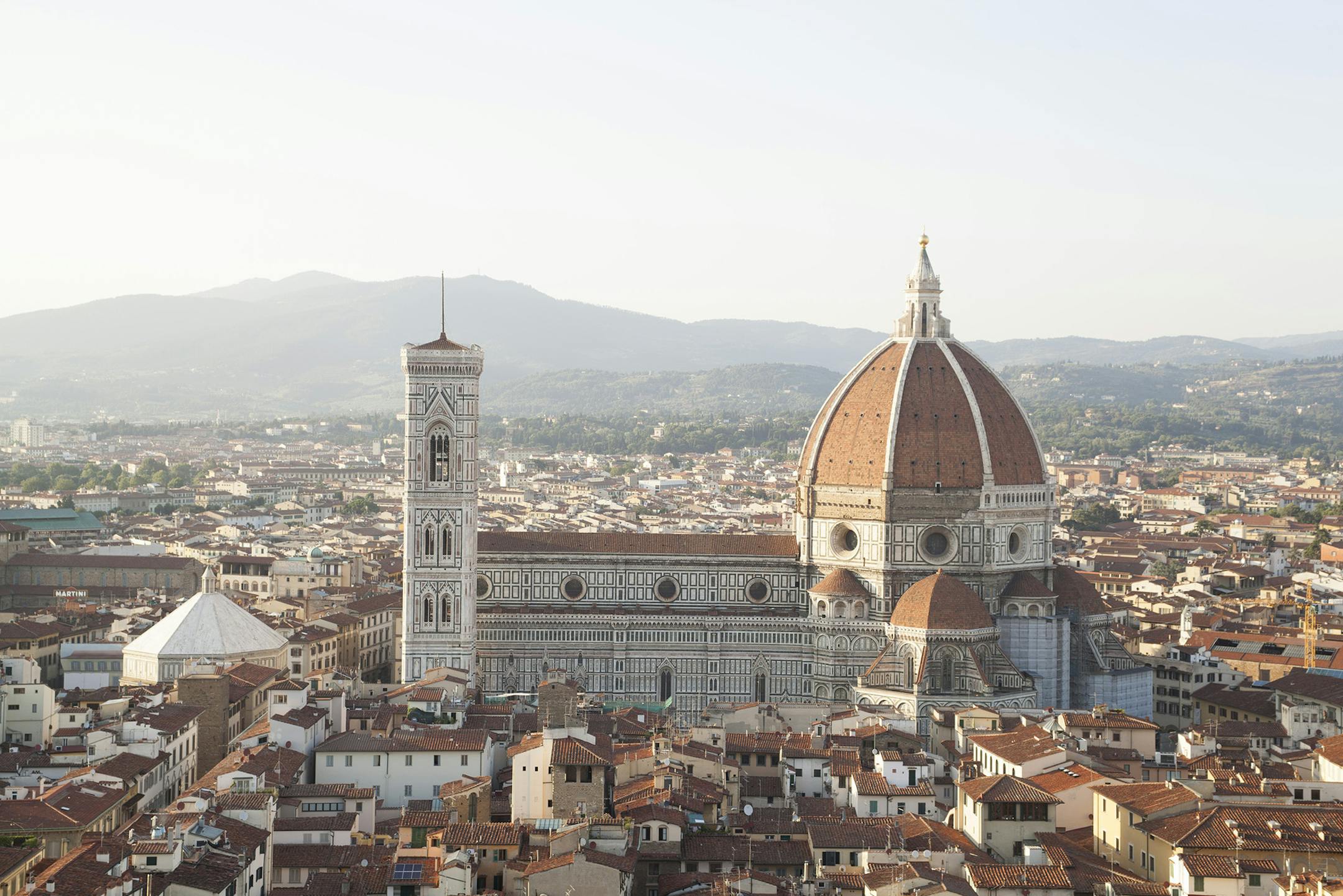
The hall is magnificent, but I'm in Florence on a different mission: to seek out what's left of Dante's medieval world. Would the great poet recognize anything in this city so dominated by Renaissance art and architecture if he were to return? The last time he walked these streets, after all, was 700 years ago.
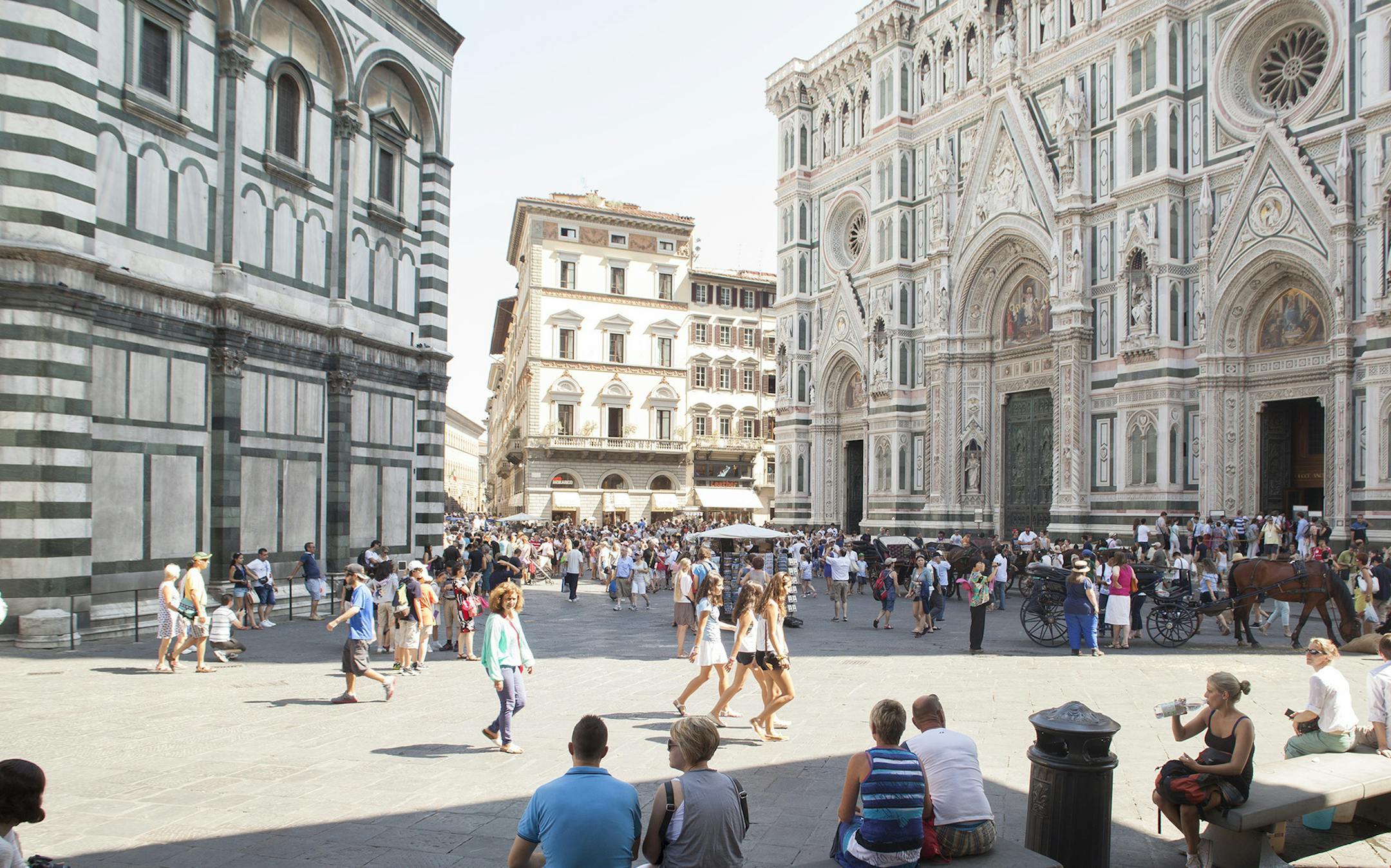
This morning, when I crossed the L-shaped Piazza della Signoria to reach the Palazzo Vecchio, I was literally following in Dante's footsteps. Dante would have come to this turn-of-the-14th-century building often when it was known as the Palazzo dei Priori, housing the city's priors, or municipal councilmen. Dante served as a prior in 1300. But now all that's left of the poet in this palace is his so-called death mask.
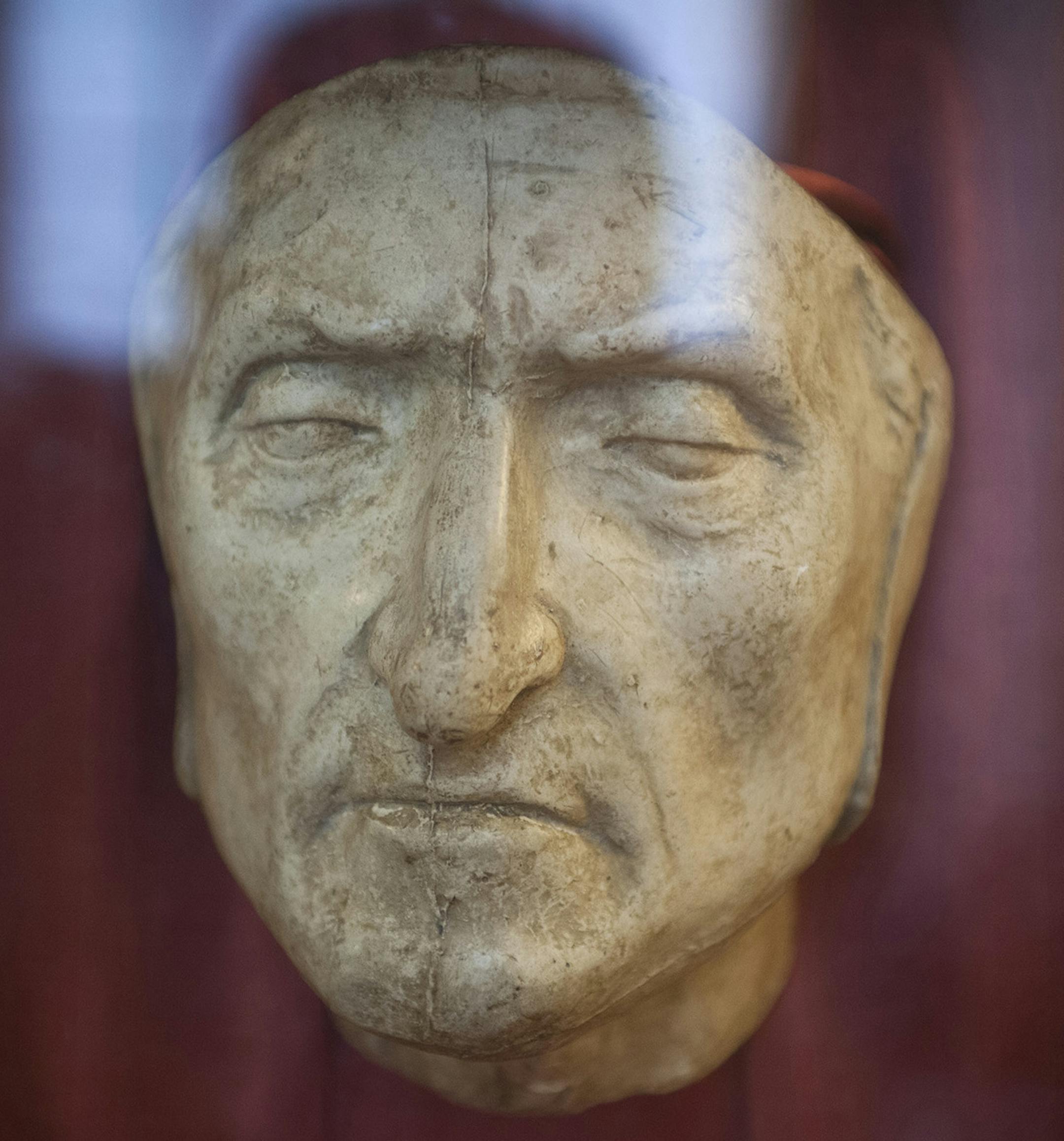
I mount a steep staircase and find the mask near the hall's back balcony. Not even a real death mask, it's a reconstruction based on written descriptions and measurements of the poet's skull. An eerie-looking object, it sits in a box all by itself atop a bureau in a bare, narrow corridor, looking like a discarded artifact. I can't help feeling a bit sorry for the poet. Among the more dazzling objects of the Renaissance here, he seems like an afterthought. Has Florence forgotten Dante?
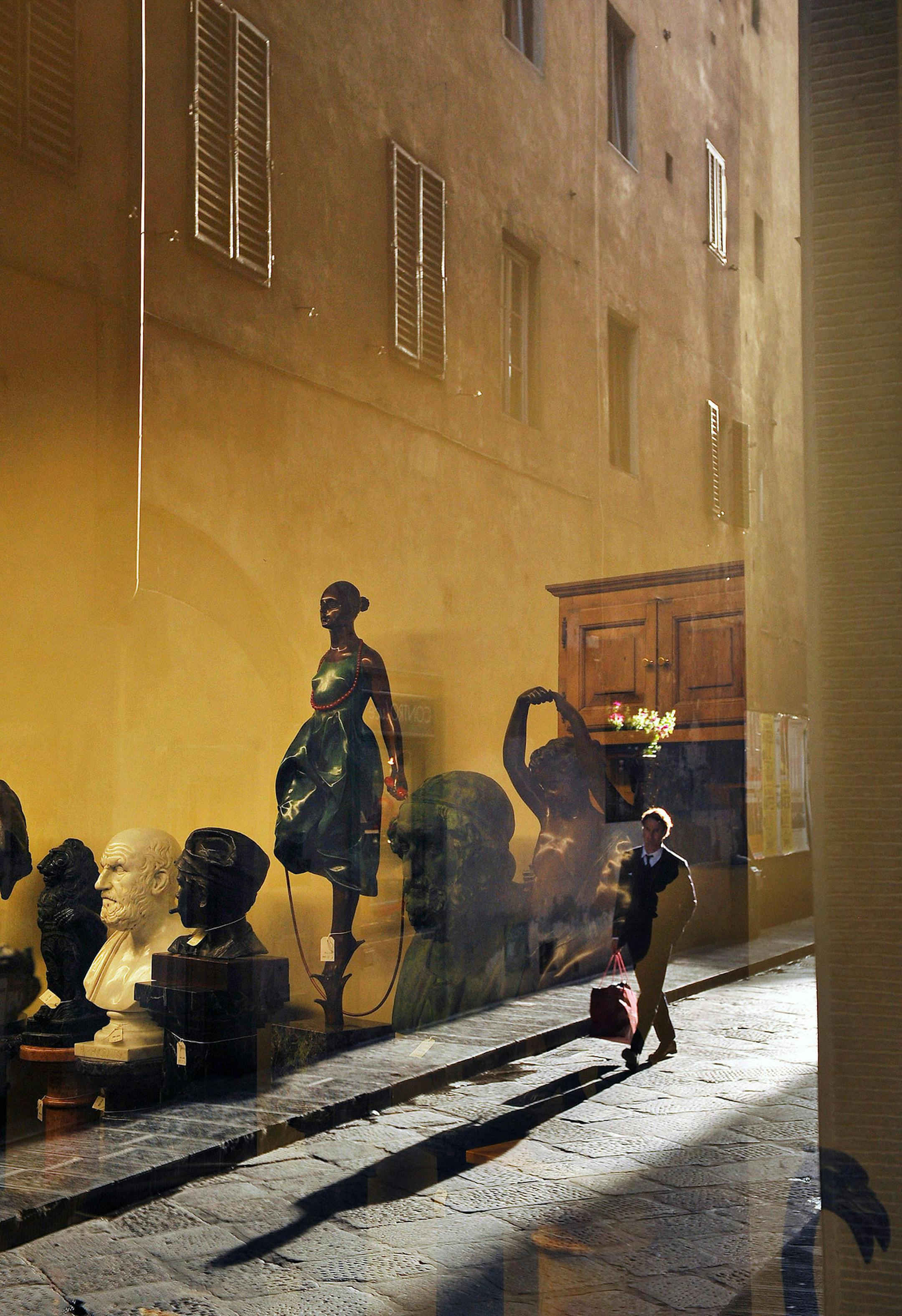
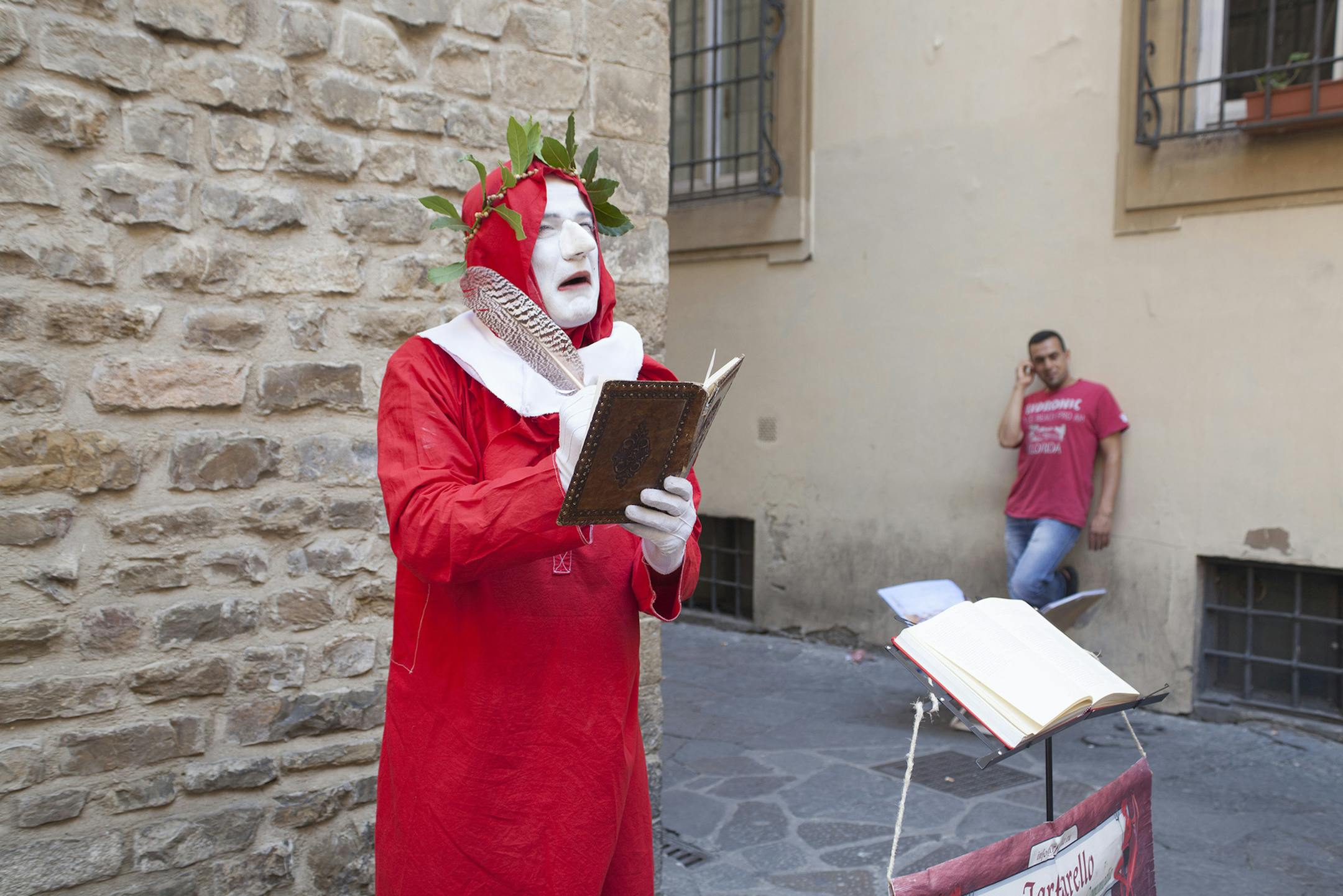
Its merchants certainly haven't. In the three days I've been here, I've spotted a leather shop called Dante Alighieri that sells guitar-shaped purses, a restaurant that promises Il Paradiso della Pizza, a Hotel Dante and street vendors selling everything from Dante busts to illustrations of Dante's nine circles of hell.
The city also has plenty of Dante paintings and sculptures that honor the poet. More than 30 plaques emblazoned with Dante's verses are placed in locations mentioned in his work. At the hotel where I'm staying, housed in a 14th-century structure built only decades after the poet's death, there are more Dante quotes on the walls and embedded in the tiles (along with the words of other poetic souls, from Steve Jobs to Shakespeare). The Locanda dei Poeti also offers a Dante Alighieri room, an appropriate name for singles accommodations: Dante had a reputation for being a loner.
At least that's the legend. We actually know only a few facts about the 13th-century poet. We don't know his exact birth date (Dante tells us that he was born "under the sign of Gemini"), but we do know that in the 33 or so years he lived in Florence, he fought in a battle, joined a political party, fell in love with a woman he met only twice but idealized for the rest of his life, married another woman he had been betrothed to since he was 12, and fathered three children with her.
Oh, and he wrote poetry.