

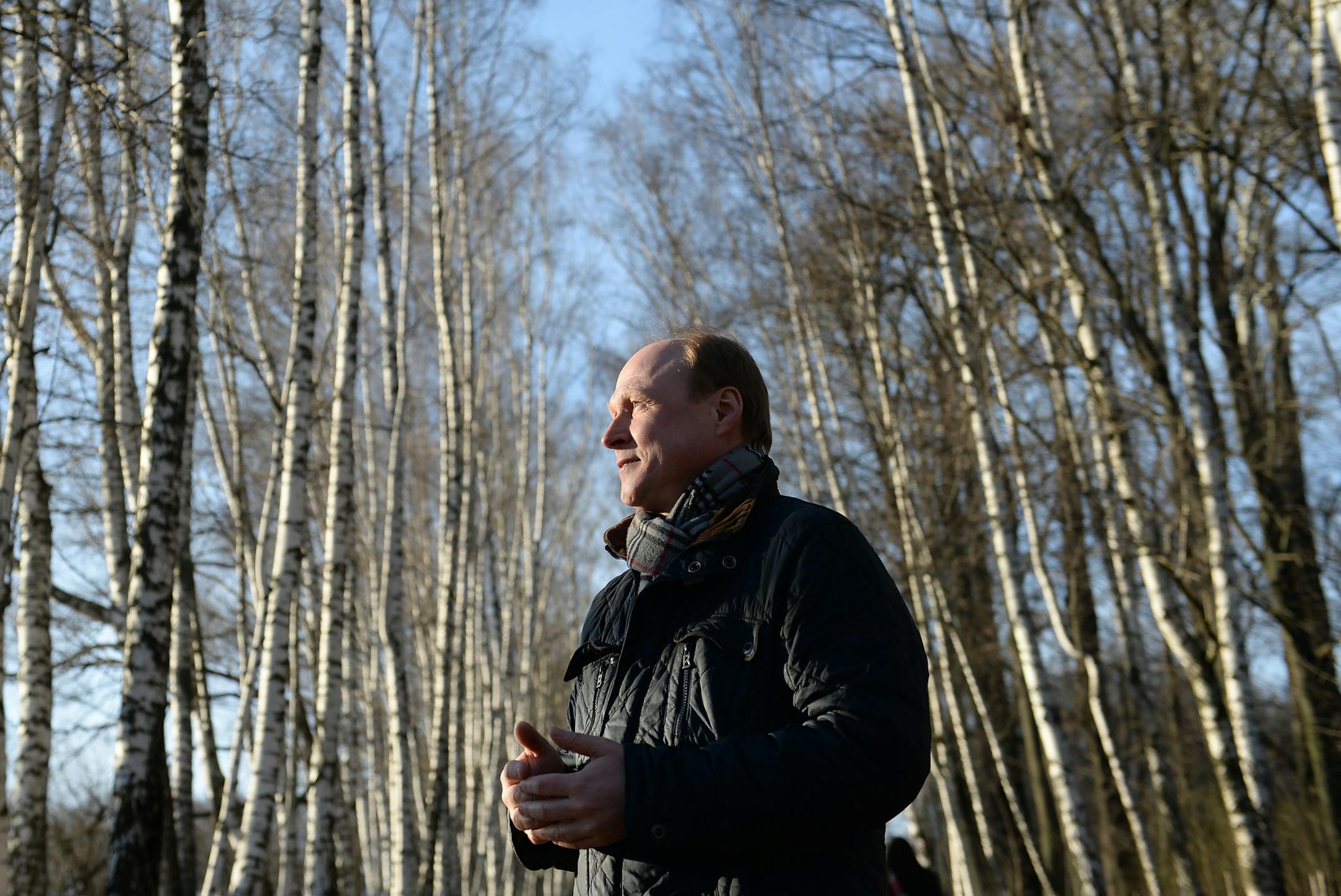
YASNAYA POLYANA, Russia – On a sunny late afternoon, Vladimir Tolstoy, the great-great-grandson of Leo Tolstoy and an adviser on cultural affairs to President Vladimir Putin, strode up the birch-lined path that leads to the bucolic family compound — now a state museum called Yasnaya Polyana — where his forebear wrote "War and Peace" and "Anna Karenina."
At each step, he was greeted by staff members heading home for the day.
At once friendly and feudal, the scene at this estate 125 miles south of Moscow captured something of the mood in Russia today, where Putin is regarded as a czar, especially outside the big cities, even as the liberal intelligentsia reviles him and laments his popularity. It also reflects the benefits for Putin of enlisting the support of a member of an illustrious family as he stokes national pride.
Since being tapped by Putin in 2012, Tolstoy, 52, has emerged as the more conciliatory, highbrow and Western-friendly face of Kremlin cultural policy. He works with Russia's culture minister, Vladimir Medinsky, who is known for aggressive assertions of Russian superiority and conservative values.
Tolstoy was raised in a middle-class family in the Moscow region and trained as a journalist. In 1994, he was named director of the museum, where he added lectures, a literary prize and Russian-language classes. His wife, Ekaterina Tolstaya, took over as director after he became an adviser to Putin.
Tolstoy said that Putin had offered him the post after he criticized the president's advisory council for culture at a meeting of museum directors in April 2012.
Guided by Tolstoy, a committee of leading cultural figures and state officials produced an 18-page policy document that defines culture broadly, saying it is as valuable to Russia as its natural resources. It also touches on the importance of religion in shaping values and the place of the Russian language in uniting a country of more than 140 million people and diverse ethnicities. The document also highlights Russia's distinctiveness "as a country which unites two worlds, East and West."
Some cultural figures have criticized the document for not addressing the pervasive influence of Russian state television, which operates as a mouthpiece for the Kremlin. "It's abstract, like a biblical text," said Kirill Razlogov, a cultural historian who heads the Russian Film Critics Guild.


