Peter Stark grew up in the Wisconsin woods and understood before he was 10 that he had "inherited this legacy of wilderness" from his family and early naturalists. He read "The Story of My Boyhood and Youth" by John Muir several times and felt "a deep boyhood bond" with him. He read Thoreau and Aldo Leopold and stories of Champlain and Coronado and other explorers, and they all people this account -- rather crowd it, at times.
His new book is "The Last Empty Places: A Past and Present Journey Through the Blank Spots on the American Map." Part travelogue, philosophical musings, environmental treatise and family vacation journal, the variety provides humanity and context. But it costs focus and depth in places. What's most interesting is Stark's recurring questioning of why such places as his four chosen blank spots -- northern Maine, western Pennsylvania, southeast Oregon and "the high, haunted desert of New Mexico" -- matter.
"What is compelling ... is their unpredictability, and the uncertainty ... so unlike the safe, well-trodden paths most of us travel in our daily lives. The unpredictability provokes our awareness of the natural world, otherwise we won't survive. Our awareness, if we're open to it, pushes us toward insights that don't occur in our routine lives."
Subdivisions multiply and bulldozers chew up valleys and supplant forests with "an onslaught of asphalt, millions of house lights ... stadiums [and] shopping malls." A century ago, Muir railed against the chopping down of the forests, the plowing of the prairies. Progress had seemed the thing then, "because God, in the conventional Christian thinking, had put Nature on Earth for the Benefit of Man." Muir sought refuge in empty places, and he wrote about them with awe: "We are now in the mountains and they are in us, kindling enthusiasm, making every nerve quiver, filling every pore and cell of us."
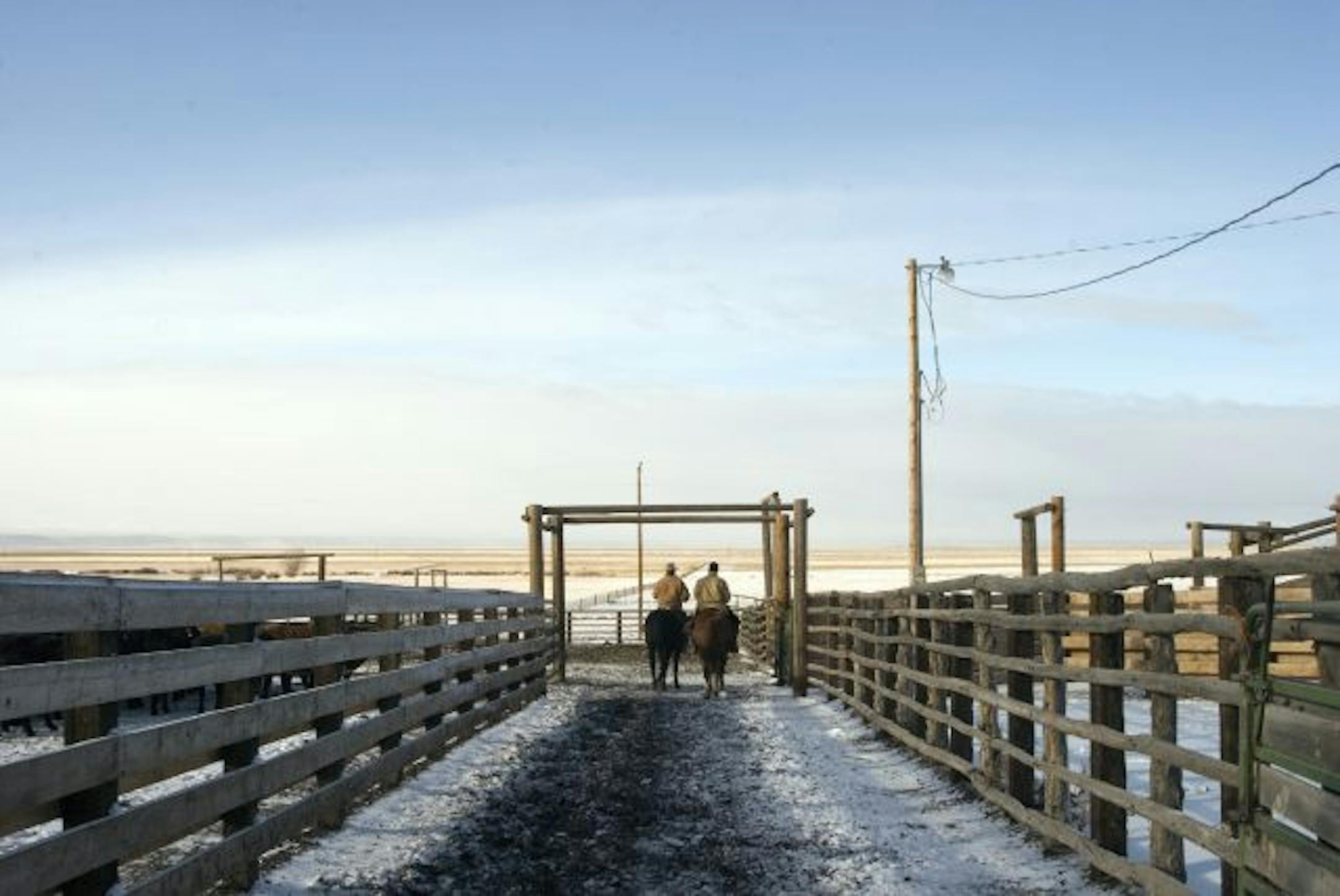
In Frenchglen, Ore., locals quantified the town's remoteness for Stark by telling him how many miles it was to the nearest Wal-Mart (175), and how far to the nearest hospital (an hour by air ambulance). He recounts a long and risky drive over rocky trails to reach dust-covered, sinewy cowhands on a million-acre ranch. The ranch manager tells him that corporate ranches like this "get a black eye," but without them there would be fewer big empty spaces. They would be subdivided into little spaces, each with its own hunting cabin, the land fenced off and the trails blocked.
Stark withholds judgment on that. But he does admire big empties and what they inspire, "that sense of America as self-possessed individuals, creating an individual destiny, in a vast land, with vast bounty." He frets that few see it, because we have become "swallowed up in the anonymity of the interstate exchange and frontage road, among the abstract transactions of hedge funds and mutual funds, among the ephemeral landscapes of cyberspace [and] the fantasized dramas of television."
Chuck Haga, a former Star Tribune writer, now lives in North Dakota.