

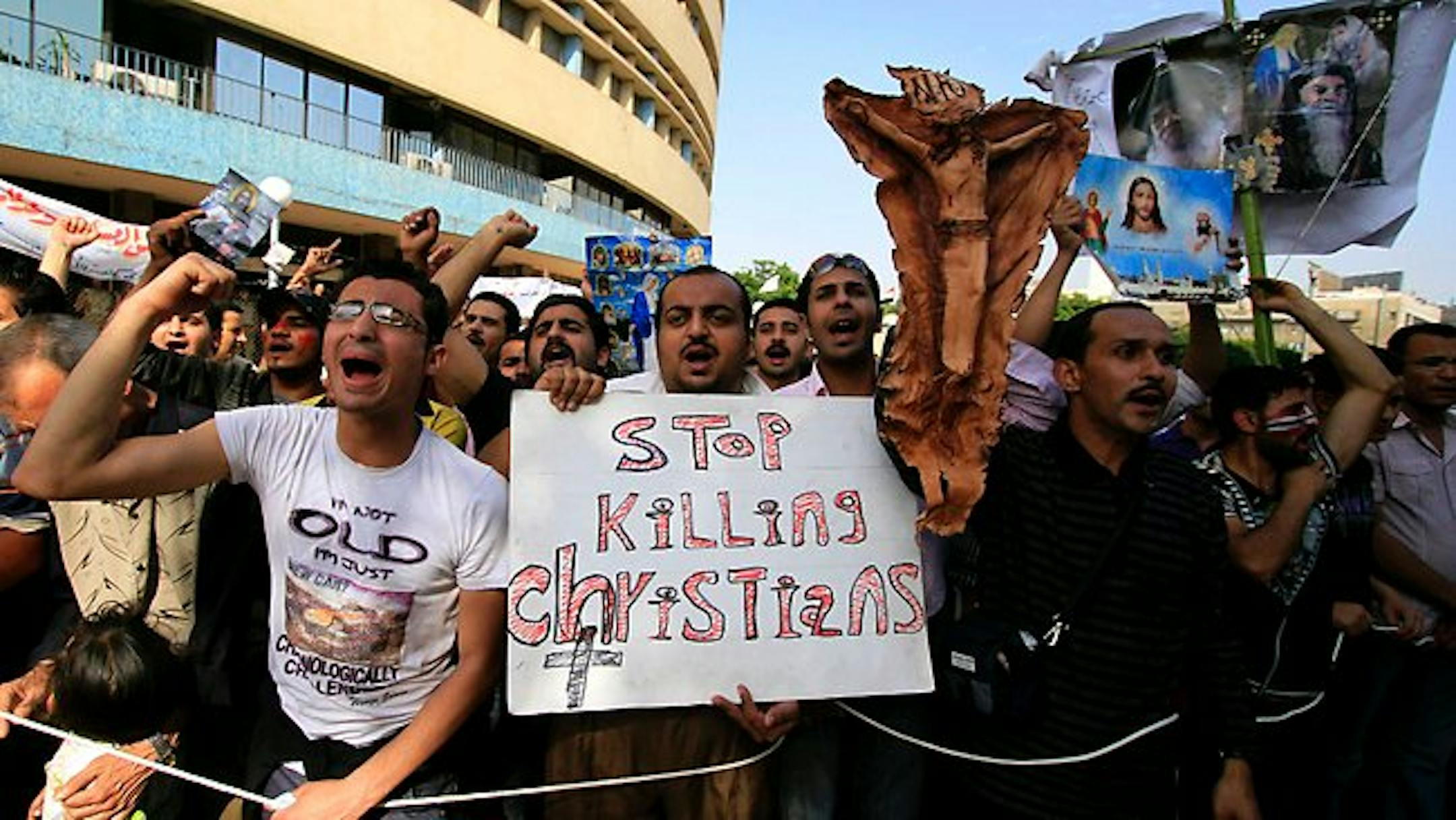
The killing of a guru in a Sikh temple in Vienna leads to riots across the Punjab region of northern India. An anti-Islamic video produced in California results in global protests. Immigrants from Muslim countries are attacked by vigilantes in Greece, where arsonists burn down a makeshift mosque in Athens.
When it comes to religious tensions, what happens in one part of the world does not necessarily stay in that part of the world.
Influences from abroad in recent years were reported to have contributed to religious hostilities or government restrictions in more than six in 10 countries across the globe, a Pew Research Center found in a new study.
No region of the world was exempt. Foreign influences contributed to hostilities or restrictions in all 20 countries studied in the Middle East and North Africa, and about three-quarters of the 95 nations studied in the Asia-Pacific region and Europe, the study found.
So what is the major influence related to religious tensions crossing borders?
Hint: It's about much more than a small church in Florida burning a Quran or a Danish magazine publishing cartoons of a revered prophet.
Nativist fears
Issues related to immigration, whether from individuals seeking economic opportunities in more affluent nations or those fleeing civil conflict, reportedly contributed to religious hostilities or restrictions in the largest number of countries, the study found. International immigrants, migrant workers and refugees either played a role in social hostilities involving religion or were targeted by government restrictions on religion in 63 countries, or 32 percent of the nations studied.


