

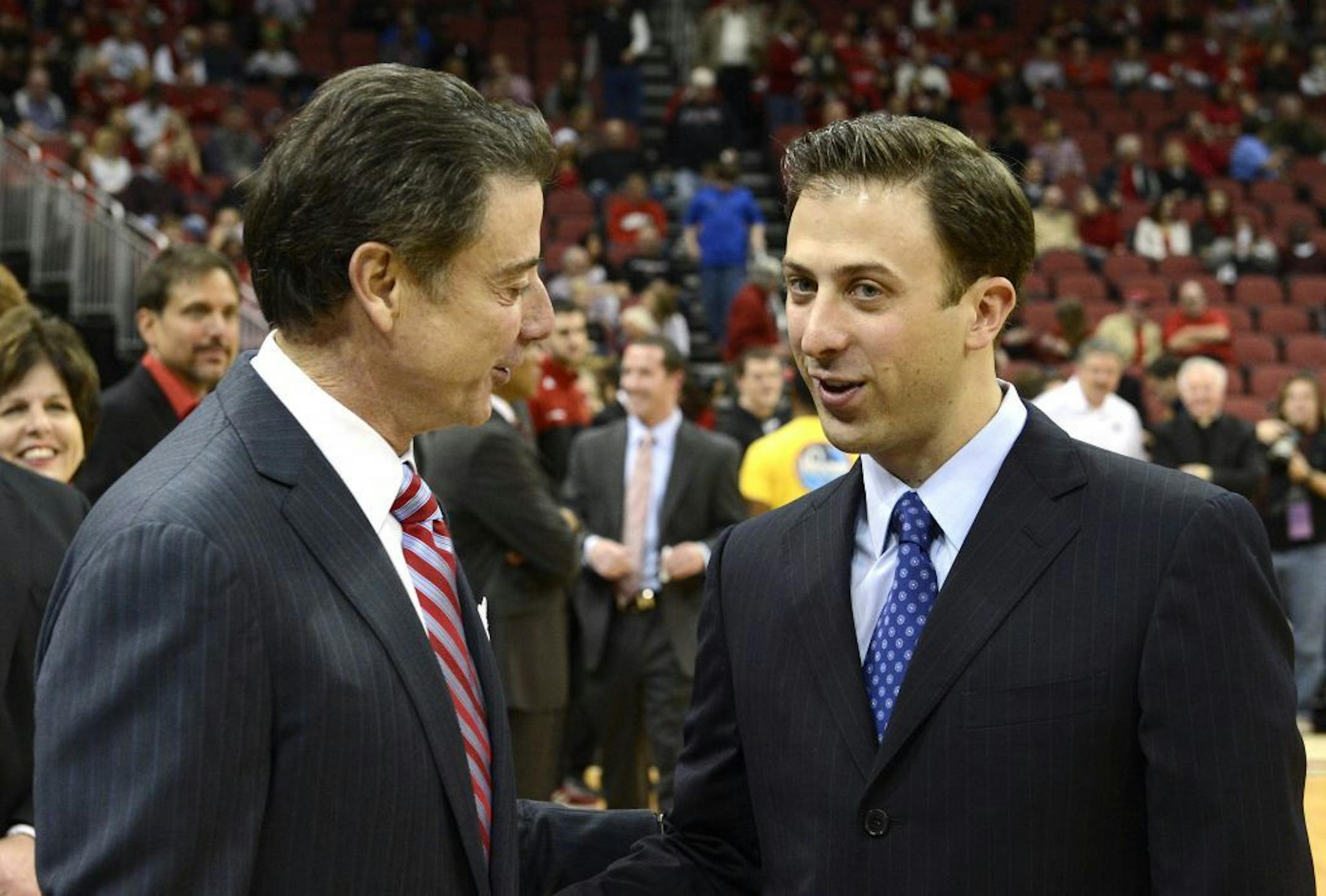
ESPN had an idea for a showpiece college basketball game, and the way it was pieced together provides a glimpse of how the cable giant can control college sports.
What if the University of Louisville, the 2013 national champions, played an all-expenses-paid game in Puerto Rico in November of 2014, network officials thought. Better yet, what if the marquee attraction pitted coach Rick Pitino against his son, coach Richard Pitino of the Minnesota Gophers?
ESPN first approached Louisville and, after getting its agreement, then dialed Minnesota, making it appear that the Gophers were only along for the ride.
"ESPN, really, made a suggestion of, 'How would Minnesota look in this game?' " said Louisville senior associate athletic director Kenny Klein. "It was basically a joint thing" between Louisville and ESPN to approach the University of Minnesota.
The matchup, which will be played in November at a U.S. Coast Guard air station, is but one example of how Minnesota — like most major college sports programs — goes far and wide to gain exposure for its basketball team. But teams can be beholden to sponsors in doing so.
The exposure can help with recruiting, give well-heeled fans a chance to accompany the team to popular locations and add spice to a season that, for the Gophers this year, will end with a trip to the ESPN-televised National Invitational Tournament in New York City.
Clint Overby, ESPN's senior director of events, said the sports cable network's influence can be overstated, and "I can't [see] that in any scenario where we technically 'control the universe.' " Overby noted that in any matchup involving Louisville, "they're the marquee attraction. [But] Minnesota's had a great year."
Three months after ESPN announced the Louisville-Minnesota game, Minnesota officials are still releasing few details about the game but acknowledged that television is often in control.


