

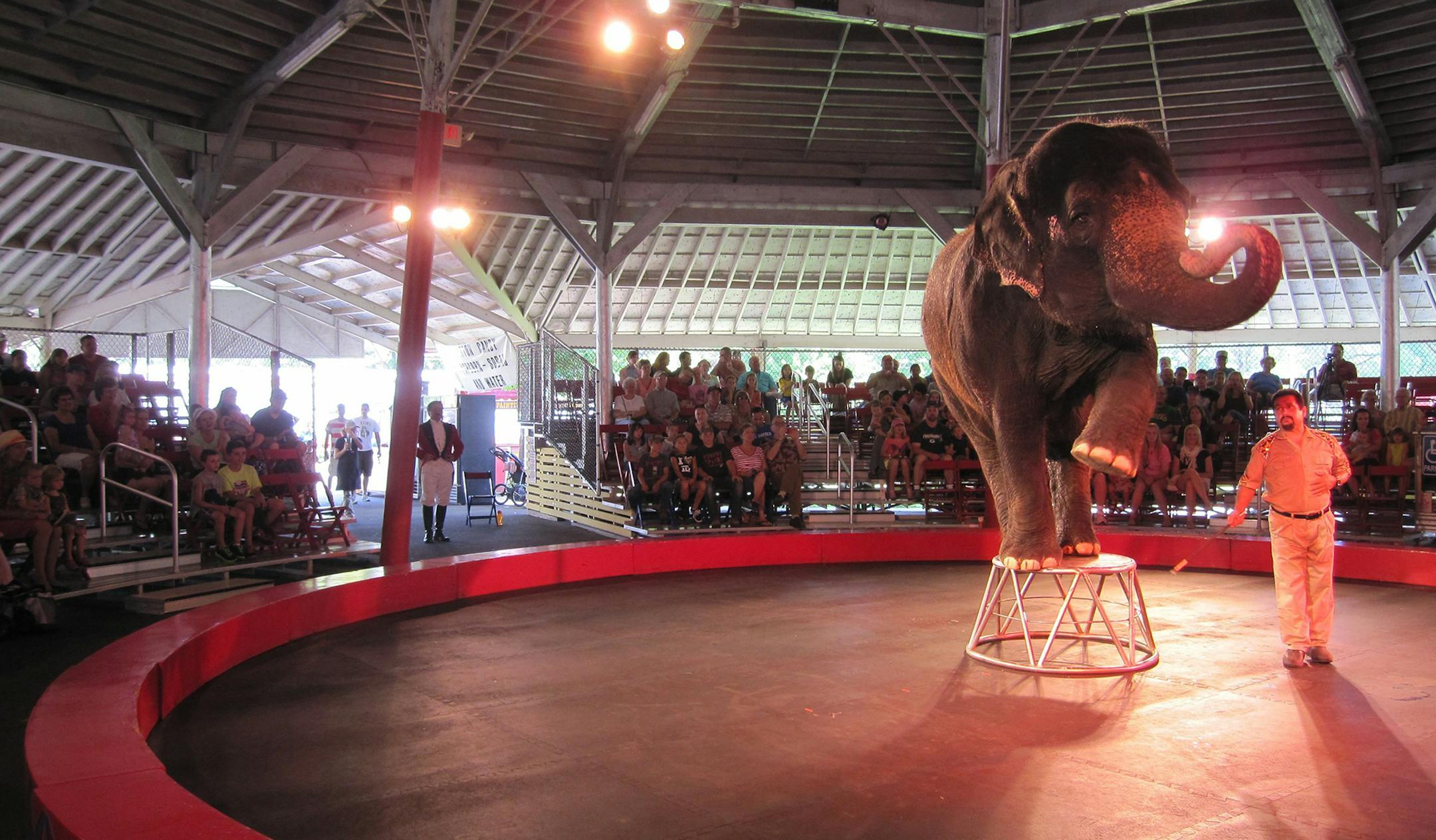
Let's begin with the obvious question: How in the name of Jumbo the Elephant did a south-central Wisconsin town of 12,000 become the circus capital of the world?
It all goes back to five brothers — Al, Alf, Charles, John and Otto — who were raised in Baraboo during the mid- to late 1800s. They had a knack for juggling, telling jokes, performing skits and engaging in general hilarity. By 1884, they had sketched out a routine and pitched a tent to create a show they named the Ringling Brothers' Classic and Comic Concert Company.
It wasn't long before the brothers bought covered wagons to take their show on the road, touring with a shorter, punchier name: the Ringling Brothers Circus. Each winter they returned home to Baraboo with their tigers, elephants, wagons and the rest. Little did the brothers know their lark would turn their hometown into a place that continues to live and breathe circus 130 years later.
"It's not uncommon to see an elephant walking down the street in Baraboo," said Mary Hultman, who owns Raven House antiques store. "Which is kind of cool."
Clowns, guns and prom dresses
At the edge of town, an official state marker declares Baraboo the home of the Ringlings; it is likely the only state marker that includes a nod to an animal called the "Hideous Hyena Striata Gigantium, the Mammoth, Midnight Marauding, Man-Eating Monstrosity."
Just down the road is another marker. In the front yard of otherwise innocuous bank Badgerland Financial, a plaque proclaims it is the site of the first Ringling Brothers performance, on May 19, 1884. Admission was 25 cents.
Modern-day Baraboo was ranked fourth on last year's "20 Best Small Towns to Visit" by Smithsonian Magazine. An old courthouse, crowned by a clock tower, sits at the heart of the downtown. It is ringed by a drugstore, an antique shop, restaurants and a theater. And an International Clown Hall of Fame and Research Center, which is housed under the same roof as a gun dealer and a store that sells prom dresses.
The museum boasts a fascinating swath of memorabilia, from a 100-year-old costume and makeup kit from Edwin "Poodles" Hanneford, who performed on Broadway and palled around with Charlie Chaplin, to Chester "Bobo" Barnett's clown car. ("He was a big guy in a little car with seven dogs, a skunk, a trumpet and two suitcases," said Greg DeSanto, executive director of the clown center.)


