

Like many of Hennepin County's poorest residents, Alfred McClary suffers from multiple chronic health problems that require lots of attention to manage.
"I've got so many medications here," the 60-year-old Minneapolis resident said recently. He takes as many as 10 a day. He's had gout surgery in the past month, and peripheral artery disease causes excruciating pain in his legs. The pain cost him his longtime job in purchasing at a hotel a few years ago, he said.
It's patients like McClary that Hennepin County is working with to hold down costs through Hennepin Health. The nation-leading effort, launched a year ago with federal approval in conjunction with the state Department of Human Services, gave Hennepin Health control of Medicaid dollars, allowing it to integrate medical and behavioral health care with social services.
The state often will contract with a managed-care company to run Medicaid for a county, but Hennepin County already had an HMO infrastructure to try innovating on its own.
"Everybody's watching us," said health care lawyer and analyst Keith Halleland. "We may be crazy, but there are good signs. I'm a believer myself."
The project is making inroads in improving coordination of medical care for the indigent and in controlling costs. "From the information we've seen so far, it is working," said Scott Leitz, assistant commissioner of the state Department of Human Services. Now other counties are considering similar efforts, he said.
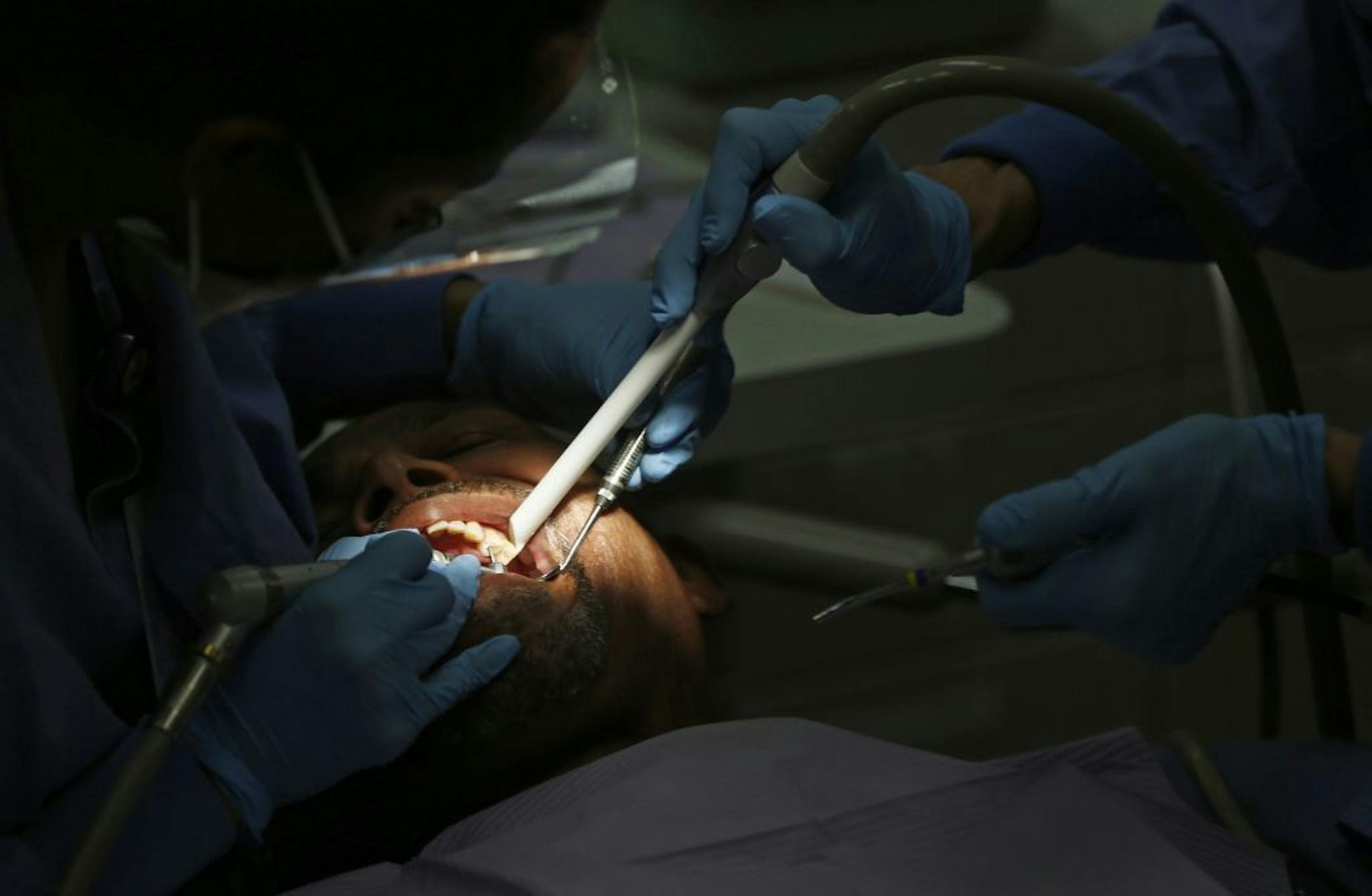
One of Hennepin Health's first moves was to put a dental clinic at Hennepin County Medical Center in downtown Minneapolis. That was crucial, because the poor often have troubles with their teeth that grow into bigger health problems. Other initiatives focused on medication management and chemical dependency.
"What we liked about it was that they were really focused on upstream and primary care … rather than on the emergency-room care," Leitz said.
![At the dental offices of HCMC, resident dentist Asmeret Tefahun worked on a filling for a patient who DID have insurance. The clinic also serves many indigent patients, but none was there when the photographer visited. Larger medical issues can stem from indigent who receive little or no dental care. ]rtsong-taatarii@startribune.com](https://arc.stimg.co/startribunemedia/XMY4D6IZOBXNILUBAX6TQZRJNU.jpg?&w=1080)


