

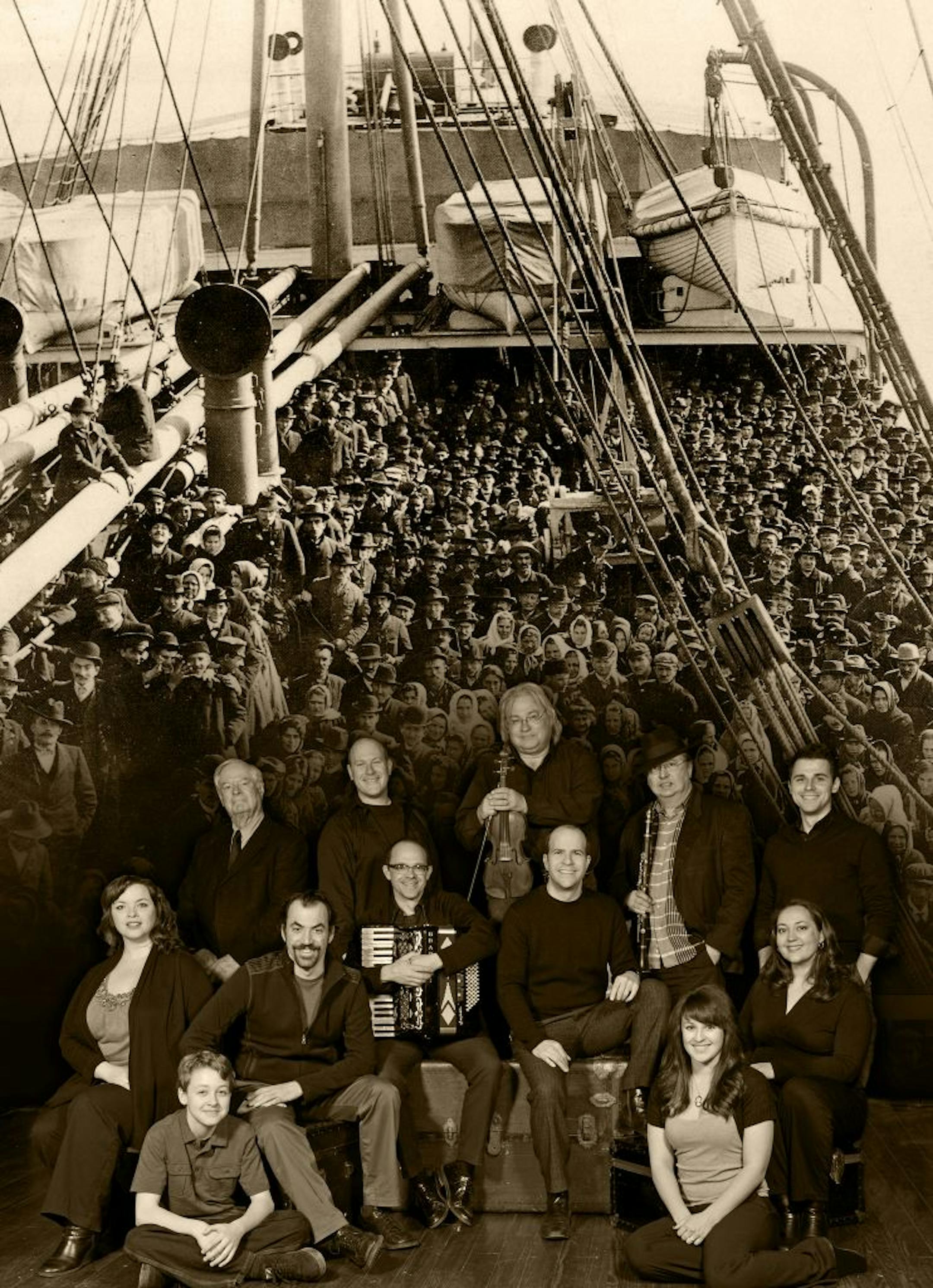
The editorial pages reflected prevalent attitudes about immigration: Newcomers were taking jobs, depressing wages, depleting welfare resources. Contrary voices suggested the influx of people helped refresh our perspectives and initiative, and that the nation was culturally enriched.
Ah, the more things change. From about 1880 to 1924, waves of immigrants, primarily from southern and eastern Europe, flooded the United States. Italians, Slavs, Russian Jews, Poles and Baltic peoples were among those who crowded through Ellis Island, searching for cities with gold-paved streets. They found crowded, festering tenements and a population that suspected the worst of these foreigners. So severe was the reaction that the Immigration Act of 1924 imposed restrictive quotas that lasted until 1965.
Theater Latte Da has plumbed the first-generation experience of these Americans in "Steerage Songs," which has its premiere Thursday through Sunday at the Fitzgerald Theatre in St. Paul. Peter Rothstein and Dan Chouinard have stitched together songs and verbatim texts that shed light on this seminal period.
Along the way, Rothstein and Chouinard uncovered great curiosities from the era. Steamship companies and railroads eager for business enticed immigrants by hiring itinerant advertising troupes to sing jingles in small European towns. Some state governments, looking for population, joined in the courtship. "Uncle Sam's Farm," a ditty extolling the available opportunities in America, had this chorus:
"Our lands, they are broad enough, don't be alarmed; For Uncle Sam has room enough to give us all a farm."
Before he was famous
Another song, "Gee! But This Is a Lonesome Town," was included for its place in the history of little Izzy Baline. In 1905, the New York World reported on the doings about town of Adm. Prince Louis of Battenberg. A relative of the British royal family, the prince went slumming one night and stumbled into a chop suey kitchen in Chinatown. Two singing waiters, "Izzy and Bulhead," serenaded Louis with "Lonesome Town" and afterward the prince flipped them a dime. The World reported that "Izzy, the recipient of the ten cents, declares he will have it framed and hung on the wall as a souvenir."
We know Izzy better by the name he would later assume, Irving Berlin.


