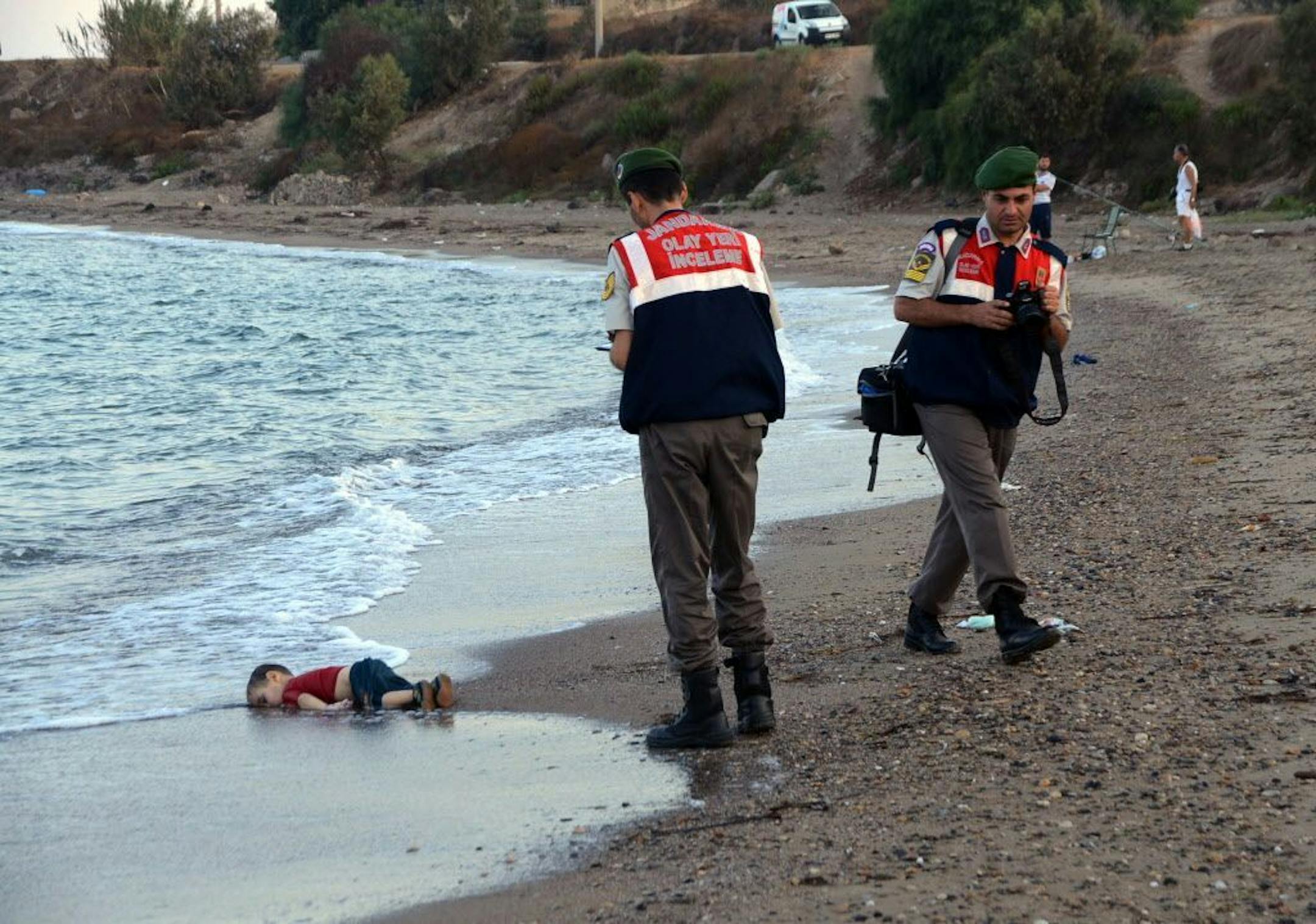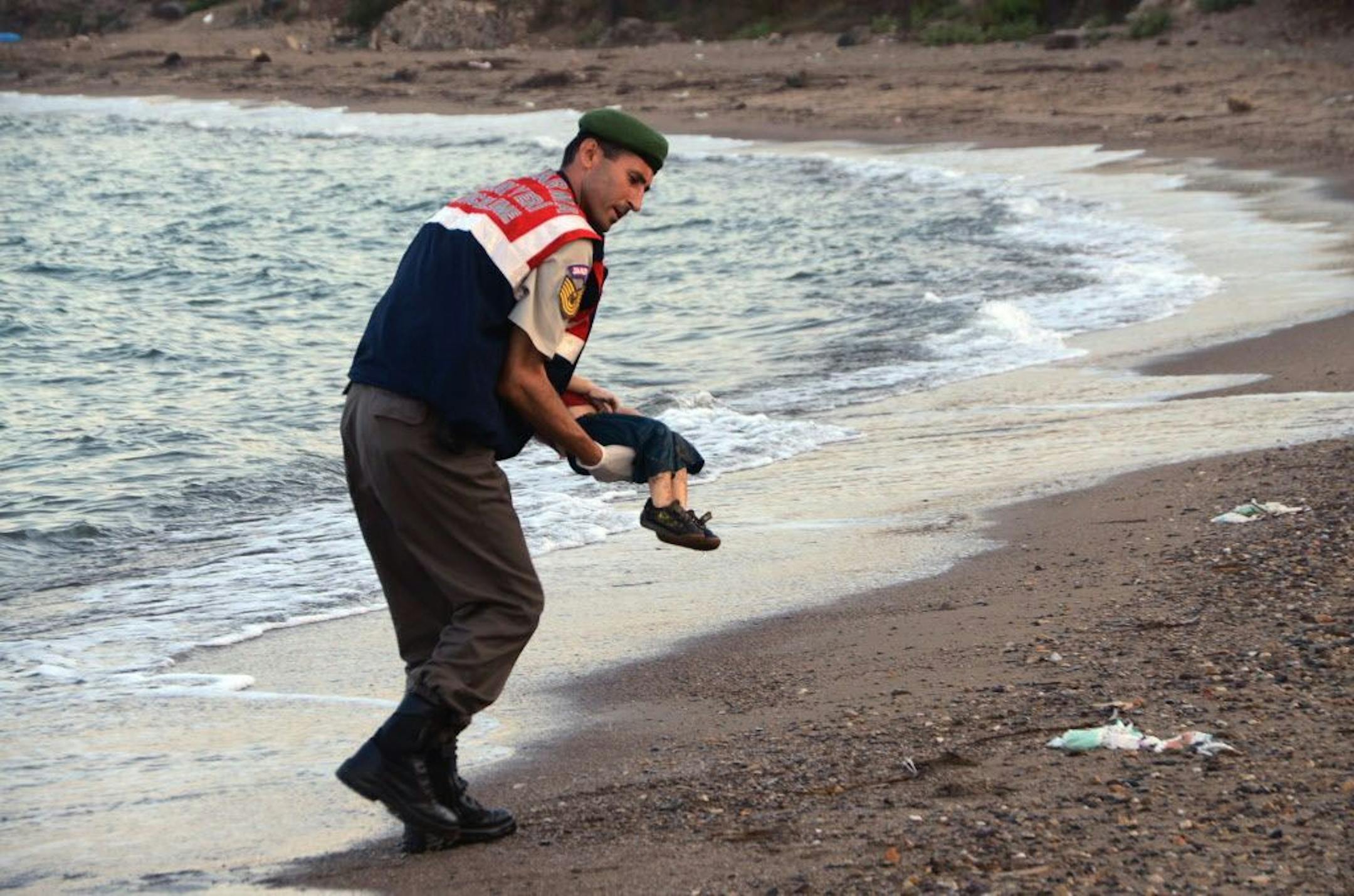
The photo of the dead 3-year-old Syrian boy on a Turkish beach is haunting.
It captures everything we don't want to see when we tap our phones or open our newspapers: a vicious civil war, a surge of refugees, the death of an innocent.
The image of little Aylan Kurdi is hammering home the Syrian migrant crisis to the world, largely through social media. Aylan died along with his 5-year-old brother and their mother when their small rubber boat capsized as it headed for Greece. The Associated Press distributed the photos to its subscribers. The photos were from the Turkish news agency DHA.
"It is a very painful picture to view," said Peter Bouckaert, who as director of emergencies at Human Rights Watch has witnessed his fair share of painful scenes. "It had me in tears when it first showed up on my mobile phone. I had to think hard whether to share this."
But share, he did. Bouckaert, who is in Hungary watching the crisis unfold, said people need to be pushed to look at the "ghastly spectacle" so they can, in turn, prod governments to help the suffering Syrian people.
Still, will the disturbing image galvanize people into action? Will it be like other seared-in-our-memory photographs — a vulture hovering over starving child in Sudan, a girl fleeing a napalm attack in Vietnam, the child in a firefighter's arms after the Oklahoma City bombing?
Or will it become just another of the many images on social media, lost amid the din?
"One of the things about this story is that it's really difficult sometimes for the world to get a handle on it," said Al Tompkins, a senior faculty member at the Poynter Institute, a center for media studies in St. Petersburg, Florida. "Regardless of the technology, a singular iconic image can still touch us in ways."