

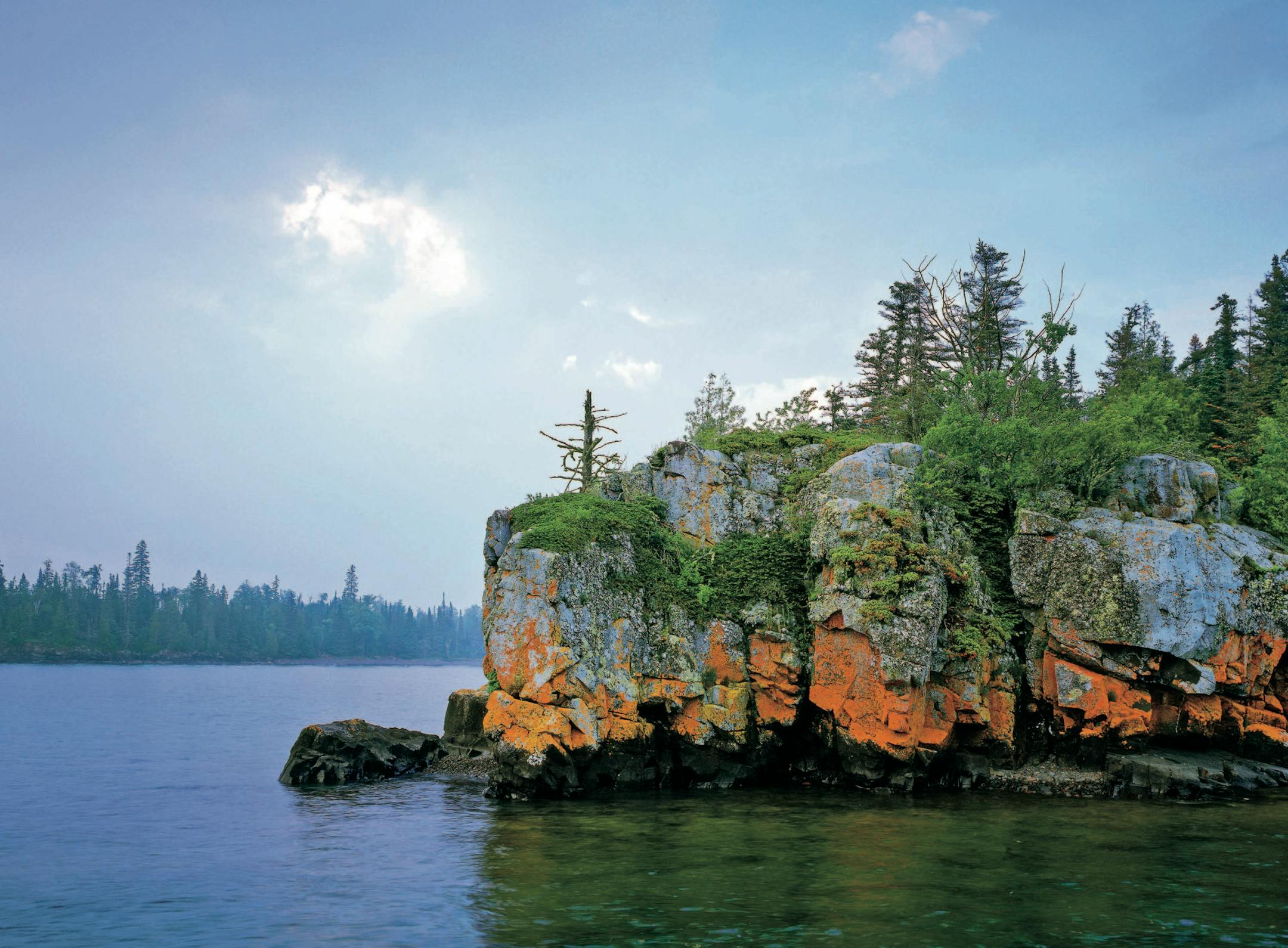
Isle Royale sits roughly 20 miles east of mainland Minnesota and 55 miles west of Michigan's Upper Peninsula, yet the island in Lake Superior belongs to Michigan. Why?
That's a question Andrew Heintz has pondered for years. Heintz, a reader from Golden Valley, is an avid North Shore hiker but has yet to cross Isle Royale off his bucket list.
The query is not unusual. "A Minnesota backpacker or boater will ask the question … quite regularly while a Michigan one won't ask it at all," said Timothy Cochrane, a former Isle Royale park ranger and author of a book about the Ojibwe and the island.
Heintz's question is the latest entry to Curious Minnesota, a community-reporting project that invites readers to ask the Star Tribune questions.
First, we have to figure out why the island belongs to the United States at all. Isle Royale is, in fact, closest to Canada.
America's Founding Fathers had something to do with it. In 1783, Benjamin Franklin, among others, signed the Treaty of Paris, an agreement that established the nation's borders. American negotiators may have known about Isle Royale's copper deposits and persuaded the British to draw the U.S. border north of the island.
"There's this age-old rumor that somebody whispered in [Franklin's] ear and that he sort of fudged the line up and around a big island close to the Canadian border," said Seth DePasqual, the park's archaeologist.
It's unclear how much European explorers knew about the area's copper reserves, but evidence suggests that American Indians began mining there at least 4,500 years ago, DePasqual said.


