
Iceland cools off campers

Wind, ice and rustic majesty punctuate 1,000-mile trek around the island.

June 5, 2008 at 11:02PM
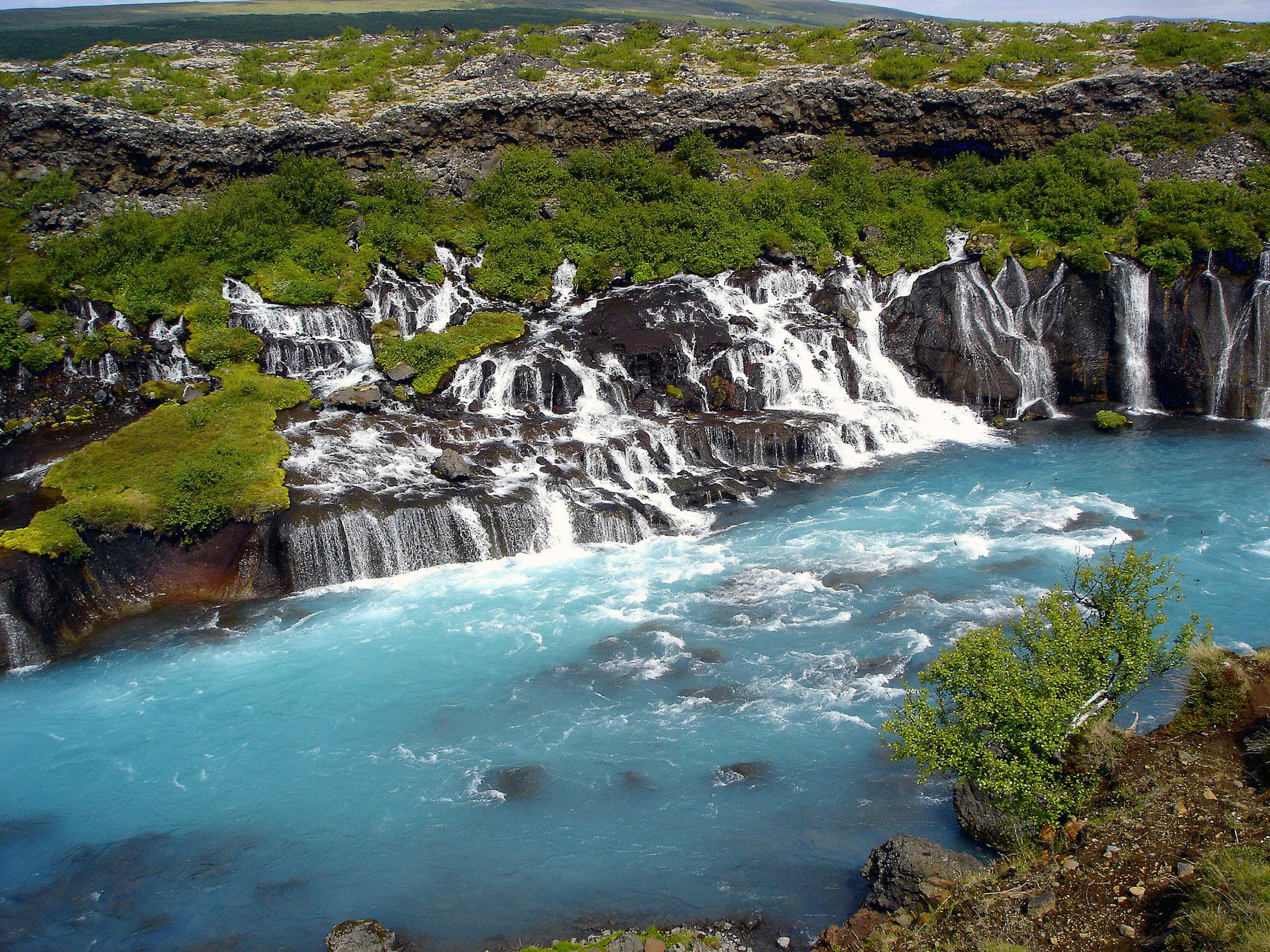
The Ring Road traces Iceland's landscape of tundra, desert, volcanic rock, glaciers and falls like Hraunfoss, where the water emerges over a lava field.
The Ring Road traces Iceland's landscape of tundra, desert, volcanic rock, glaciers and falls like Hraunfoss, where the water emerges over a lava field. (Boston Globe/The Minnesota Star Tribune)

At the edge of the island's largest glacier, in a desert covered with lava rocks, I learned what it means to be an amateur camper.

Around what would have been dawn had the sun actually set during my weeklong trek through Iceland, it became clear that my $119 department store tent was not designed to withstand arctic gusts. Had my girlfriend and I not gone to such lengths to block out the midnight rays and the howling winds, we might have seen warning signs. With such essential gear as earplugs and eyeshades, we hadn't bothered to use some of our other equipment -- such as stakes to secure our tent. Not a wise idea in a country with few trees.

We were in Iceland after hearing that its glacial rivers offer some of the world's best white-water rafting, and its capital, aside from $10 draft beers and basic entrees costing north of $50, boasts of hot springs. We chose to explore the island, driving a scenic route that would take us nearly a thousand miles over six days.

Our first stop was the nearby Blue Lagoon, an otherworldly spa about 15 minutes from the airport. We spent several hours sloshing about in the briny, 100-degree water, slathering a cleansing goop into our drowsy pores.

Pampered, crinkled and smelling of sulfur, we left the tourists behind for a lonely road that looped peacefully through blackened lava fields. Then we reached a sign with a yellow and black exclamation point that read "Malbik Endar." It was the only hint of civilization in the visible distance, and it signaled the end of the paved road.

Our manual-shift Toyota Yaris squealed as we climbed a steep grade on what felt more like a mountain trail than a dirt road. We puttered along the curving road, through parched valleys, over craggy peaks, until the bleak horizon gave way to grass and the sea glistening in the distance. A few more bends in the road, and we came upon several grazing Icelandic horses, a shaggy, affectionate breed that huddle to ward off the cold.

When our shortcut finally brought us to the highway -- a two-lane road that rings the island -- we picked up speed and headed to Skaftafell, a lava field at the base of Vatnajvkull, the island's (and Europe's) largest glacier.

Waking at the crack of dawn
About midnight, we saw what looked like giant muddy ice cubes spilling from the green foothills. It was our first glimpse of the mist-covered Vatnajvkull, and we decided to put up our tent in a small campground. As it began to drizzle, we discovered we couldn't inflate our air mattress; we had brought the wrong charger. We also found our tent looked a lot more like a sail than others nearby, which were low-slung, aerodynamic, and secured with large ropes and stakes.

We eventually learned why. The wind pushed one side of the Target special over our heads. Then one of the poles -- the main one -- cracked. Half the tent collapsed.

It was time to wake up.

We inspected the glacier and later took a cruise in a bay studded with large icebergs that had snapped off the glacier.

Back on the road, we followed large, black mountains across rocky fiords and alongside dozens of picturesque waterfalls. With thick clouds touching the ground, we inched along an impossibly curvy road in driving rain.

The next day we took another dirt road to Dettifoss, Europe's largest waterfall. From there, we explored one of the country's few places with trees. That night, we gave the tent another try. We repaired the pole and ripped rain shield with duct tape, then camped among about a dozen cabins owned by the rafting company we had paid for the next day's trip.

The thrill of icy waters

The next morning we found ourselves donning dry suits that gave neck-to-toe protection. At the end of an hourlong bus ride through a hailstorm, our Nepalese guide told us to put on our helmets and helped us carry our large rubber raft into a smooth section of the East Glacial River, which felt freezing despite wool socks, dry suit and rubber boots.

Within minutes, the grassy banks gave way to canyons, and the icy impact of the rapids soaked our faces and numbed our gloved fingers. The bumps turned to ledges, and as our guide urged us to row harder, we flew over sizable drops, some of them causing rafts to tip over. We shot through the bluish-gray river, staring at stark black cliffs, the beauty of the moss-covered, treeless gorge inuring us to the onset of frostbite.

Six hours later, we sipped hot chocolate and did our best to thaw.

We drove again through midnight that night, along the ocean, beside tall mountains and broad meadows, crossing into another desert.

It began to rain, and with exhaustion setting in, we stopped at a timeworn hotel we found beside the road.

The next day we took more dirt roads to explore caves, a large national park, geysers and yet more beautiful waterfalls. Finally, after all the miles, all the sheep, all the rustic majesty, we rolled into Reykjavik, which had a campground by the sea.

We spent the night (and more than $250) in a newly appointed Radisson.

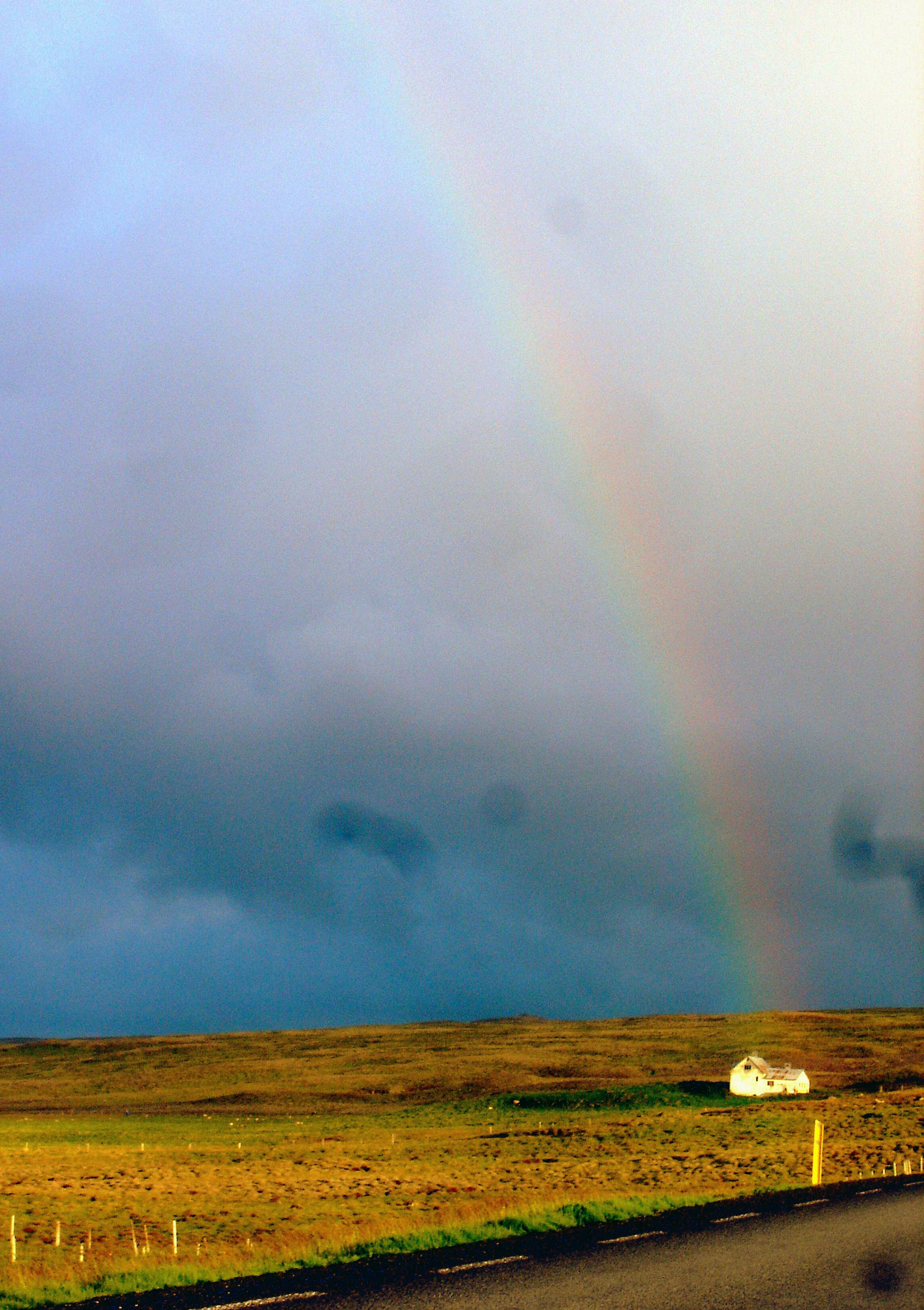
The Ring Road, sometimes alongside a rainbow, traces the Iceland's landscape of tundra, desert, volcanic rock and glaciers.
The Ring Road, sometimes alongside a rainbow, traces the Iceland's landscape of tundra, desert, volcanic rock and glaciers. (Boston Globe/The Minnesota Star Tribune)
about the writer

about the writer

DAVID ABEL

More from Minnesota Star Tribune

See More
card image
J. SCOTT APPLEWHITE, ASSOCIATED PRESS/The Minnesota Star Tribune

The "winners" have all been Turkeys, no matter the honor's name.

In this photo taken Monday, March 6, 2017, in San Francisco, released confidential files by The University of California of a sexual misconduct case, like this one against UC Santa Cruz Latin Studies professor Hector Perla is shown. Perla was accused of raping a student during a wine-tasting outing in June 2015. Some of the files are so heavily redacted that on many pages no words are visible. Perla is one of 113 UC employees found to have violated the system's sexual misconduct policies in rece