
Hunting for buntings

A rare close encounter with the beautiful but elusive snow bunting caught the interest of a police officer.

December 30, 2008 at 6:25PM
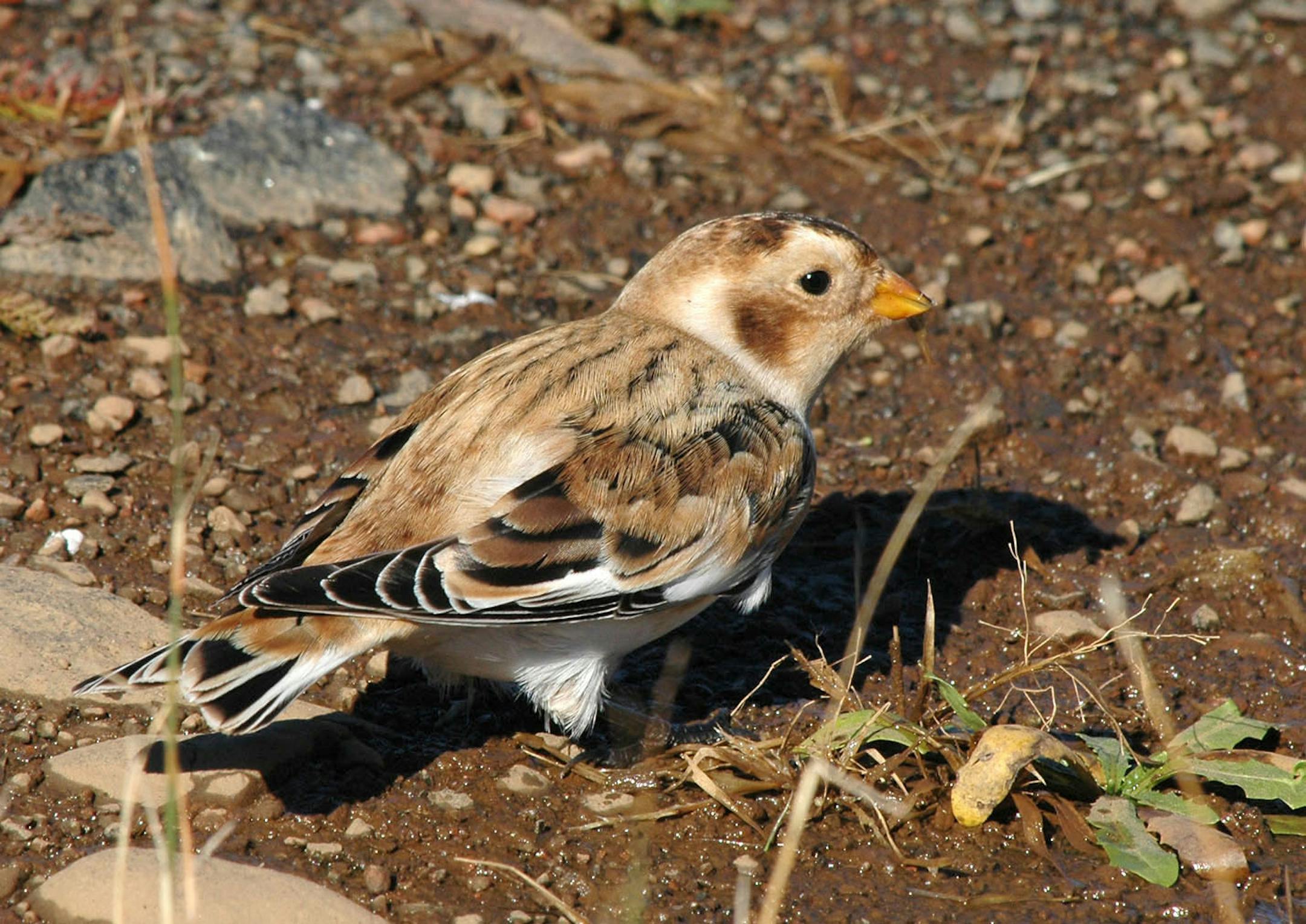
Snow bunting
Snow bunting (Special To The Star Tribune/The Minnesota Star Tribune)

On a beautiful sunny day in late November, I patrolled the western shore of Lake Mille Lacs, looking beyond the ice rimming the shoreline to scan for lingering waterfowl. Wind had blown some of the ice against the shore, creating a fractured palette of gray. Beyond that, the lake was a peignoir blue.

Six birds cut across that blue in an undulating flight. They were the size of waxings but white. They could only be snow buntings.

I followed them down the shore, hoping they would sweep to a stop at some grassy place ahead of me. (It's not easy to get a close look at snow buntings.) But the birds flew on, seeming to disappear in the white of the ice.

It was unusual to see snow buntings flying over a lake. These are tundra birds. In Minnesota, you'll see them in fallow or weedy fields, along road edges, picking at seeds and grit. They arrive in late fall, ranging widely across the state until they migrate north in March.

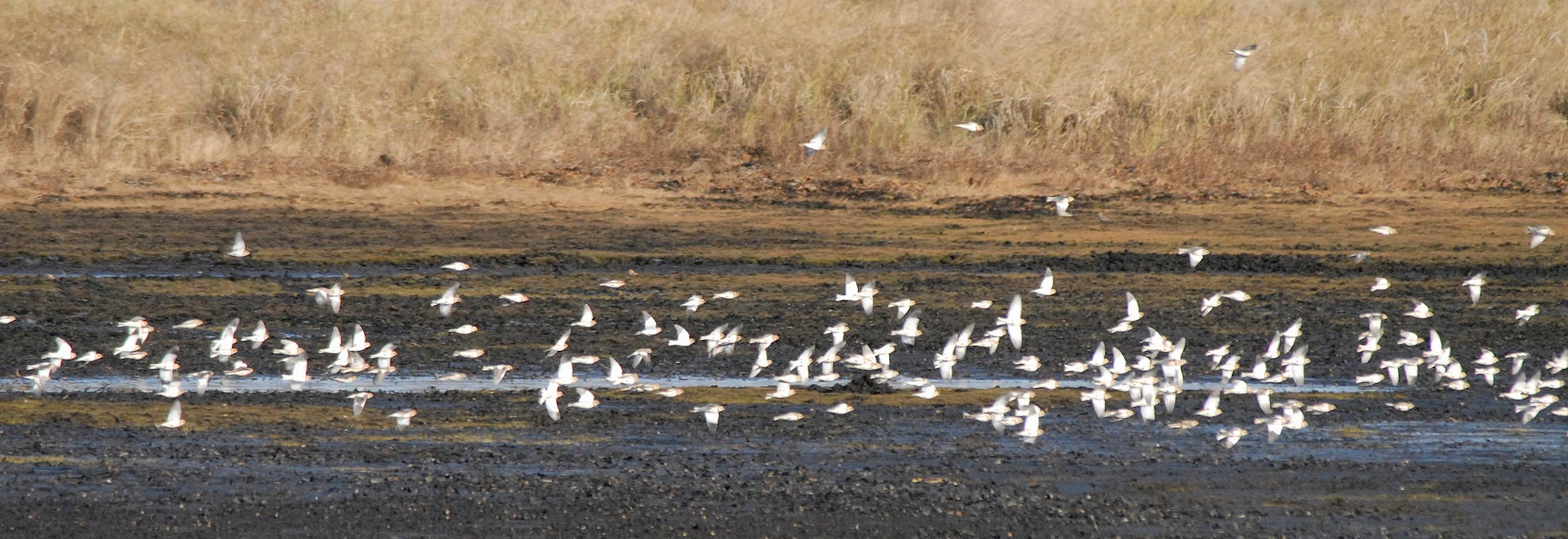
When they're foraging in the weeds, it's almost impossible to see buntings. But with luck, one of them will pull the departure trigger, and all of the birds will rise up as a single creature and flow away. And that's how you usually see them -- a white string of birds wheeling and whirling in the air.

Snow buntings look white when you see them in the air. But if you can get a good look at them on a roadside, you'll see that the white of their non-breeding plumage is marked with rust and brown on the back, crown, flanks and breast. There is a vivid cheek patch and the black wing and tailfeathers are embroidered with white on the edges.

The females look like that year-round. The males change plumage. When courting in spring, the males lose their mottled colors and become white birds with black wings. In that breeding plumage, they're often regarded as the epitome of bird beauty.

I had another lakeside encounter with buntings. Several Novembers ago, I was wandering down the North Shore, checking any patch of grass or brush for reluctant migrants. Instead, I found a surprise: a small flock of buntings not at the beginning of their migration, but at the likely end of their trip south from Canada.
I stopped the car as soon as I saw the birds, almost holding my breath so they wouldn't rush away. From the car window, I photographed the birds for perhaps 15 minutes. It was so cool to be that close to buntings for a change.

Then the police car pulled up.

I hadn't paid much attention to where I had parked. It was in the parking lot of the small-boat harbor at Silver Bay. This was four years after the 9/11 attacks. Harbors were being watched for unlikely visitors, even the harbor at Silver Bay.

The officer, in clunky law-enforcement shoes, slowly walked toward me. I was just about to show her my ID, when the buntings spooked, rising like shot right in front of her.

She didn't seem to notice them. She only had eyes for me.

I pointed to the disappearing birds. I was a birdwatcher, those were the birds. See?

She left. I stayed. But I never saw the buntings again.

Jim Williams, a lifelong birder, is on the U.S. National Wildlife Refuge Birding Initiative Committee. He also is a member of the American Birding Association, Ducks Unlimited, Pheasants Forever and Delta Waterfowl. Join his conversation about birds at startribune.com/wingnut. He can be reached by e-mail at two-jays@att.net.

Snow bunting flock
Snow bunting flock (Special to the Star Tribune/The Minnesota Star Tribune)
about the writer

about the writer

Jim Williams, Contributing writer

More from Minnesota Star Tribune

See More
card image
J. SCOTT APPLEWHITE, ASSOCIATED PRESS/The Minnesota Star Tribune

The "winners" have all been Turkeys, no matter the honor's name.

In this photo taken Monday, March 6, 2017, in San Francisco, released confidential files by The University of California of a sexual misconduct case, like this one against UC Santa Cruz Latin Studies professor Hector Perla is shown. Perla was accused of raping a student during a wine-tasting outing in June 2015. Some of the files are so heavily redacted that on many pages no words are visible. Perla is one of 113 UC employees found to have violated the system's sexual misconduct policies in rece