

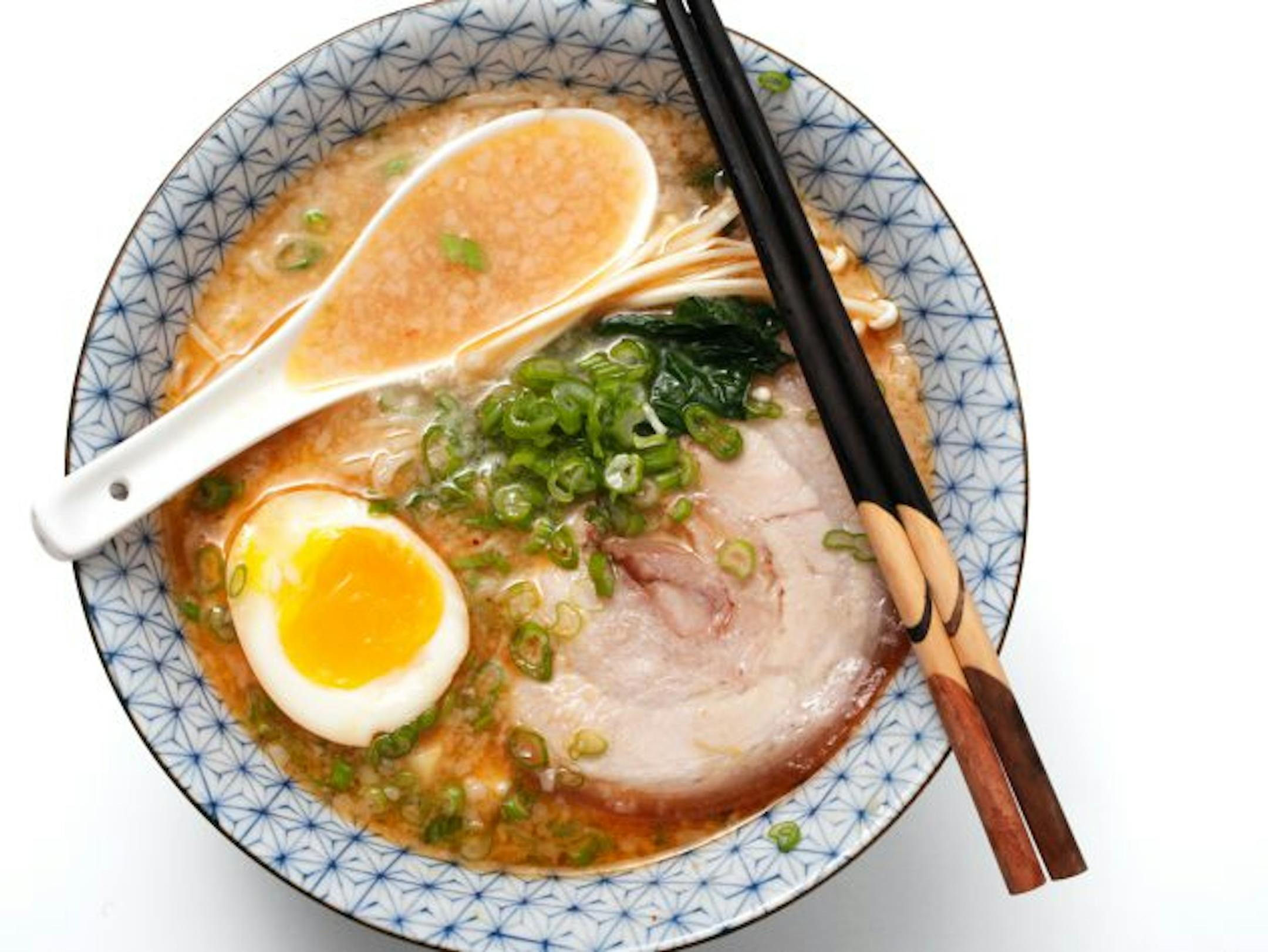

Forget the instant ramen that comes in a cellophane package with seasoning packet. That originated in 1958 with Momofuku Ando of Nissin Food Products in Japan.
We're talking homemade ramen here, a dish that seems to be simply noodles and broth and extras, but one which is based on the complex flavors of a long-simmered stock, which comes in as many variations as there are cooks. In Japan, the dish is often sold in small shops called ramen-yas.
Of the four basic kinds of ramen broth, the one made with pork bones – tonkotsu -- is a favorite of many. Its intense pork flavor and opaqueness comes from boiling (not simmering) the bones – a lot of them -- for a very long time (6 hours or more).
J. Kenji Lopez-Alt, managing culinary director of the online site Serious Eats, developed this version of the classic. He recommends cutting the bones (or having the butcher do so) into cross-wise disks rather than to split them lengthwise for better flavor extraction during the boiling. He also uses a chicken carcass to mellow out the flavor.
To arrive at the clean color he wants in his soup, he "washes" the bones by putting them in water and then boiling them. Then he rinses the bones and cleans them off before starting the actual cooking process.
His recipe is strictly for the broth. You can find fresh ramen noodles at United Noodle in Minneapolis or make your own with this recipe from Nancy Singleton Hachisu, author of "Japanese Farm Food," which is part of her simplified version of ramen in a chicken-based broth.
To find out more about Kenji's process for deducing the best broth, read his article in full: http://www.seriouseats.com/2012/02/how-to-make-tonkotsu-ramen-broth-at-home-recipe.html
For Kenji's step-by-step recipe, go to:http://www.seriouseats.com/recipes/2012/02/rich-and-creamy-tonkotsu-ramen-broth-from-scratch-recipe.html


