

So black is now Black. In the wake of the protests following the killings of George Floyd, Breonna Taylor and too many others, editors everywhere have decreed with sudden and remarkable unanimity that the formerly common adjective referring to African Americans will henceforth be a proper adjective.
I'm all for the change. Yes, as a card-carrying Grammar Curmudgeon I have a few curmudgeonly concerns. But before we get to that part, let's do a little history.
Over the past half millennium, the U.S. and its predecessor colonies have invented all sorts of ways to refer to the Africans they bought and sold and their many generations of descendants. Many of those terms were derogatory at the time; most are considered derogatory today. The nation's difficulty in finding the proper word to describe a people dragged unwillingly to its shores itself mirrors the difficulty the nation has had in digesting the original crime.
And it's small wonder that Black people in the U.S. have spent so much time resisting the nation's naming — the historian David Day wrote somewhere that a war only ends when the conquered begin using the nomenclature of the conqueror — but in a world preternaturally conscious of color, a word is necessary.
From the late 19th century onward, Negro activists (as they would proudly call themselves) fought furiously to get newspapers to capitalize "negro" — both as an adjective ("two Negro men") and as a noun ("two Negroes"). This battle occurred at a time when many of those we would now call Black proudly preferred the term "colored." Addie Hunton, my great-grandmother, who published popular books and essays, stuck with "colored" long after "Negro" had won the day.
But winning the day was hard, not least because that era too had its share of Grammar Curmudgeons. Wordsmiths maintained that because the lowercase "n" was proper English usage, refusing to capitalize the letter implied no insult. In 1914, the official magazine of the NAACP offered a forceful response: "The mere fact that they can make a certain logical defense of their usage is absolutely worthless when confronted by the undoubted fact that 10,000,000 people consider themselves insulted."
Still, accomplishment of the project took some while. In the 1940s, the Swedish sociologist Gunnar Myrdal was lauding Southerners for coming up with a verbal compromise — a word my editors probably won't let me write — a term halfway between "Negro" and another, better-known word my editors definitely won't let me write. The struggle continued. As late as 1955, at the height of the McCarthy era, a witness told the House Un-American Activities Committee that the Communist Party was winning support in the Negro community in large part due to its unstinting support for capitalizing that very adjective.
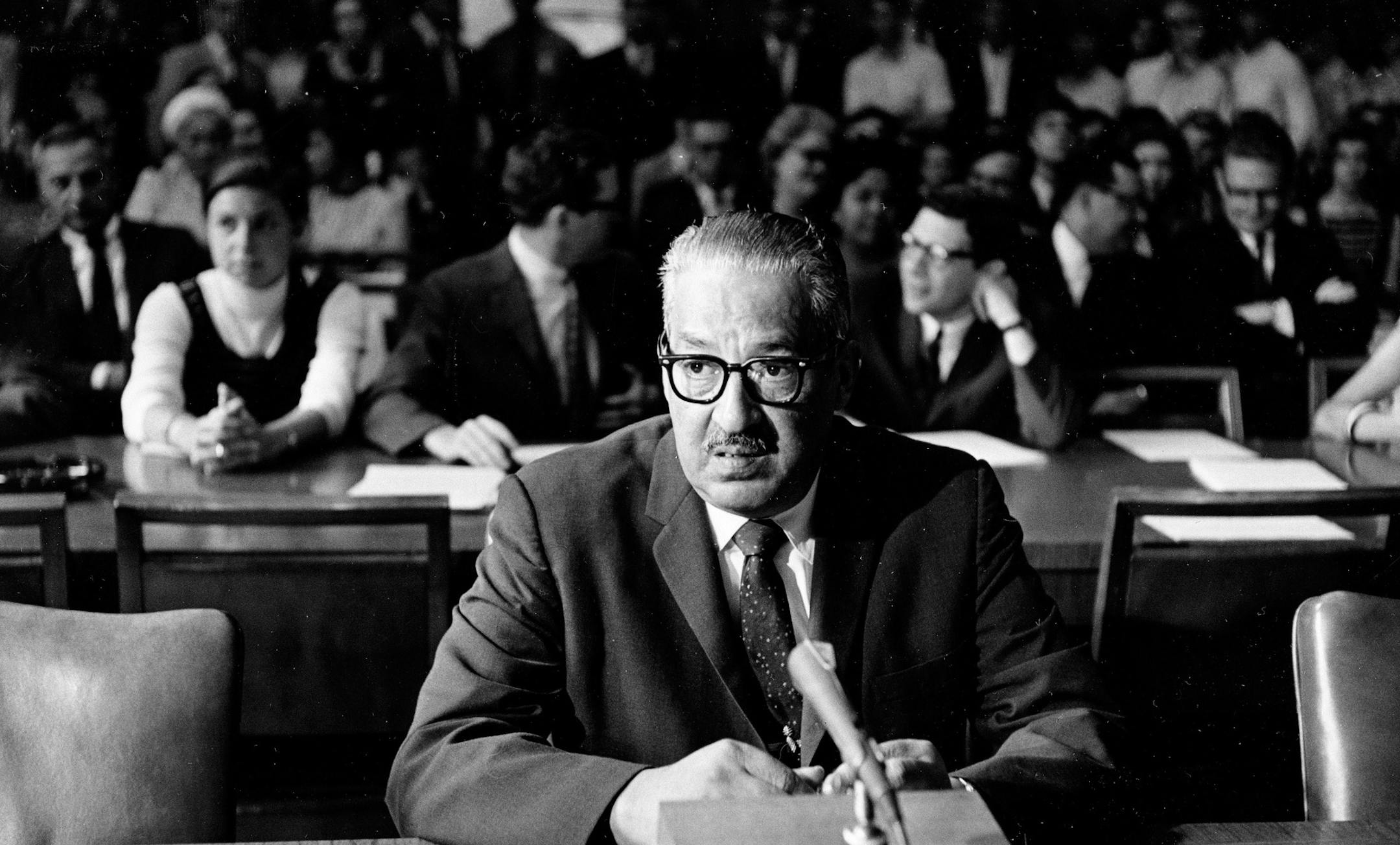
Skip forward a few years. Nearly four decades ago, I had the great privilege of serving as a law clerk for Justice Thurgood Marshall of the U.S. Supreme Court. Activists challenged his insistence on using "Negro" rather than "black" in his written opinions. Behind closed doors, Marshall had a stormy answer to his critics, an answer that boiled down to: "I've spent my whole life fighting to get people to capitalize Negro. I'm not going to let a bunch of kids" — perhaps he put the point more colorfully — "tell me what I should call myself."


