

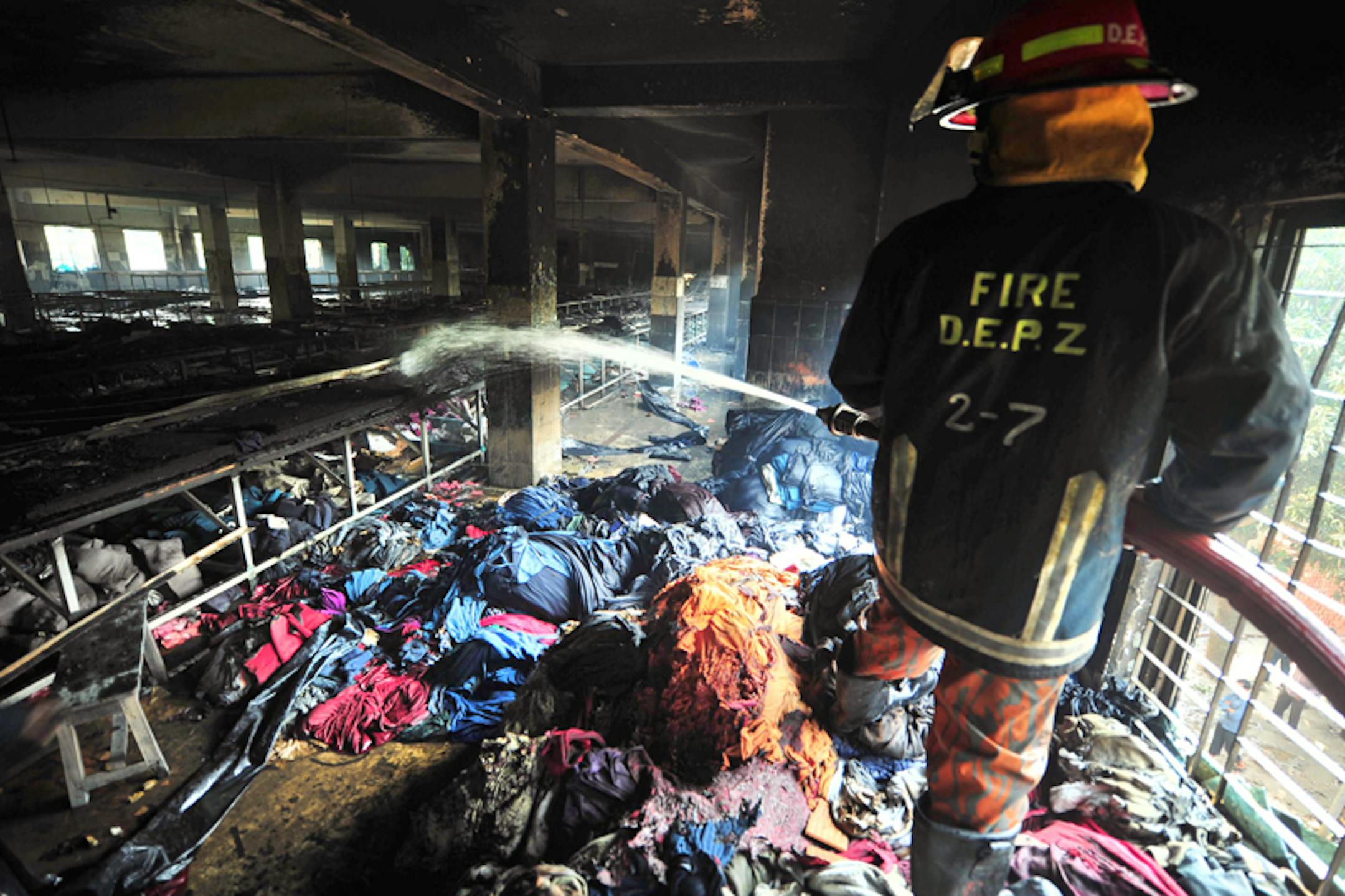
The fire that killed 112 workers at a garment factory in the suburbs of Bangladesh's capital last month was a stark reminder of the human costs of producing and consuming cheap clothes.
While American officials have condemned poor safety conditions at the factory and have urged the Bangladeshi government to raise wages and improve working conditions, the United States can do much more: It should bring down high tariffs on imports from Bangladesh and other Asian countries. The tariffs put pressure on contractors to scrimp on labor standards in order to stay competitive.
The United States imported more than $4 billion worth of apparel and textiles from Bangladesh last year. So it has an interest in giving the country's garment industry some financial room with which to improve conditions for the 3 million employees, most of them female, who work in the industry.
Monitoring systems have, in many cases, achieved progress at the higher levels of the industry -- the contractors that deal directly with American retailers. But oversight is lax, and conditions particularly dire, in factories run by subcontractors, like the Tazreen Fashions factory, the site of the deadly blaze on Nov. 24.
A bill introduced in Congress in 2009 by Rep. Jim McDermott, D-Wash., could have improved the situation by including Bangladesh, Cambodia, Laos, Nepal, Pakistan and Sri Lanka on the list of developing countries, like Mexico, that receive duty-free access to the American market as a result of free-trade agreements.
But the bill never even made it to committee, and Bangladesh still faces a cost squeeze that is ultimately felt most acutely on those lowest on the production chain, especially the lowest-paying subcontractors, among whom corruption is endemic. It takes its greatest toll on workers.
The distortions created by the current trade policy are striking. In the United States federal fiscal year that ended in September 2011, Bangladesh exported $5.10 billion in goods to the United States, of which less than 10 percent were eligible for exemption from import duties.
On the rest, Bangladesh had to pay at least 15.3 percent in tariffs. The tariffs were equivalent to imposing a $4.61 tax on every person in Bangladesh, a country with a per-capita annual income of $770.


