
How Touchstone Mental Health makes recovery a part of everyday living

October 10, 2025
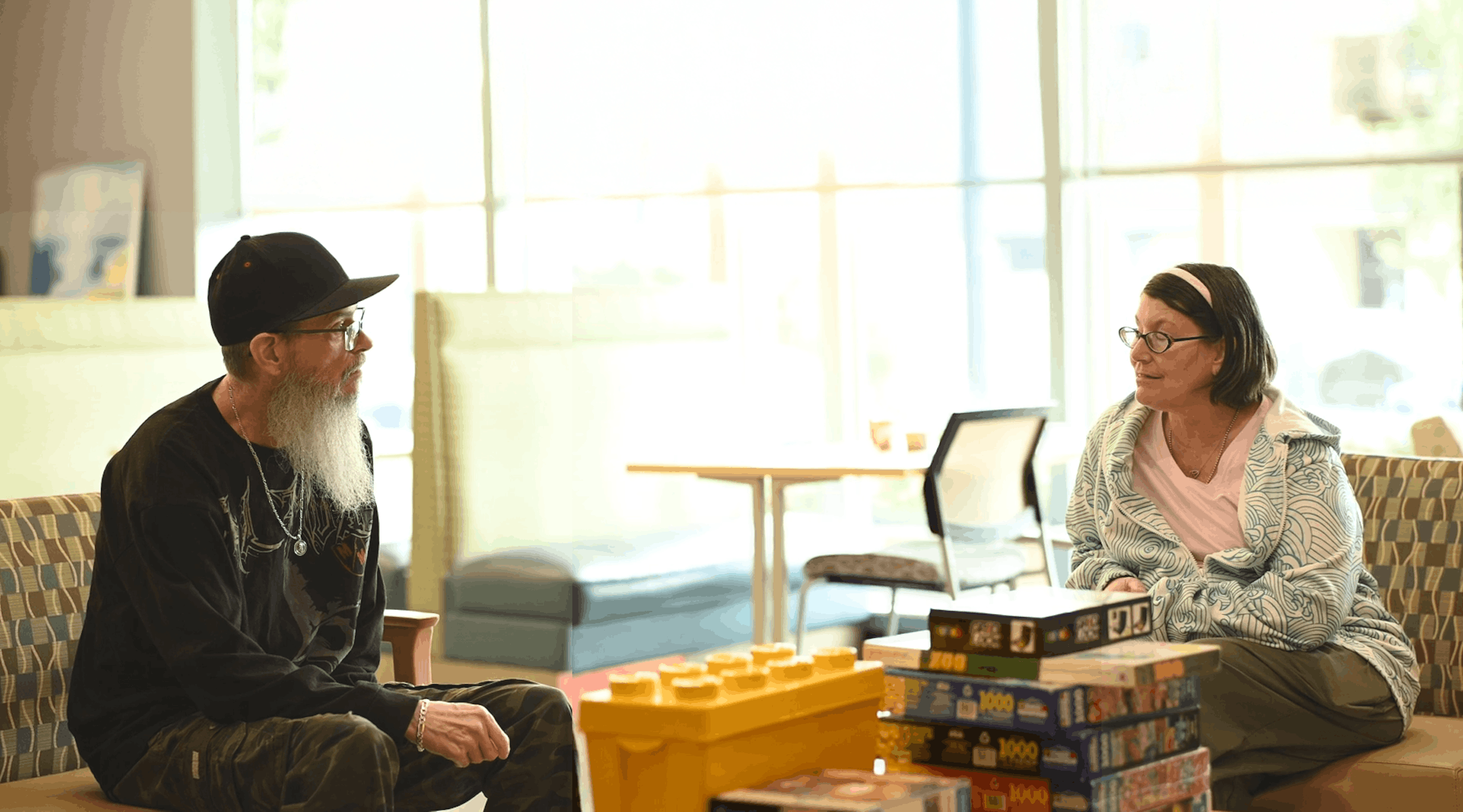
George and Barbara chat in a Rising Cedar Apartments common area

For George and Barbara, living at the Rising Cedar Apartments has meant finding a community where recovery is possible.

Provided by Touchstone Mental Health

At the Rising Cedar Apartments, George and Barbara didn’t just find the housing and resources they needed on their recovery journey. They found a community that had their back through it all.

Now each celebrating three years of sobriety, George and Barbara say it wouldn’t be possible without what they call their Rising Cedar family, which includes the building’s staff and the other residents living there.

“They know when you’re going through a rough time, and they know how to handle situations like that. It’s just given me a place where I can get what I’m looking for — stability,” George said.

Allowing residents to live with dignity

Touchstone Mental Health is the onsite service provider at supportive housing programs that provide adults living with mental health and substance abuse issues with full-time housing and recovery support. In the Seward neighborhood of Minneapolis, they operate Rising Cedar apartments, which is owned by Project for Pride in Living. Along with Rising Cedar, Touchstone provides services at Minnehaha Commons, a building for residents age 55 and older.

The newest housing program, Kyle Garden Square in downtown Minneapolis, opened in October 2025. Both these programs are owned by Alliance Housing with property management by Property Solutions and Services.

Some people make their way to these buildings after experiencing homelessness. And many, like Barbara and George, have been in other recovery programs before.

One key difference at Rising Cedar and Minnehaha Commons? Residents live in private apartments as opposed to dormitory-style housing, which Barbara says helps her take pride in her living situation and fosters a sense of independence.

“You sort of get your dignity back. You get a certain sense of purpose back,” she said.

icon0:21
Barbara reflects on the relationship of purpose and self-respect

Building a supportive community

The team at Rising Cedar includes nurses, social workers and direct support staff, who are available to assist residents 24/7.

“They make sure that you can make your appointments. They coordinate your rides, everything,” Barbara said. “It’s really great. Everybody helps out everybody.”

But support doesn’t just come from the staff at Rising Cedar. The building works to cultivate a community environment where residents can uplift each other, too.

Rising Cedar encourages community building through outings to major events in the Twin Cities as well as simple coffee meetups for residents to get to know each other better.

“It is really important to make sure that people do feel like we all are part of this environment. We all contribute. We all are able to have an effect on what it’s like here. And I think that helps with stigma,” said Vanna Preska, Touchstone’s director of community housing.

icon0:28
George shares the how important privacy is when recovering from a substance abuse disorder

Providing stability through the ups and down

For many residents at Rising Cedar, recovery isn’t a linear process. That means some might seek out outside treatment programs during their time there.

With connections throughout the area, Touchstone can help residents get in touch with various resources. And, most importantly, units are held for residents while they get the help they need.

For both George and Barbara, the reassurance that they can always come home to Rising Cedar has been instrumental in their recovery journey.

“Even though I had problems with my addiction, I was able to go out, get help, and come back and still have my apartment,” George said.

That stability is what ultimately helps many residents stay on the path to recovery, Preska said.

“I think if they can find stability, they’re better able to cope with their symptoms, manage their symptoms, and feel that they’re active and involved in their community,” Preska said. “And that creates a sense of purpose.”