

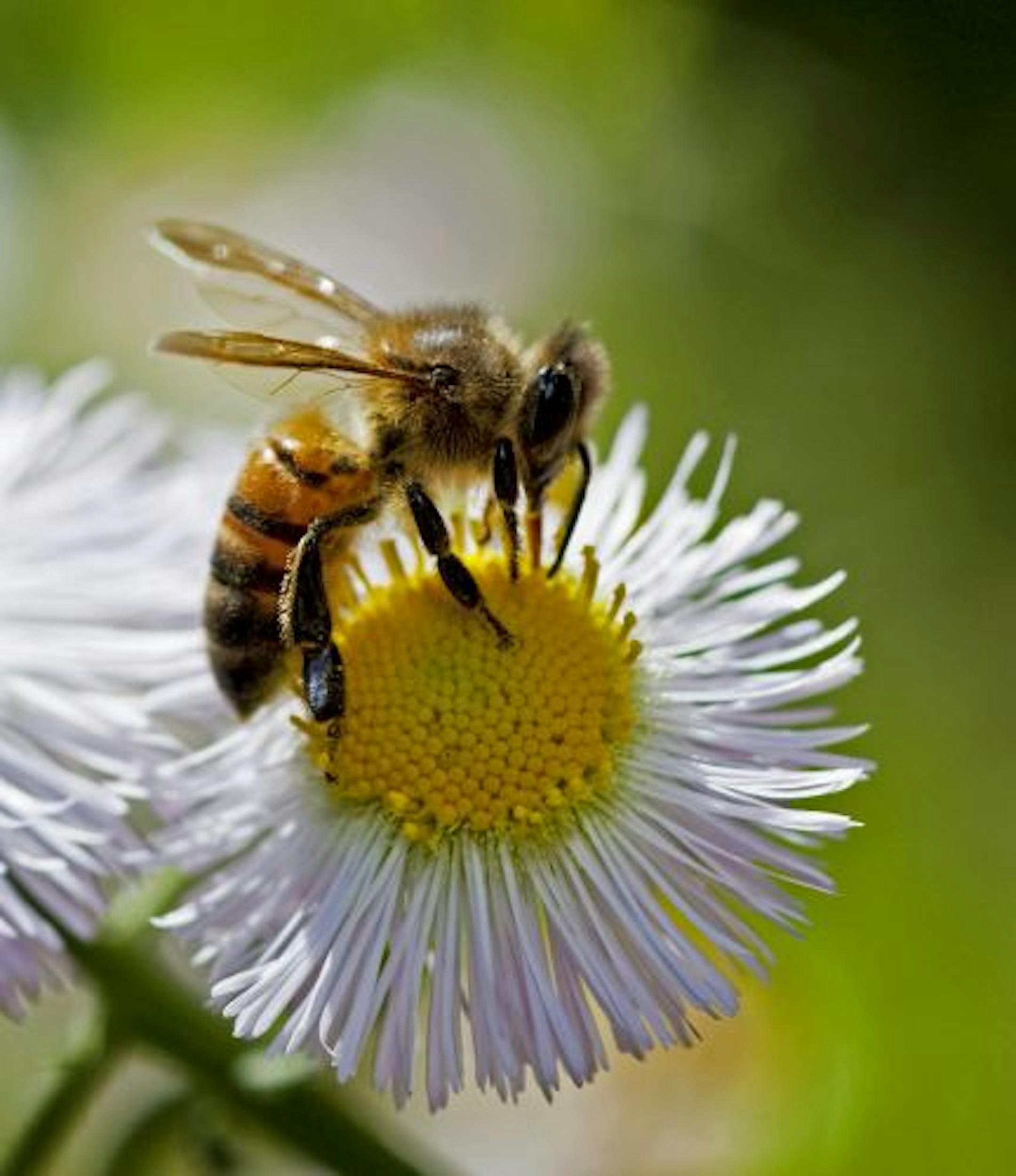
Most of us know that bees are suffering. Mites, viruses, loss of habitat and use of insecticides have significantly reduced the number of honeybees and native bees. But as gardeners, it's in our best interests to help bees survive and thrive. Some kind of bee pollinates almost everything in our vegetable gardens, all of our native flowers and some cultivated perennials.
But what we don't know about bees can sting us.
Bees look and act different from wasps. Wasps are smooth, whereas bees are fuzzy. While wasps can be aggressive, bees rarely are. They can sting, but they only do so when they feel threatened. And, unlike wasps, bees aren't interested in our picnic food or our soft drinks. In fact, they're not particularly interested in humans. What they are interested in is finding flowers with nectar and pollen, finding nesting sites and living without pesticides.
And that's where we can help.
Plant flowers
Bees are attracted to colorful flowers, but what keeps them coming back is pollen and nectar. If they find neither one in a flower, no matter how colorful, they'll move on to another plant.
Natural bee magnets include flowers such as asters, bee balm, butterfly weed, catnip, clover, common milkweed, cosmos, goldenrod, purple coneflower, sedum, sunflower and yarrow. They're also attracted to herbs, such as mint, oregano, chives, rosemary, thyme and sage, and the flowers on blueberry bushes as well as redbud, apple and cherry trees.
But bees aren't as picky as most gardeners: They also are attracted to weeds. So if you're behind in your weeding, you can always say you're leaving the dandelions and creeping Charlie in place for the bees.


