

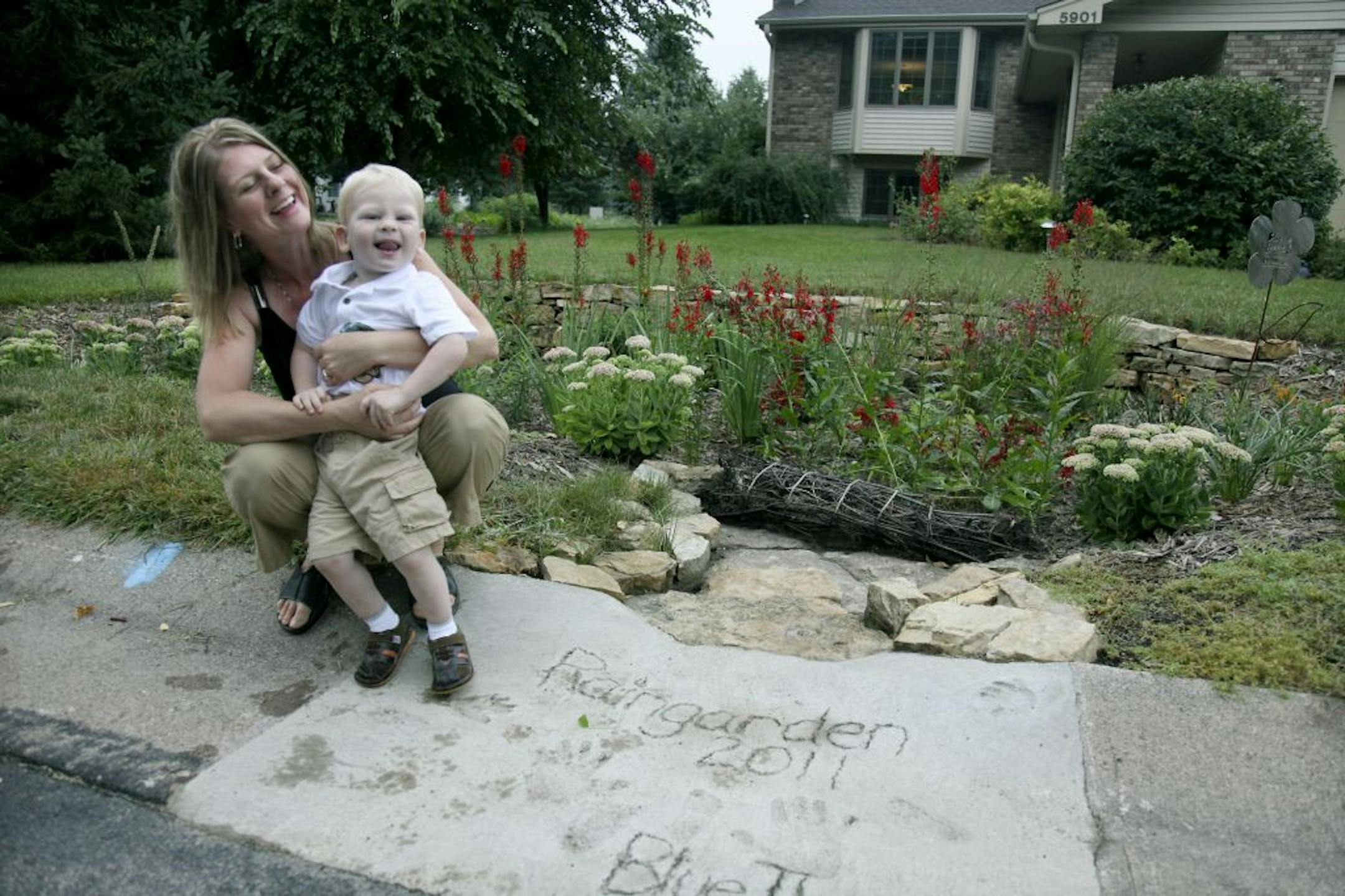
Dawn Pape's rain garden is a workhorse, designed with a curb cut to capture runoff from her entire street in Shoreview. But Pape, a master gardener, also was determined to make her rain garden pretty and to keep it that way.
"I see so many ugly, ugly rain gardens going in -- especially in developments," she said. "Developers have to do it, so they throw in some seeds and don't maintain the gardens. It gives rain gardens a bad name. I'm out to prove they can look decent."
There are many more rain gardens in the Twin Cities than there were even a few years ago. But not all of them are visually appealing or even doing their job -- collecting and filtering water so that runoff containing dirt, lawn chemicals and other nasty stuff doesn't end up in lakes and creeks.
By now most people have heard of rain gardens, but there are still many misconceptions about what they are, what they're supposed to do and what they involve, according to Lynn Steiner, a Minneapolis horticulturist and author of the new book "Rain Gardens: Sustainable Landscaping for a Beautiful Yard and a Healthy World."
"There's definitely more awareness now," said. "Five years ago, the term was not on the radar. People don't give you a blank look anymore." Then she added: "I'm surprised how many people, even people in horticulture, think a rain garden is a water garden, a pond," she said. "Then they say they don't want a pond in their front yard."
Unlike a pond, a rain garden is supposed to drain, within a few hours or a day or two at most. It needs drought-tolerant plants that can handle both rainy and dry spells, ideally with long roots. And while a rain garden is generally a low-maintenance garden, it does require some minimal upkeep.
Block patrol
Debby and Bob Wolk are still babysitting some of the 11 rain gardens that they gave to everyone on their Minneapolis block in celebration of their 50th anniversary in 2009.


