

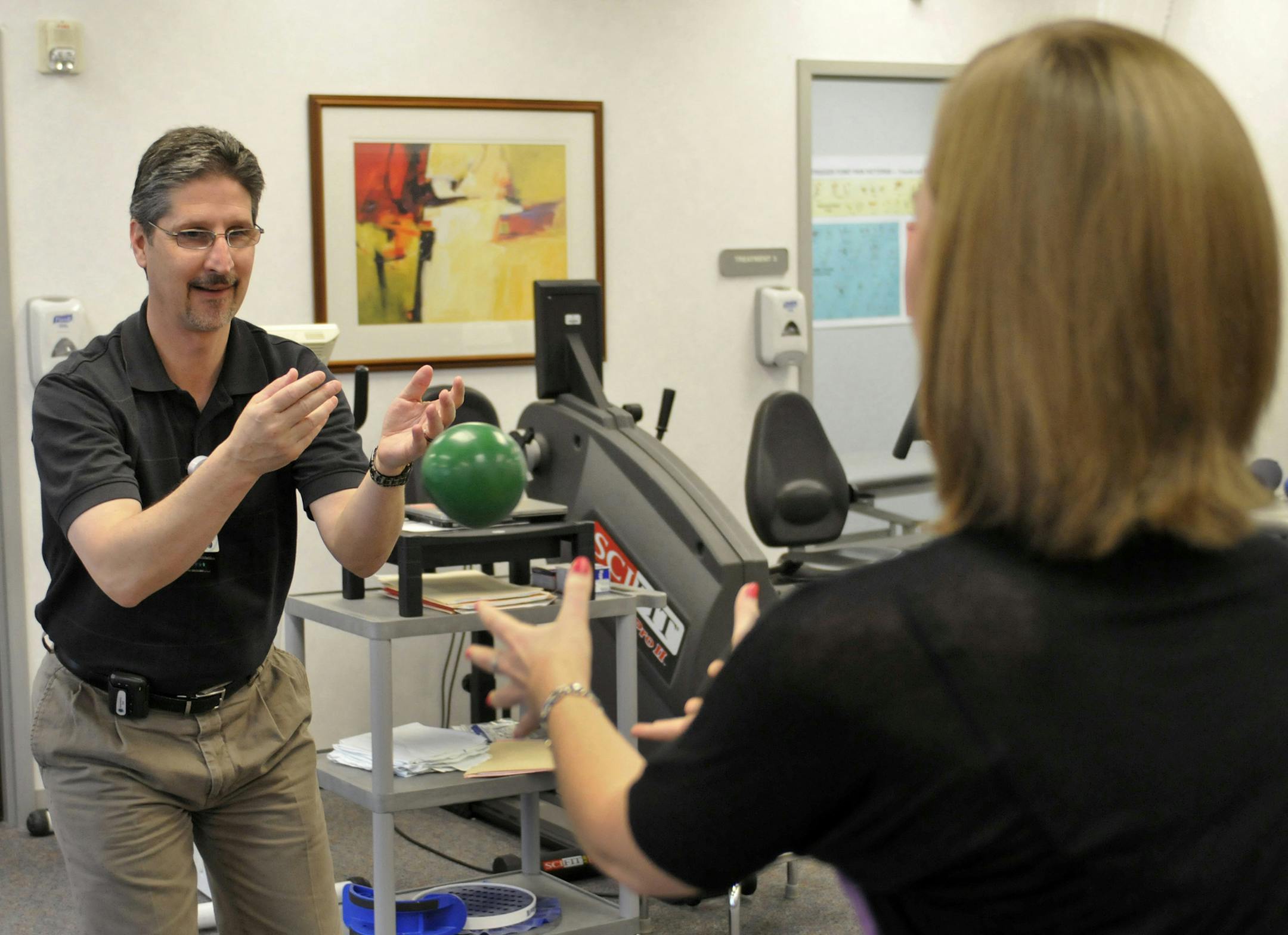
Nearly 2 million people receive physical therapy every day, a number that's likely to increase as the population ages. For many, it can be overwhelming and intimidating. Here, three experts weigh in on what to expect, the keys to getting better and how to avoid "PT" in the first place.
When is physical therapy necessary?
"Most little aches and pains work themselves out in a day or two," said Dr. David Aiken, a rehabilitation specialist. "If within a week or so [the pain] hasn't resolved on its own or begins to affect your functionality, you should seek treatment."
Physical therapist Erin Ball said many people make the mistake of waiting to seek treatment, hoping that the pain will go away. "The trouble is that certain injuries get worse with time. An easy fix now could be a very complicated fix down the road."
The assessment
Most PT begins with a thorough assessment, said physical therapist Nabila Tanas. She delves into the patient's medical history, looking for underlying causes. She also educates the patient about how lifestyle changes may help.
The treatment
Most therapy consists of multiple techniques, said Aiken, including therapeutic exercises to restore strength and function, as well as manual therapy, which is a "detailed massage" designed to soothe soft tissue and loosen joints and muscles.
Tanas specializes in the manipulation of muscles and soft tissue to help relieve pain, either locally or elsewhere on the body along nerve pathways. For instance, if a patient is suffering from chronic headaches, the problem may stem from stiff muscles in the neck or back.
Common mistakes
Most PT requires patients to do exercises on their own. Experts agree this key component of treatment is also the most neglected, which can delay healing.
To keep his patients motivated, Aiken said, he stresses the correlation between the exercises and the outcome.


