
How FAA flight cuts could affect your travel plans

What to expect at the airport after the Trump administration reduces flight traffic by 10 percent.

The Washington Post
November 6, 2025 at 6:56PM
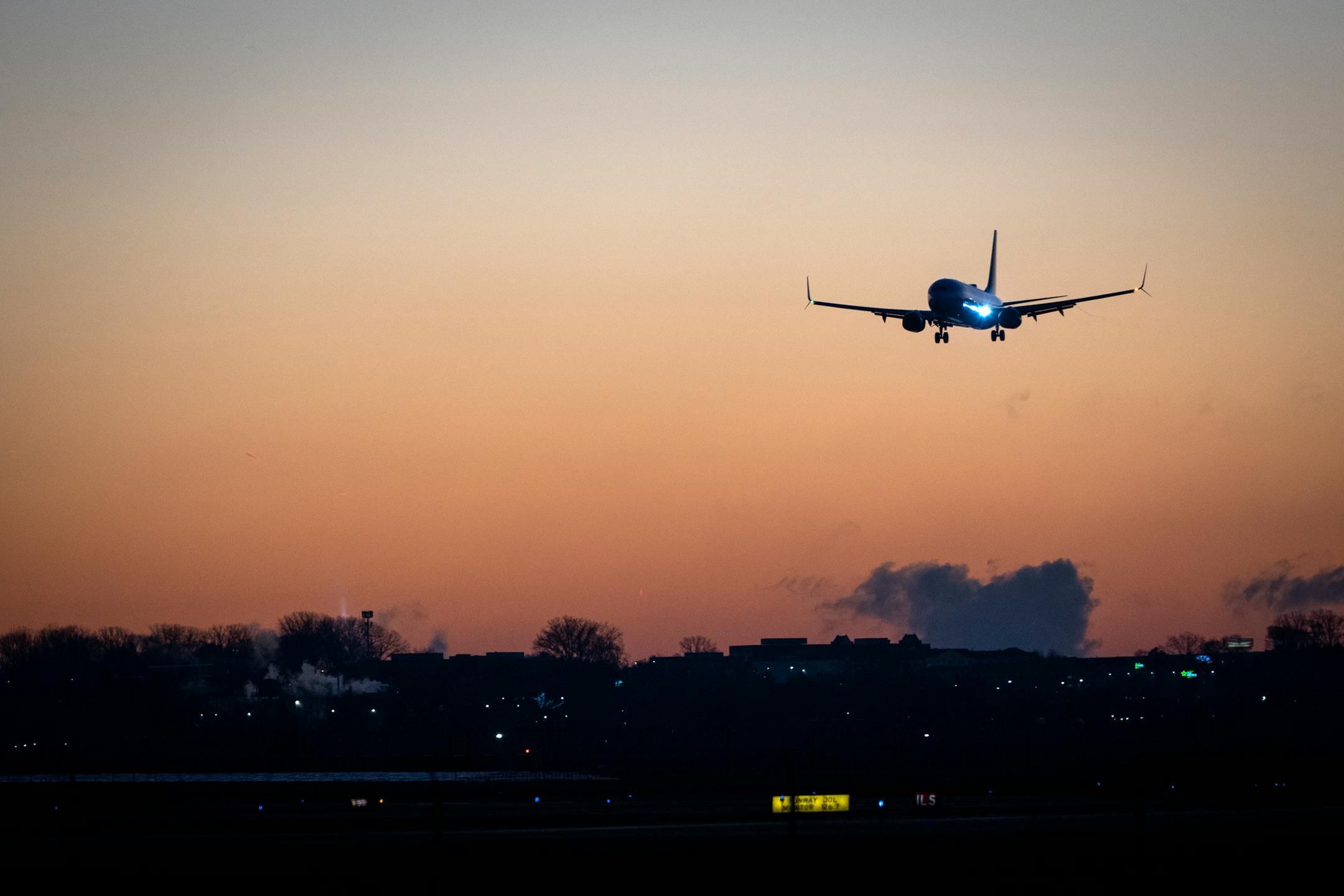
The government’s list of airports with reduced service includes Minneapolis-St. Paul International Airport. (Leila Navidi/The Minnesota Star Tribune)

As the longest U.S. government shutdown in history continues, transportation officials have been warning travelers to expect delays at airports while essential workers go without pay. Air traffic controllers and Transportation Security Administration officers have been working under duress, but staffing shortages have caused only sporadic spikes in flight disruptions.

In an unprecedented move, Transportation Secretary Sean P. Duffy said that starting Friday, the Trump administration will reduce flight traffic by 10 percent in 40 “high traffic” markets. Travelers may be concerned about canceled flights and delays as officials focus on safety, but airlines are working to minimize the fallout.

“My hunch is that fewer than 10 percent of travelers are going to get impacted,” said Scott Keyes, founder of the cheap-flight service Going.

Here’s what fliers can expect when the reductions go into effect Friday.

What airports are affected by the shutdown?

The government’s list of airports with reduced service includes Baltimore, Washington Reagan and Washington Dulles, as well as facilities in major markets such as New York, Los Angeles, Chicago, Atlanta, Boston, Detroit, Houston, Dallas, Orlando and Miami. You can see the full list here.

Should I change my flight?

Airlines are saying that the vast majority of customers’ travel will be unaffected. Keyes expects the same, and recommends travelers hold tight until they know they’ve been impacted.

“I wouldn’t switch your flight just yet because you just don’t know which ones are going to be on the chopping block, but I would be ready,” Keyes said.

In the meantime, he recommends downloading your airline’s app, turning on notifications, signing up for your airline’s text alerts and keeping your eye on your email for any updates on your flight.

John Rose, chief risk officer for the travel agency Altour, also said all travelers should monitor their flights constantly starting this weekend as airlines rework and update their schedules to accommodate the 10 percent reduction.

With the continued effects of the shutdown on staffing, “we could still have a lot more flight disruptions that have nothing to do with the 10% reduction just because we don’t have people working in the air traffic control towers, possibly,” he said by text message on Thursday morning.

How should I rebook a canceled flight?

Keyes said if your flight does get canceled, “that’s like a starting gun for a race.”

“If you get yourself rebooked faster than the next person, then you win and your trip is saved,” he said. “If you’re slower than the next person, unfortunately, your trip might be off.”

You may be able to rebook yourself through the airline app or website. If you need to get on the phone with an agent, but are facing long wait times, Keyes says to call the airline’s international customer service centers. Instead of competing for time with the U.S. office, try dialing the ones in Canada, Mexico, Spain or Singapore, for example. (FYI: You may incur charges for making an international call depending on your phone plan.)

Will I get a refund if my flight is canceled?

If the airline cancels or significantly delays your flight — meaning delayed more than three hours for a domestic trip or six hours for international — you are owed a full refund if you choose not to travel.

“Your rights are the same as they were yesterday in terms of being entitled to a full cash refund if your flight is canceled or significantly changed,” Keyes said. “That is the case regardless of the reason why a flight is canceled or significantly changed.”

What are airlines doing to help?

Many of the major U.S. carriers are offering travelers more flexibility to cancel plans for a refund than usual.

On its website, Delta Air Lines said, “We are providing additional flexibility to all of our customers during the impacted travel period to change, cancel or refund their flights, including our basic economy fares, without penalty.”

United Airlines CEO Scott Kirby wrote in an open letter to employees that, “any customer traveling during this period is eligible for a refund if they do not wish to fly — even if their flight isn’t impacted. That includes nonrefundable tickets and those customers with basic economy tickets.” United said that long-haul international flights and flights between its hub airports would not be affected.

The Frontier Airlines website says: “Customers whose flights are canceled or delayed for more than 3 hours (domestic flights) or 6 hours (international flights) are able to rebook or to request a refund here. We have also issued a flexible travel policy for any customer traveling during this period who would like to change or cancel their travel plans.”

What delays can I expect at TSA checkpoints?

Hours-long security checkpoint lines over the weekend at Houston’s George Bush Intercontinental Airport made headlines, though wait times had dropped somewhat by midweek.

Now there may technically be fewer flights and travelers, but don’t expect shorter lines at the airport.

“My hunch is that you’re not going to see a huge difference,” Keyes said. “Then obviously, as we get closer to the Thanksgiving travel period, then all bets are off.”

If the shutdown continues, and there is a prolonged strain on TSA staffing, Keyes said then you may start to see longer lines for security.

TSA guidance recommends arriving at least two hours before domestic flights and three hours before international.

What does this mean for Thanksgiving travel?

Vice President JD Vance and Duffy, the transportation secretary, have warned that Thanksgiving travel could be snarled if the shutdown continues into the busy holiday season.

“It could be a disaster,” Vance said at a news conference with Duffy last week.

Duffy used the same word, noting that air traffic controllers might need to take on second jobs to pay bills.

“People will not be able to go from one place to the other because of the government shutdown,” he said.

A few days later, he warned of “mass chaos” in the coming days. “You will see mass flight delays,” he said. “You’ll see mass cancellations, and you may see us close certain parts of the airspace, because we just cannot manage it because we don’t have air traffic controllers.”

“I hate to say it, but I think if you’re planning to travel over Thanksgiving, at the very least, it’s probably a good time to start entertaining backup plans,” Keyes said Thursday. “I wouldn’t switch my plans today. I wouldn’t do it tomorrow, but I would start to gather a backup option.”

Keyes said that could be switching to an early-morning flight, “which we know are more likely to arrive on time,” prioritizing nonstop flights to avoid risks of missed connections, or even finding alternative modes of transportation to flying.

Lori Aratani contributed to this report.

about the writer

about the writer

Hannah Sampson, Natalie B. Compton, Gabe Hiatt

The Washington Post

More from Nation

See More

The U.S. Department of Health and Human Services on Thursday unveiled a series of regulatory actions designed to effectively ban gender-affirming care for minors, building on broader Trump administration restrictions on transgender Americans.