

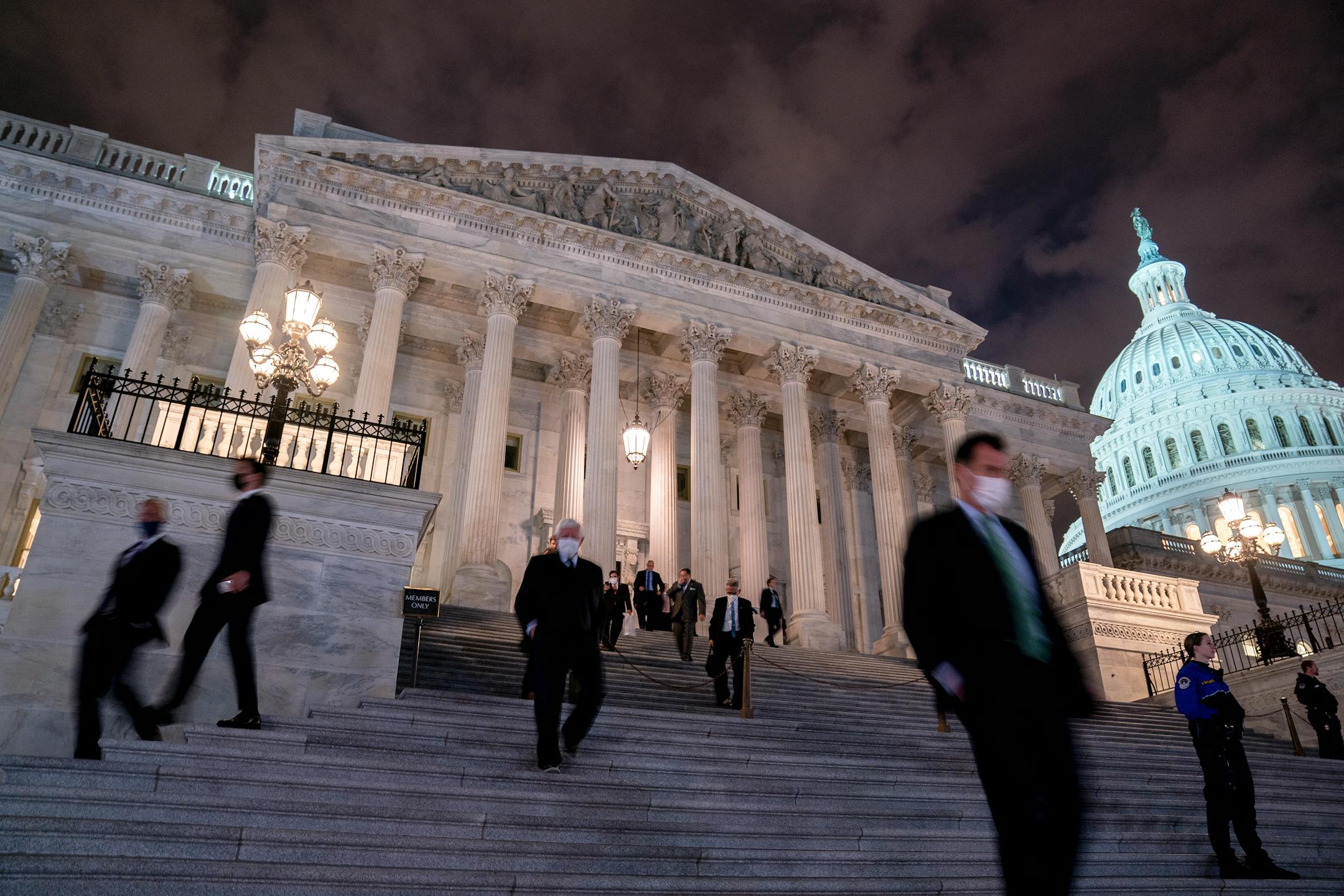
Once again, a last-minute congressional deal prevented the U.S. government from defaulting for the first time ever on its financial obligations. Congress passed a debt ceiling increase of $2.5 trillion on Dec. 14, a day before Treasury Secretary Janet Yellen's deadline to address the federal debt limit.
Without that increase — passed largely along party lines — the government would not have been able to borrow the money necessary to meet its obligations, threatening a crisis that Yellen said could "eviscerate" the economic recovery. The threat has now been pushed out for another year or so, when Congress will likely have to revisit the issue.
This brinkmanship over the full faith and credit of the United States needs to end. Congress must stop these short-term solutions and take steps to ensure the debt limit cannot be used as a tool of partisan politics. Bipartisan cooperation is necessary; both parties are responsible for contributing to our national debt and should be equally committed to taking meaningful action to address it.
How to achieve this? First and foremost, Congress should start by increasing the debt limit to ensure all past financial commitments are covered.
Next, Congress should commit that all future legislation estimated to increase the national debt by the Congressional Budget Office or the Joint Committee on Taxation will include language increasing the debt limit accordingly. This approach would ensure that both parties are accountable for addressing the debt incurred by their policies — whether tax cuts or government programs.
Often the debt limit is misconstrued as enlarging the nation's financial commitments or authorizing new spending. This is incorrect: The debt limit refers to the maximum amount of debt that Congress allows the Treasury Department to issue, permitting the government to continue to fund financial obligations that have already been authorized and allocated.
Debt limit legislation, however, places a cap on funding these obligations. If the Treasury Department is unable to issue new debt, the government will be forced to default on financial commitments, jeopardizing the full faith and credit of the United States globally. This is why past Treasury secretaries of both political parties have gone to such lengths to protect the economy when the nation has been allowed to approach the debt limit.
Our first Treasury secretary and the founder of the Bank of New York, Alexander Hamilton, recognized the critical nature of American sovereign debt to our national economy. He acted on this understanding by forming the first central bank to absorb Revolutionary War-era debt in 1791.


