

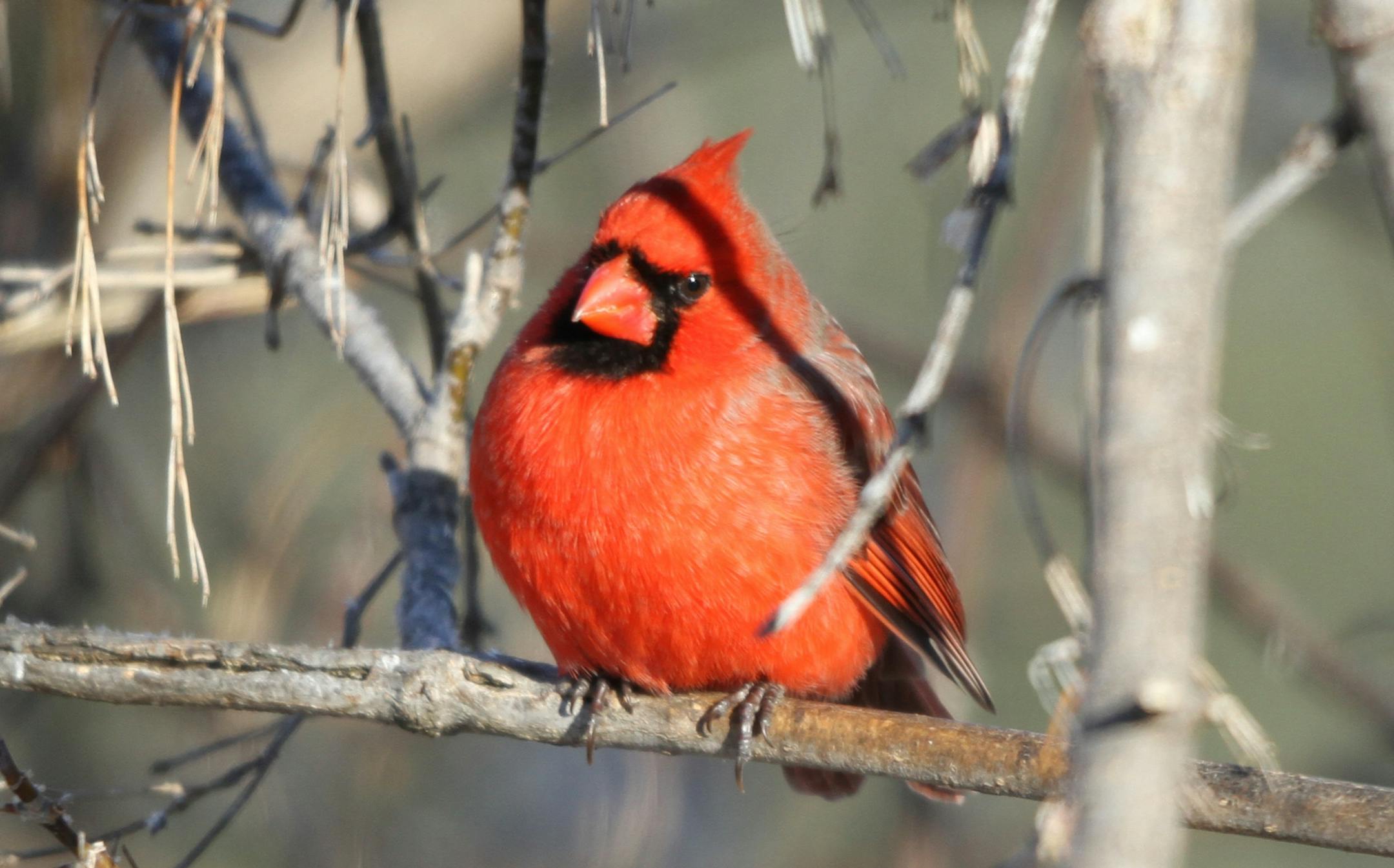
Q: I really worried about my back-yard birds during the brutally cold weather in January. How do they stand living outdoors at such times?
A: You're right to suspect that extreme cold is very hard on birds and other wildlife. Even though our resident birds live here year-round, they still suffer through prolonged bad weather. Birds use a variety of strategies to cope with extreme cold. Many shiver through the night, which helps maintain their body heat. But this burns through their fat reserves, so they wake up eager for a meal. Birds puff out their feathers to trap an insulating layer of air near their bodies, they squat down to cover their bare legs and seek shelter frequently during the day. You'll often find a group of birds in any sunny spot that's protected from the wind to help conserve their body heat. Still, when the weather turns brutal, only the strongest survive.
Swan count
Q: I was pleased to read on this page that trumpeter swans numbered in the thousands, as I thought their numbers were still low. What are the estimated populations of tundra and trumpeter swans in North America, and is it possible to distinguish between the two species in flight?
A: The Trumpeter Swan Society is reporting 46,225 trumpeters in North America. There are about 10,000 trumpeters in our region, about 25,000 in the Pacific Coast population and about 10,000 in Rocky Mountain flocks. This is great news, because this handsome bird nearly became extinct in the early 1900s. A census taken every five years (the most recent was in 2010) shows the trumpeter population steadily increasing. Tundra swans are a much more abundant species. The Western population is estimated at 100,000 and in the Eastern region, some of whose birds migrate through our area, there are another 100,000.
It's a challenge to tell these big, all-white birds apart in flight — even veteran swan watchers hope to hear swans calling, because their voices are very different. You can hear the two species' calls at the first link below, and find some I.D. tips at the second. In our area, if you see swans in winter, they're almost surely trumpeters. In the fall, if you see four or five swans together, they're probably a family group, and thus trumpeters, since these move around as a family. If you see a large V of swans passing overhead, chances are that they're tundras. Links: www.trumpeterswansociety.org/swan-voice.html; www.trumpeterswansociety.org/swan-identification.html.
Droopy downy
Q: A downy woodpecker visits our feeder several times a day and after eating he hangs onto the feeder for a half-hour or more. He puffs out his feathers, eats again, and then flies off. Is this related to the cold weather?
A: Your downy woodpecker sounds like one in my back yard, who hangs onto the feeder for a few minutes after eating. It's possible that your woodpecker is a healthy bird who figures it's too much trouble to fly to shelter to digest its meal, so it just stays at the table, so to speak, until it's time to eat again. It's also possible that the downy is impaired by injury or illness and only has enough strength for a couple of flights each day. During this brutal winter, many birds are showing signs of exposure, and some are not going to make it.
Cold showers
Q: I've seen conflicting advice on whether to maintain a heated birdbath on very cold days. Does it harm birds to take a bath when it's 10-below?


