

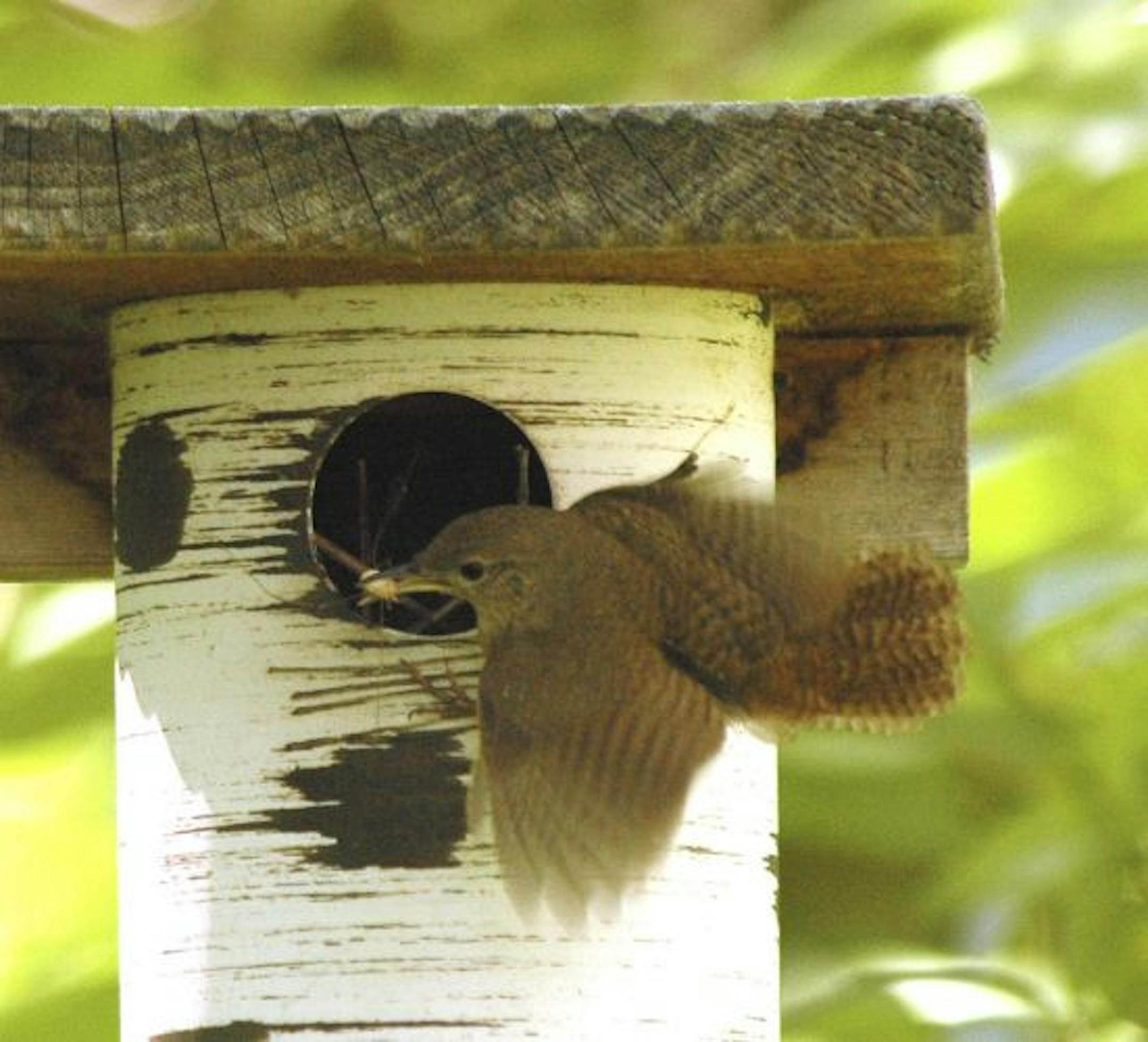
Birds are singing from pre-dawn to post-dusk in a heady mixture of trills, chirps, whistles and buzzes. Our inner ears are primed for our favorite birds: "Oh, there's an oriole," or "Hey, that's the indigo bunting!"
One fine day, usually around mid-May, a distinctive bubbly song announces that house wrens are back. Many people rejoice at the return of these small (less than 5 inches long), active birds with their turned-up tails. I have to admit to mixed feelings about house wrens, but more about that later.
House wrens are little dynamos, hopping quickly through shrubs and vines and, in woodlands, across toppled trees and branches. They're very tolerant of humans and will nest just about anywhere with the right overgrown habitat. For many people, this is their favorite bird; they like the wren's confident nature, jaunty cocked tail and loud, burbling song.
In fact, a friend advises those thinking about putting up a wren house to make sure they like that distinctive song, "because you're going to hear it all day long."
Wrens don't visit feeders; instead they hunt spiders and insects, such as beetles, bugs and various caterpillars. They stuff their nestlings with a similar diet, along with grasshoppers and crickets.
Real estate hogs
When it comes time to nest, wrens search out tree holes, crevices in stone piles or even hollow logs. Their ready use of nest boxes endears them to many people. Indeed, if you hang several nest boxes, a male wren will usually usurp every one. Males prepare a number of starter nests for a female's consideration, stuffing all available cavities with 3- and 4-inch twigs. She does an inspection tour, then chooses a single cavity and finishes the nest herself.
The sticks aren't the true nest, but form a platform for holding a small cup nest deep inside. This construction keeps the nestlings above rainwater or other seepage.


