

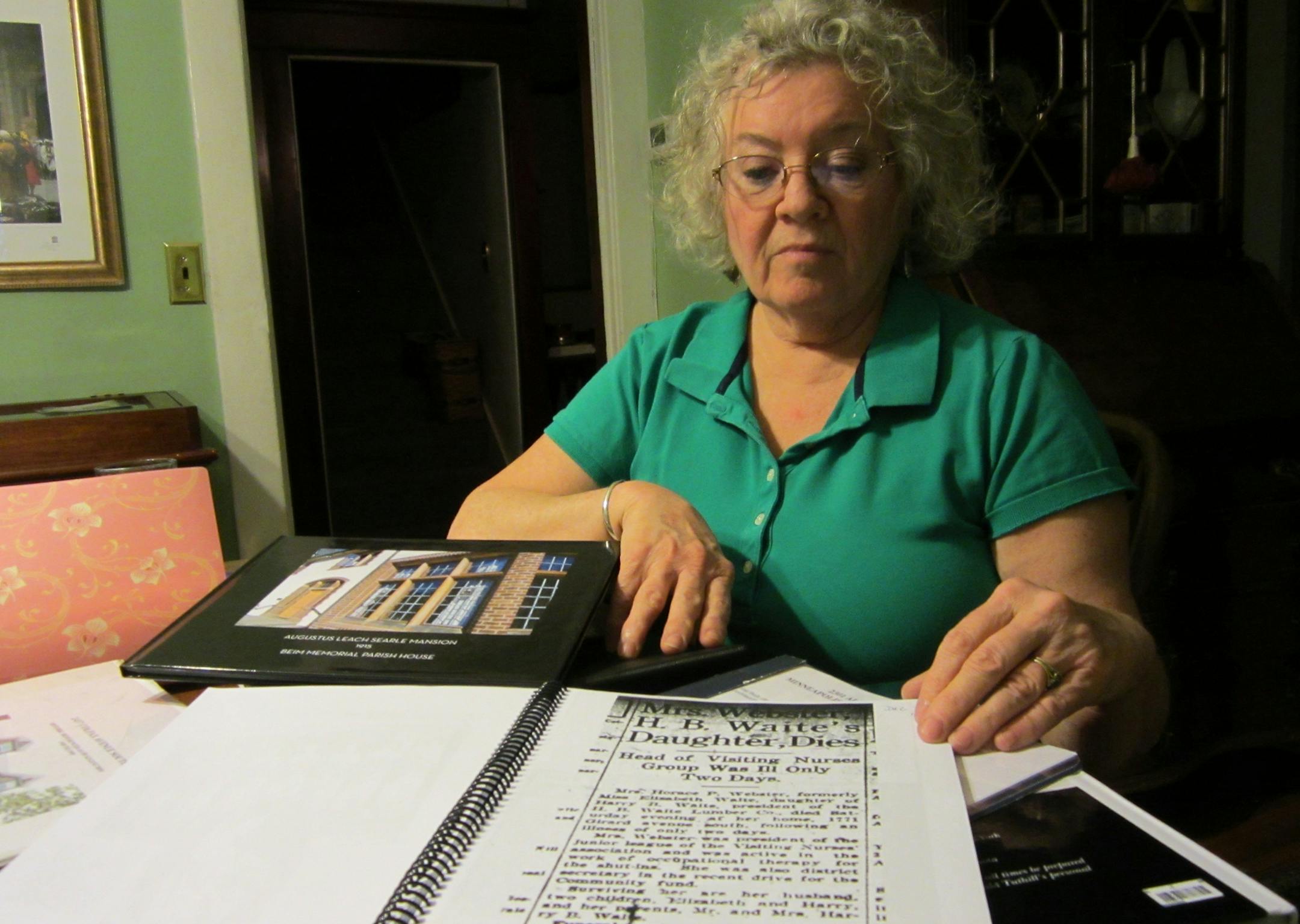
Go on a walk with Kathleen Kullberg around her Minneapolis neighborhood and she'll tell you about nearly every house she passes with the familiarity of a family friend.
Between stories of parties, weddings, and even death, it's easy to forget that the people she's talking about have been gone for more than 100 years. Kullberg is a self-proclaimed house detective — a venture she started more than five years ago — studying Minnesota houses and the people who lived in them.
On Thursday, she'll share her house research tips and personal anecdotes during a how-to workshop at the Scott County Historical Society.
"What [Kullberg] actually does is bring people the tools to research their own home," said Bonnie Sue Rolstad, who attended one of Kullberg's workshops last fall.
The 90-minute session, "If Your Walls Could Talk," will cover all of the tools Kullberg uses when investigating a house, from digging up public records to which databases work best. Perhaps most important, she'll discuss when it's time to turn off the computer in order to find answers.
"I try to make the workshops humorous … because research in a library can be stuffy, but it is necessary," Kullberg said. "Not everything is online. I find a lot online, but you actually have to go there and read things, too."
The workshop's location is fitting, said Stephanie Herrick, curator of education for the Scott County Historical Society. When it comes to that old-fashioned research, the Historical Society, which is housed at the Stans Museum in Shakopee, has carved out its place among local house researchers.
"People come in and research their houses or their land using the materials in our library a lot," she said. "We have all of the Scott County newspapers dating back to the 1800s, copies of plat maps, books, census files, and cemetery indexes. … But the newspapers alone are just amazing to have on file."


