By Edward Ortiz Sacramento Bee
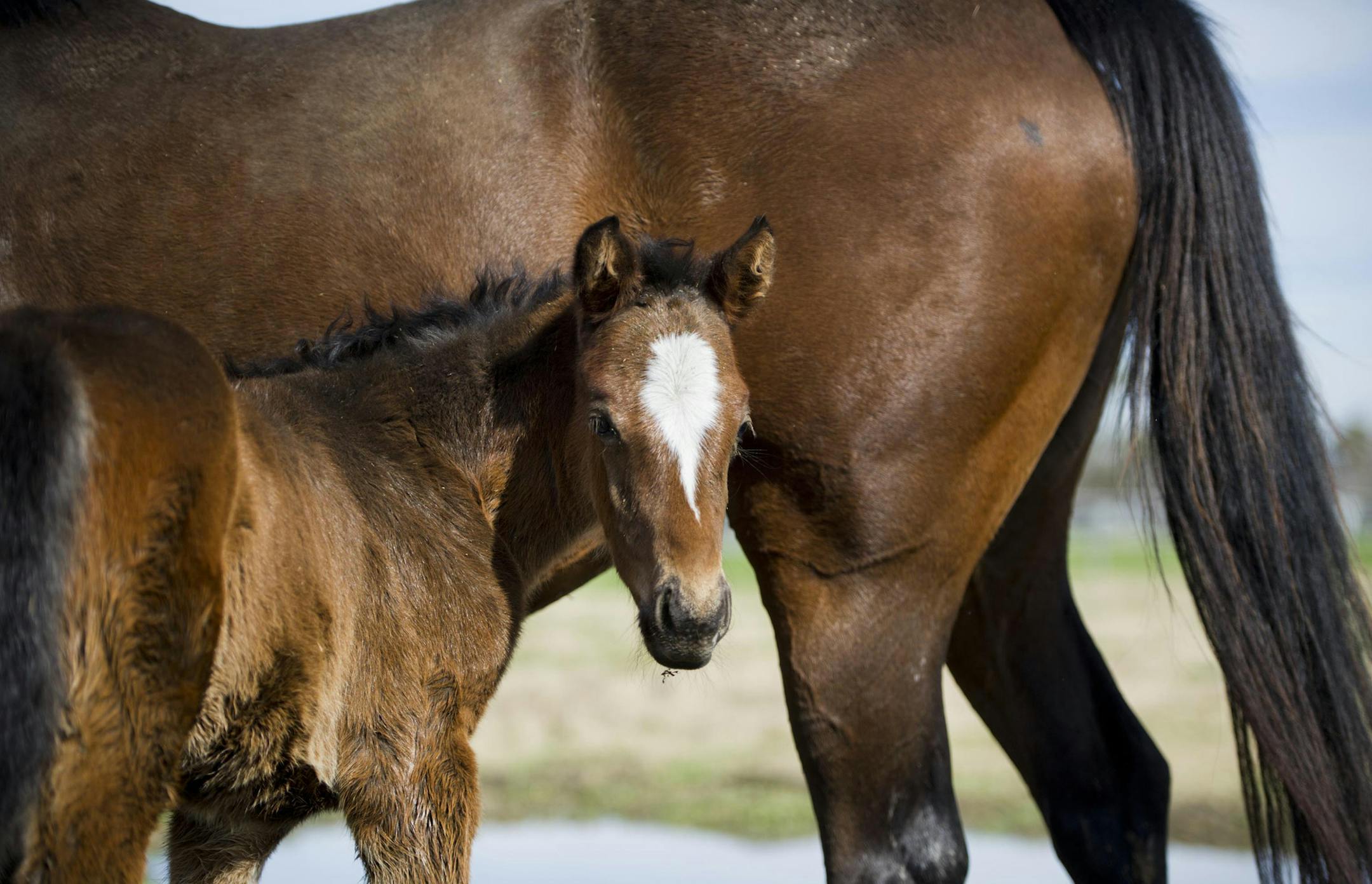
SACRAMENTO, Calif. – On a thoroughbred ranch in Vacaville, a 3-week-old foal gallops close to its mother. Their bond seems natural, but it didn't start out that way.
When the foal was born, it completely ignored its mother.
University of California, Davis veterinary specialist John Madigan intervened moments after the birth with a novel treatment he calls "the squeeze." It's attracting attention from researchers studying autism in children, who see a possible parallel between Madigan's work with horses and a similar technique — called kangaroo care — that's often used on pre-term infants.
"The phenomenon that Madigan has observed in foals is interesting and dramatic," said David Stevenson, professor of pediatrics at Stanford University.
Over the past five years, a dozen foals at Victory Rose Thoroughbreds in Vacaville have been born with neonatal maladjustment syndrome, or NMS, in which they are emotionally detached from their mothers. In each case, horse farm owner Ellen Jackson called Madigan, a UCD veterinary professor.
First identified in the 1950s, neonatal maladjustment syndrome affects roughly 5 percent of newborn horses.
To counteract the condition, Madigan ties a soft rope harness around the foal's body and gently squeezes it to increase pressure. The squeeze causes the foal to drop over and go to sleep.