

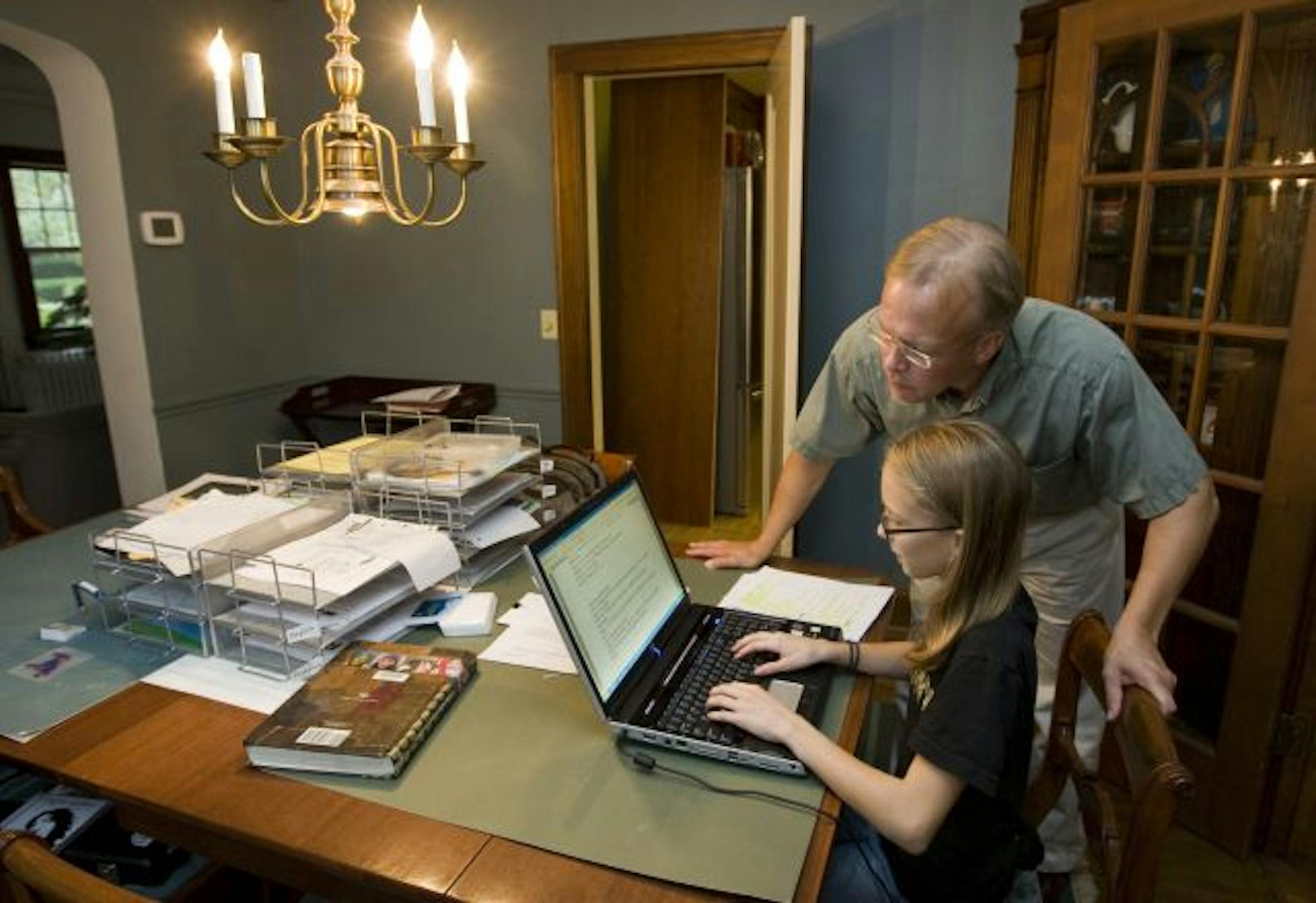
Ben Franklin once said that nothing is certain but death and taxes, but students know that homework runs a strong third.
"Work" gets most of the attention, but "home" also plays an important role, and may even enhance a student's skills with some thought given to creating a consistent and efficient place for books and brains to come together. The U.S. Department of Education notes that students do best when they know that their parents and adults close to them think homework is important. One way is to provide a special, pleasant place for that work.
A successful homework center should reflect the student's age and learning style, but also jibe with the family's routine, said Laura Davis, who owns College Nannies and Tutors serving Minneapolis, Edina and Eden Prairie, which provides nannies who also serve as tutors. One of their first tasks often is helping a family create a space dedicated to homework.
"In elementary school, the work is more back and forth, give and take, repetition and reinforcement, where having a partner is great -- hence the usual spot at the kitchen table while Mom's making dinner," Davis said. But the table may need to be cleared before the work is done, so it's better to create some other nearby spot.
That could mean installing a work surface in a little-used alcove, or realizing that in the era of cell phones, no one ever actually sits down at the old "message center." Instead of letting that counter become the place where mail piles up, make it the homework center.
Wherever you end up, Davis said, make sure it's stocked with the tools of the trade: pencils, calculator, paper, white-out, highlighters, protractors, etc. These could be housed in built-ins, or perhaps even better, kept in a "tool kit" of sorts that can travel with the student throughout the house, especially if there's more than one child. That also helps nurture a sense of responsibility.
The study space is likely to shift as the child grows older, so this kit could shift to the dining room table during middle school, and to the bedroom or home office during high school, if those changes make sense. In middle school and high school, the parental scrutiny is likely to shift from being within earshot of questions to instituting a nightly check-in with the student's assignment notebook or school planner.
Look for an underused area


